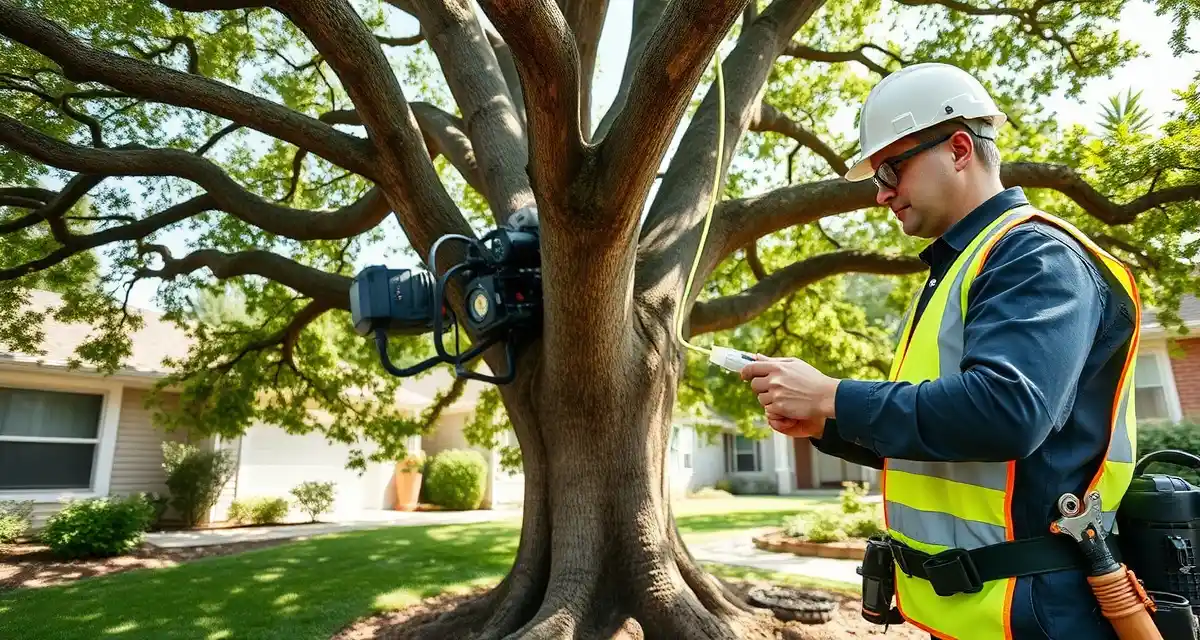
Deep Root Fertilization Scheduling Software for Tree Companies
Deep root fertilization has a 55-65% gross margin, the highest of any common tree service. Making accurate tracking and re-booking essential is not just good advice; it's the economics of the service demanding that you take it seriously.
The problem is that most tree service companies treat fertilization as an informal add-on. They apply it, maybe write it on a work order, and hope the customer calls back next year. ArboStar has fertilization tracking but requires manual treatment history entry with no automated return scheduling for annual or seasonal programs. That manual process depends on someone remembering, which means a large portion of fertilization customers never get a return visit prompt.
StumpIQ tracks every fertilization treatment by tree, type, and date, and auto-prompts the next treatment at the interval you define. That systematic approach to what is essentially a subscription service is how fertilization becomes a reliable revenue stream rather than a sporadic add-on.
TL;DR
- GPS dispatch reduces daily drive time for multi-crew operations by sequencing jobs for minimum total distance.
- Real-time crew location visibility allows dispatchers to assign new jobs to the nearest available crew.
- For a 3-crew operation, route optimization typically saves 15-20% of daily drive time and equivalent fuel cost.
- Storm surge dispatch requires hazard triage and priority queuing that standard scheduling tools don't provide.
- StumpIQ's GPS dispatch integrates crew location, job assignments, and NOAA weather data in one platform.
Why Deep Root Fertilization Needs Its Own Tracking System
It's a Repeat Service with Fixed Intervals
Deep root fertilization is typically applied on an annual or biannual basis for most tree species. Some slow-growing species or trees in poor soil conditions need it every 18 months. High-value specimen trees in stressed conditions might be on a 6-month observation cycle.
Whatever the interval, it's predictable. And predictable return dates mean predictable return revenue, if you have a system that captures the treatment record and prompts the next appointment at the right time.
Without systematic tracking, fertilization customers either call you back (maybe) or forget about the service (often). With systematic tracking, you prompt the return visit before they've thought about it, which is when the conversion rate is highest.
Treatment History Affects Future Decisions
What was applied, when, and at what rate affects what should be applied next. A tree that received slow-release NPK last spring needs a different follow-up assessment than one that received a micronutrient treatment for chlorosis correction.
Professional fertilization service means the technician arrives for the second visit knowing what happened on the first. That's only possible when the treatment record is accessible in the field, not stored in a paper folder at the office.
Multiple Trees Per Property Need Individual Records
A residential property might have 8 trees getting deep root fertilization on different schedules. The three oaks on annual NPK. The dogwood that needed an iron chelate treatment for chlorosis correction. The two Japanese maples on a biannual slow-release program.
Tracking these individually, by tree, not just by customer account, ensures the right treatment goes to the right tree at the right time. Commingling treatment records at the customer level means details get lost.
Building a Fertilization Program in Software
Set Up Treatment Protocols by Species and Condition
Define your standard treatment protocols before you start tracking individual trees:
- Standard NPK deep root (annual): general maintenance fertilization for healthy deciduous trees
- High-nitrogen deep root (biannual): for trees showing slow growth or pale foliage
- Iron chelate treatment: for chlorotic trees, especially pin oaks, river birches, and azaleas
- Phosphorus-rich treatment: for young trees establishing root systems
- Micronutrient blend: for trees with complex deficiency profiles
- Mycorrhizal inoculant: for trees recovering from construction damage or soil compaction
When protocols are pre-defined in your software, technicians select from a menu rather than writing free-text treatment descriptions that later become difficult to standardize.
Link Products and Rates to Treatment Records
Track not just "fertilized" but what product was used, at what rate, and via what application method (deep root injection, surface drench, granular broadcast).
This information has practical value:
- Billing accuracy: product cost is tracked against the job for margin review
- Regulatory compliance: in some states, commercial pesticide/fertilizer application requires treatment records by product and rate
- Results correlation: if a tree responds poorly to treatment, having the exact product and rate on record helps troubleshoot
Some states require commercial applicator records to include product name, EPA registration number, application rate, and date. Software that captures these fields in a structured way produces compliant records automatically.
Schedule Return Visits at Application
The moment you apply a fertilization treatment is when you know the next treatment date. Set the return interval right then, before you leave the property.
When a treatment is completed and the job is marked done, the software prompts: "Set return visit interval?" Select 12 months (or whatever the appropriate interval is for this treatment type), and the system generates a scheduling reminder for 11 months from now with an automated customer notification.
StumpIQ's system auto-prompts the next treatment at the interval you define. This is the mechanism that turns one-time fertilization customers into annual accounts.
Connecting Fertilization to the Full Tree Health Workflow
Integration with Tree Health Assessments
Deep root fertilization is often a response to a health assessment observation. A tree health assessment that documents soil compaction and signs of nutrient deficiency leads directly to a fertilization treatment recommendation.
When assessment and treatment records are in the same system, the workflow connects naturally:
- Tree health assessment documents chlorosis and compaction
- Assessment report includes treatment recommendation
- Customer approves treatment from the report
- Fertilization job is created with species and condition context linked from the assessment
- Treatment is applied and recorded
- Return visit is auto-scheduled
See the tree health assessment software guide for the assessment side of this workflow.
Integration with Trimming and Inspection Visits
Fertilization is a natural add-on to annual pruning visits. When the crew is already on the property for pruning, a deep root treatment adds $120-250 per tree with minimal additional time.
Software that flags fertilization history during the quoting workflow, "this property's oak trees last received fertilization 18 months ago, they're due", prompts the upsell at the right moment. See also how to upsell tree service customers for the broader add-on strategy.
Fertilization Service Economics
The Margin Math
Deep root fertilization costs per tree:
- Labor: 15-25 minutes per tree including setup
- Product: $8-25 per tree depending on product and tree size
- Equipment: minimal depreciation on injectors and hoses
Revenue per tree: $80-200 depending on tree size and market
At $120 average revenue and $40 average cost (labor + product), that's an $80 margin per tree, 67% gross margin.
A technician who treats 8 trees per hour at $120/tree generates $960/hour in revenue with $320 in direct costs. That's the margin profile that makes fertilization worth building a systematic program around.
The Re-booking Value
A fertilization customer returning annually at $500/visit over 5 years is worth $2,500 in repeat revenue from a single initial treatment conversion. The customer acquisition cost is effectively zero, you're already on the property for another service.
Building the re-booking system is the difference between capturing that long-term value and treating every fertilization job as a one-time transaction.
Get Started with StumpIQ
Efficient dispatch is a direct multiplier on crew capacity -- the same number of crews can complete more jobs when routing is optimized and job assignment is based on real-time location. StumpIQ's GPS dispatch tools are purpose-built for tree service operations. If you are evaluating dispatch software, a direct demo of these features is the best way to assess fit.
FAQ
What software tracks deep root fertilization schedules?
Purpose-built tree service software with treatment tracking by individual tree. StumpIQ tracks every fertilization treatment by tree, treatment type, product, and date, and auto-prompts the next treatment at the interval you define. General field service platforms like Jobber, FieldPulse, and Crew Control have no tree-level treatment history tracking.
How do I automate fertilization return visits for tree customers?
Set the return interval when you complete the fertilization treatment. StumpIQ prompts you to set the next treatment date at job completion, select the interval (12 months for annual, 18 months for biannual, etc.) and the system generates a scheduling reminder at the appropriate time with an automated customer notification. The return visit books itself without manual follow-up.
Can I track fertilization products and application rates in tree service software?
Yes. StumpIQ's treatment records include product name, application rate, application method, and treated tree species. For states with commercial applicator recording requirements, these structured records produce compliant documentation automatically. Product cost tracking also enables margin analysis by treatment type, you can see which fertilization programs deliver the strongest margin and adjust your service mix accordingly.
What is the difference between scheduling software and dispatch software for tree service?
Scheduling software assigns jobs to time slots and crew members. Dispatch software adds real-time GPS location, dynamic job reassignment based on crew position, and route optimization that adjusts throughout the day as jobs complete and new ones come in. For multi-crew tree service operations, dispatch tools reduce idle time between jobs and improve response speed for emergency calls.
How does GPS dispatch improve customer communication?
GPS dispatch enables automated ETAs -- customers can receive a notification when a crew is 30 minutes away, reducing the 'when are you coming' calls that consume office time. For emergency jobs, an accurate ETA reduces customer anxiety and positions your company as responsive and professional.
What data does GPS dispatch generate and how is it useful?
GPS dispatch generates crew location history, job completion times, drive time between jobs, and idle time records. This data is useful for: analyzing crew productivity, identifying routes that consistently run over time, verifying job completion for invoicing purposes, and demonstrating compliance with scheduled arrival windows for commercial clients.
Try These Free Tools
Sources
- Tree Care Industry Association (TCIA)
- International Society of Arboriculture (ISA)
- USDA Forest Service