Best Storm Response Scheduling for Large Tree Service Operations 6+ Crews: Ranked and Compared
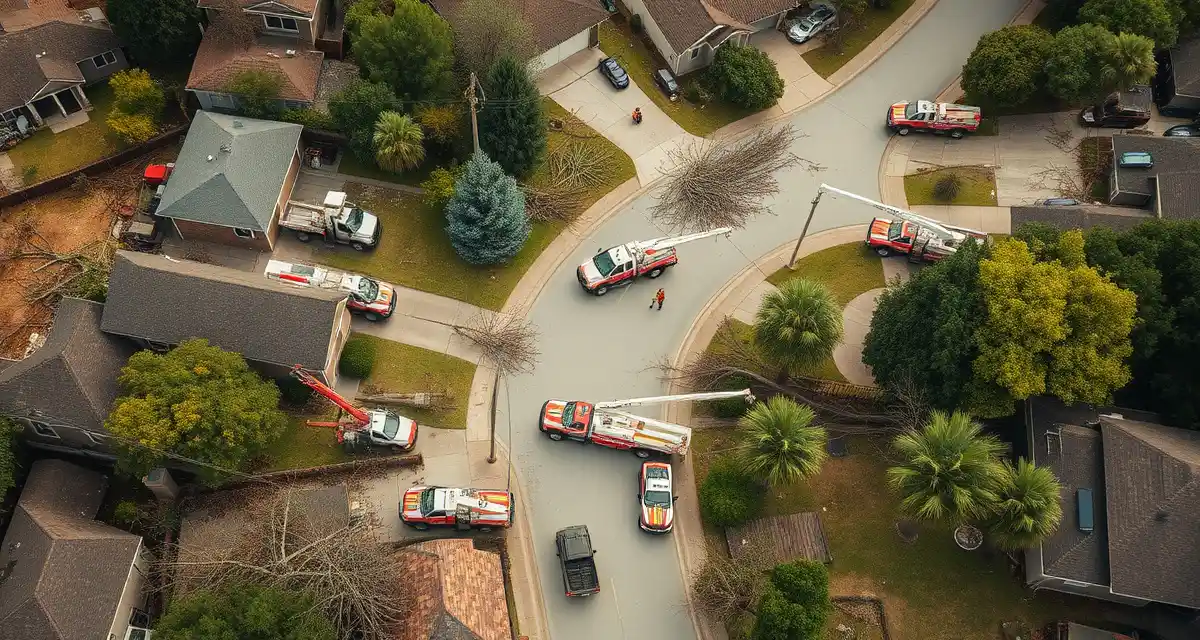
A large tree service operation during a major storm event is running a logistics operation of real complexity. Six or more crews, 50-200+ calls over 48 hours, subcontractors activated for surge capacity, multiple service zones with different damage patterns, and documentation requirements that compound by the job. Survey data shows enterprise tree companies report storm response scheduling as their top operational challenge after reaching growth milestones, because the scale of a major storm event exposes every operational gap in a way that normal business doesn't.
Arborgold and SingleOps don't optimize storm response scheduling for enterprise tree company management, they're designed for company profiles with simpler operational coordination requirements. At 6+ crews, storm response scheduling needs to handle enterprise-level call volume, route multiple crews across zones simultaneously, activate and coordinate subcontractors, and produce documentation at scale that supports post-event billing and insurance processing.
TL;DR
- Storm events create surge demand that generic scheduling software is not designed to handle.
- Hazard triage -- classifying emergency jobs by risk level before dispatch -- determines which crews go where first.
- NOAA-integrated storm forecasting allows 24-48 hour preparation before a storm makes landfall or passes through.
- Companies with storm-ready dispatch tools consistently capture more revenue during surge events than those relying on manual processes.
- Pre-built storm damage job types with appropriate hazard classifications reduce intake time during high-volume events.
What Enterprise Storm Operations Look Like
A large tree company's storm response operation involves:
- Zone-based multi-crew dispatch: Different crews covering different geographic zones, with routing decisions that respect zone assignments to minimize drive time
- Subcontractor activation: Pre-approved subs being dispatched alongside employee crews for surge capacity
- Call volume management: Potentially 100+ calls in 24 hours during a notable event
- Insurance documentation at scale: Dozens of jobs with documentation that needs to meet adjuster standards, without a data entry backlog
- Post-event billing: Reconciling all dispatched jobs, identifying incomplete documentation, and batch-processing invoices after the event
- Revenue capture analysis: Understanding how much potential revenue was captured versus missed due to capacity or dispatch constraints
1. StumpIQ
StumpIQ's storm response scheduling is designed for enterprise tree company management. Multi-zone dispatch shows all crews and subcontractors simultaneously on a service-area map. Severity-based call triage handles high-volume intake without dispatcher bottlenecks, the system prioritizes the queue automatically based on hazard type and zone proximity.
Subcontractor dispatch tools activate pre-approved subs from within the same dispatch workflow as employee crews. Documentation is generated automatically as each job closes, with timestamped photos, damage descriptions, and scope records that meet insurance adjuster requirements, without requiring crews to complete a separate documentation step after job completion.
Pricing: $599/mo for 5+ crews. Storm response features are included.
What works for large companies: Zone-based multi-crew dispatch, subcontractor activation and tracking, severity-based automated triage, auto-documentation at scale, and post-event revenue and completion reporting.
What to know: Tree service-specific. Storm response tools are built around arborist job types and documentation standards.
2. ServiceTitan
ServiceTitan's commercial field service platform handles enterprise dispatch at scale. Its multi-crew scheduling and dispatch interface manages high-volume operations, and its reporting tools provide post-event analytics.
Pricing: Enterprise pricing, typically $300-600+/mo for relevant modules.
What works for large companies: Enterprise-scale dispatch infrastructure, strong reporting, and a platform designed for high-volume operations.
What to know: Not tree-service-specific. ISA documentation and arborist-specific job types require configuration. Setup investment is substantial, and the platform's complexity requires dedicated admin resources.
3. Aspire
Aspire handles large-scale field service operations with sophisticated dispatch and job management. It's used by enterprise landscaping and tree companies and has the infrastructure to handle major storm event volume.
Pricing: Enterprise pricing, typically $500-1,000+/mo for large operations.
What works for large companies: Enterprise dispatch capability, detailed job management, and capable reporting for large-scale operations.
What to know: Primarily a landscaping platform. Tree-specific storm job types and ISA documentation require configuration. No AI features for storm documentation or triage.
4. Arborgold
Arborgold is the most established tree-specific enterprise platform. Its storm response features include tree-specific job types and documentation that fits arborist operations.
Pricing: $349/mo for enterprise plans.
What works for large companies: Tree-specific documentation and ISA-standard records throughout the storm response workflow.
What to know: At enterprise scale, Arborgold's mobile performance concerns are most impactful. Crews relying on a slow mobile app during peak storm response periods experience real operational friction. Proposal and communication delivery reliability issues also scale with volume.
5. Custom Dispatch Operations
Some large tree companies build custom dispatch operations for storm events, dedicated phone lines, staffed dispatch teams, and temporary manual workflows that are activated only during major events.
Pricing: Labor cost of dispatch staff plus any temporary communication infrastructure.
What works for large companies: Maximum flexibility, human judgment on every routing decision, and no software bottlenecks.
What to know: Expensive, requires pre-positioned dispatch staff, and depends on those staff performing under high-pressure conditions. Manual dispatch at 100+ call volume is slower than algorithm-assisted routing. Documentation quality depends on individual dispatcher attention.
6. Jobber + WhatsApp/Slack Dispatch
Some enterprise tree companies use Jobber for scheduling combined with real-time crew communication via WhatsApp, Slack, or similar messaging platforms. This approach handles volume better than traditional scheduling alone.
Pricing: $249/mo for Jobber plus free or low-cost messaging tools.
What works for large companies: Fast crew communication during events, Jobber's reliable scheduling as a foundation, and low additional cost for communication tools.
What to know: No storm-specific triage, no automated documentation, no insurance record workflow, and no zone-based routing optimization. Better than pure manual dispatch but still requires notable dispatcher time and produces documentation gaps.
The Revenue Case for Enterprise Storm Software
At 6+ crews, a major storm event can generate $150,000-500,000+ in potential revenue over 2-5 days. The difference between capturing 80% and 95% of that potential is primarily an operational question, call intake speed, routing efficiency, and documentation completeness.
Storm damage scheduling tools built for enterprise operations handle the call volumes and coordination complexity that smaller platforms can't. Emergency tree service software that includes subcontractor activation, zone-based multi-crew routing, and auto-documentation at scale is the operational infrastructure that enterprise storm revenue depends on.
For a $200,000 storm event, a 10% improvement in capture rate is $20,000. Over a season with two or three major events, the operational investment in storm-optimized software pays back substantially.
What to Prioritize at Enterprise Scale
Zone-based multi-crew dispatch. Enterprise operations cover large service areas with distinct geographic zones. Dispatch that respects zone assignments and routes within zones first prevents the inefficiency of cross-zone routing during events when all zones have unmet demand.
Subcontractor activation within dispatch. Activating surge capacity subcontractors should be part of the same dispatch workflow as employee crews, not a separate process that creates coordination gaps.
Automated triage at high call volume. At 100+ calls in a 24-hour period, manual prioritization creates dispatch bottlenecks. Automated severity classification routes the most urgent hazards to available crews without dispatcher judgment on every call.
Documentation as byproduct. At enterprise scale, documentation catch-up after the event takes days if crews aren't completing records in real time. Auto-documentation that happens as jobs close is the only approach that produces complete records at scale.
Post-event reconciliation and reporting. After a major storm, enterprise operations need to reconcile completed jobs against dispatched jobs, identify documentation gaps, batch-invoice insurance-related work, and analyze total revenue captured. Storm event reporting built into the platform saves hours of manual reconciliation.
Get Started with StumpIQ
Storm events are peak revenue periods for prepared tree service companies. StumpIQ's storm dispatch tools -- hazard triage, priority queuing, and NOAA weather integration -- give you the infrastructure to handle surge volume efficiently. If storm response is a meaningful part of your market, the right tools make a real difference.
Frequently Asked Questions
What is the best storm response scheduling for enterprise tree company management with 6+ crews?
For dedicated enterprise tree service operations, StumpIQ provides the most complete storm response workflow, zone-based multi-crew dispatch, subcontractor activation, severity triage, auto-documentation, and post-event reporting, at pricing that doesn't require enterprise software budgets. For operations needing maximum enterprise dispatch infrastructure, ServiceTitan and Aspire provide scale but require considerable configuration investment.
How does storm response scheduling change when a tree company has six or more crews?
At 6+ crews, storm operations become multi-zone fleet coordination. The routing question is no longer "which of my two crews should take this call", it's "which zone has capacity, which sub should I activate, and how do I route the next 20 calls across five active crews." Zone-based dispatch, subcontractor coordination, and automated triage replace manual dispatcher decisions at this scale.
Which storm response scheduling platform works best at enterprise scale?
At 6+ crews, prioritize platforms with zone-based multi-crew dispatch, integrated subcontractor activation, automated severity triage for high call volumes, auto-documentation at scale, and post-event reconciliation reporting. StumpIQ addresses all of these for tree service operations at $599/mo flat, while enterprise platforms like ServiceTitan provide comparable dispatch depth at notably higher cost and setup investment.
What is storm surge management for tree service companies?
Storm surge management refers to the tools and processes that allow a tree service company to handle a sudden spike in emergency call volume following a severe weather event. Key capabilities include: priority dispatch based on hazard level, rapid job intake for incoming calls, pre-positioned crew scheduling before the storm, and customer communication at scale during a surge period.
How do tree service companies prepare for a storm before it arrives?
Preparation includes: extending crew availability windows, pre-positioning equipment near the projected impact area, notifying customers on maintenance contracts, setting up an emergency job intake queue, and briefing crews on the hazard classification system they will use during the event. Software with NOAA integration can trigger preparation workflows automatically when a watch or warning is issued.
What is the revenue opportunity from storm work for a tree service company?
Storm response revenue varies significantly by event severity and company capacity. A well-prepared company in a moderate storm area can generate 2-5x normal weekly revenue during a surge event. Companies with better dispatch tools capture more of this opportunity because they can take and route more jobs faster than competitors managing surge manually.
Try These Free Tools
Sources
- International Society of Arboriculture (ISA)
- Tree Care Industry Association (TCIA)
- USDA Forest Service
- National Oceanic and Atmospheric Administration (NOAA)