Best Storm Response Scheduling for Growing Tree Companies With 3-5 Crews: Ranked and Compared
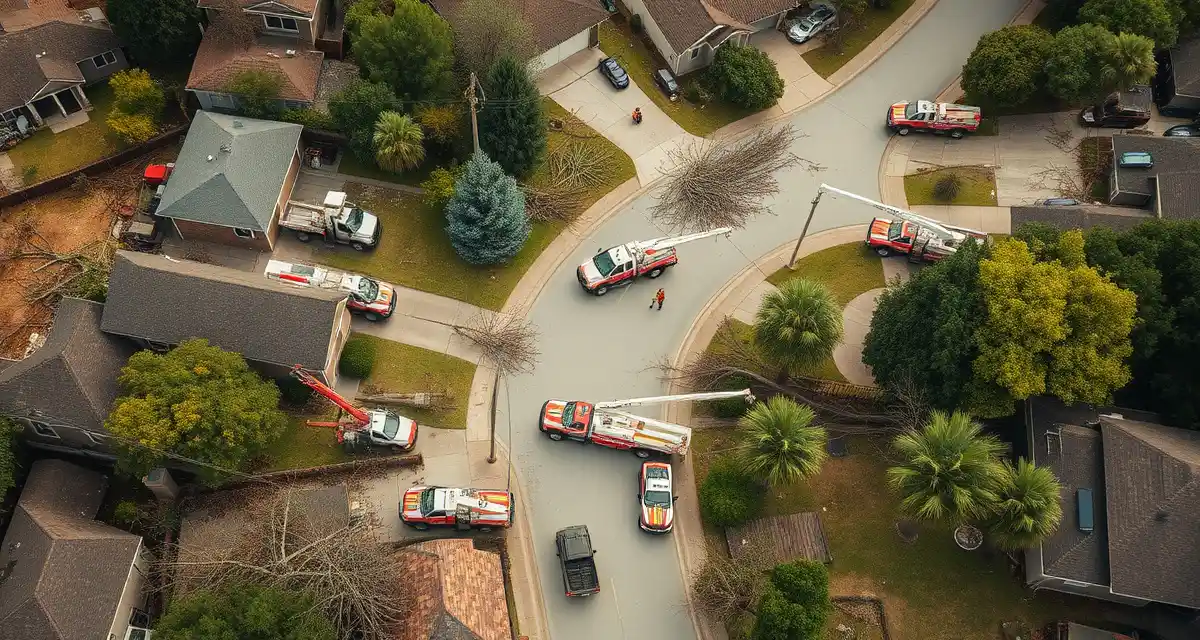
A growing tree company with 3-5 crews during a major storm event is running a multi-front operation: multiple crews in the field, dozens of incoming calls, dynamic job priority changes, and documentation requirements that compound by the hour. Survey data shows scaling tree companies report storm response scheduling as their top operational challenge after reaching growth milestones, because the systems that worked for a two-crew storm operation break down considerably at four or five crews covering wider service areas.
Arborgold and SingleOps don't optimize storm response scheduling for scaling tree service operations, they're designed for company profiles where dedicated dispatch staff handle the coordination complexity. For a company in the 3-5 crew range, the right storm scheduling tool needs to coordinate multiple crews automatically, handle call surges without creating dispatcher bottlenecks, and produce documentation that supports post-storm billing and insurance claims.
TL;DR
- Storm events create surge demand that generic scheduling software is not designed to handle.
- Hazard triage -- classifying emergency jobs by risk level before dispatch -- determines which crews go where first.
- NOAA-integrated storm forecasting allows 24-48 hour preparation before a storm makes landfall or passes through.
- Companies with storm-ready dispatch tools consistently capture more revenue during surge events than those relying on manual processes.
- Pre-built storm damage job types with appropriate hazard classifications reduce intake time during high-volume events.
How Storm Operations Change at 3-5 Crews
With two crews, you can stay on top of a storm event with attention and a good scheduling tool. With four or five crews, the complexity multiplies:
- You're managing simultaneous crews in different areas, potentially with different storm damage patterns
- New calls are routing to the nearest available crew, not just the single crew closest to you
- Equipment routing, chippers, lifts, dump trucks, becomes a separate coordination challenge alongside crew routing
- Documentation has to happen consistently across all crews, not just the ones you personally oversee
- Post-storm billing involves reconciling dozens of jobs across multiple crews
At this scale, manual dispatch decisions made without real-time data become expensive. Routing a crew 40 minutes to a job when a closer crew just finished next door represents an hour of lost productive time.
1. StumpIQ
StumpIQ's storm response scheduling is designed for scaling tree service operations. Multi-crew storm dispatch shows all crews simultaneously on a single map with live job status. Severity-based intake triage helps prioritize the queue when calls exceed current capacity, high-risk hazards get routed first without manual prioritization decisions.
Real-time crew routing suggests which crew to assign each new call to based on current location, remaining workload, and job type. At the 3-5 crew level, this replaces the mental overhead of tracking four simultaneous crew schedules with a single routing recommendation.
Pricing: $299/mo for 2-4 crews, $599/mo for 5+ crews. Storm response features are included at every tier.
What works for growing companies: Multi-crew simultaneous dispatch, severity-based call triage, real-time routing optimization, and auto-documentation that generates insurance-ready records as each job closes.
What to know: Tree service-specific design. Storm response tools are built around arborist job types and documentation requirements.
2. Arborgold
Arborgold's storm response features are built for tree service operations. Multi-crew dispatch tools handle increased job volume, and tree-specific job types support the documentation that storm response requires.
Pricing: $119-349/mo.
What works for growing companies: Tree-specific storm job types and dispatch tools designed for arborist operations. Documentation that fits professional tree service requirements.
What to know: Mobile performance concerns compound at the 3-5 crew level. When four crews are relying on the app throughout a storm event, slow load times multiply into notable operational friction. Proposal and communication reliability issues also become more visible at higher volume.
3. Jobber
Jobber handles increased scheduling volume during storm events better than a basic spreadsheet. Its dispatch and crew assignment tools manage multiple crews, and the mobile app is reliable enough for field use in challenging conditions.
Pricing: $149-249/mo for plans with full dispatch features.
What works for growing companies: Reliable mobile performance, multi-crew scheduling, and clean dispatch interface. Handles storm volume better than generic tools.
What to know: No storm-specific triage, no severity prioritization, no insurance documentation workflow, and no tree-specific job types. At the 3-5 crew level, manual prioritization of a 40-call storm queue without triage tools is a real challenge that Jobber doesn't solve.
4. ServiceTitan (Landscaping/Tree Module)
ServiceTitan's landscaping and tree module includes multi-crew dispatch and storm response capabilities. It's used by larger operations but has features relevant to growing companies.
Pricing: Enterprise pricing, typically $200-500+/mo.
What works for growing companies: Strong multi-crew dispatch and deep job management features. Good for operations heading toward 6+ crews.
What to know: Pricing and complexity are sized for larger operations. At 3-5 crews, the platform may be more than you need and cost more than the features justify. Setup and training investment is notable.
5. Housecall Pro
Housecall Pro handles multi-crew scheduling and includes customer communication tools useful during storm events. Its mobile app performance is reliable.
Pricing: $129-249/mo.
What works for growing companies: Solid multi-crew scheduling, reliable app, and customer notification features that help manage storm customer expectations.
What to know: Same limitations as at smaller company sizes, no storm triage, no insurance documentation, no tree-specific job types. At the 3-5 crew level, the gap between what a growing storm operation needs and what Housecall Pro provides becomes more operationally costly.
6. SingleOps
SingleOps has scheduling and dispatch tools that handle multi-crew operations. Its green industry focus means some storm job types are recognized, though tree-specific features require configuration.
Pricing: $125-499/mo.
What works for growing companies: Multi-crew dispatch and job management that scales with company growth. Established platform with good reliability.
What to know: Configuration before tree workflows are fully operational is still required. Tree-specific storm documentation and ISA-standard records need setup work. Best suited for operations willing to invest in configuration.
The Revenue Math on Storm Operations
Storm response is where tree companies generate their highest revenue per hour. At the 3-5 crew level, a major storm event can represent $50,000-150,000 in potential revenue over 2-4 days. Operational gaps during that window, missed calls, misprioritized jobs, incomplete documentation, directly reduce what you capture.
A dispatch system that routes four crews efficiently versus manually, across 40 incoming calls over two hours, can mean the difference between capturing 80% and 95% of available revenue. On a $100,000 storm event, that's $15,000.
Storm damage scheduling tools designed for multi-crew operations provide routing optimization, triage, and documentation that single-crew tools don't. Emergency tree service software that handles growing company complexity is the operational infrastructure that storm revenue depends on.
What to Prioritize at 3-5 Crews
Multi-crew simultaneous visibility. Four crews in the field without a live map and job status creates blind spots. You'll be making routing decisions based on outdated information.
Automated severity triage. At high call volumes, manual prioritization slows intake. A system that automatically flags high-risk hazards (tree on structure, blocked road, downed power line hazard) routes the most urgent work first.
Real-time routing optimization. At 4-5 crews, the difference between manual routing and algorithm-assisted routing compounds across every new call. Crew routing recommendations based on current location and workload prevent the inefficiency of calling crews for updates.
Documentation that happens during the job. Post-storm documentation catch-up takes hours. Documentation that happens as a byproduct of job workflow, timestamped photos, scope records, insurance documentation, is consistently complete and doesn't require a separate admin session.
Get Started with StumpIQ
Storm events are peak revenue periods for prepared tree service companies. StumpIQ's storm dispatch tools -- hazard triage, priority queuing, and NOAA weather integration -- give you the infrastructure to handle surge volume efficiently. If storm response is a meaningful part of your market, the right tools make a real difference.
Frequently Asked Questions
What is the best storm response scheduling for scaling tree service operations with 3-5 crews?
For dedicated tree service companies, StumpIQ provides the most complete multi-crew storm response at the 3-5 crew level, with simultaneous crew visibility, severity triage, real-time routing, and auto-documentation included. For operations that need general multi-crew scheduling without storm-specific depth, Jobber handles the volume with reliable performance.
How does storm response scheduling change when a tree company has multiple crews?
With multiple crews, storm scheduling becomes a real-time optimization problem. Routing decisions need current location data, job completion status, and equipment availability, not phone calls and best guesses. The documentation challenge also multiplies: ensuring consistent insurance-grade records across four crews doing simultaneous jobs requires systematic enforcement rather than manual oversight.
Which storm response scheduling platform works best at this company size?
At 3-5 crews, prioritize platforms with multi-crew simultaneous dispatch visibility, severity-based call triage, algorithm-assisted routing, equipment tracking alongside crew tracking, and auto-documentation. StumpIQ addresses all of these for arborist operations, while generalist platforms handle the volume without the storm-specific operational depth.
What is storm surge management for tree service companies?
Storm surge management refers to the tools and processes that allow a tree service company to handle a sudden spike in emergency call volume following a severe weather event. Key capabilities include: priority dispatch based on hazard level, rapid job intake for incoming calls, pre-positioned crew scheduling before the storm, and customer communication at scale during a surge period.
How do tree service companies prepare for a storm before it arrives?
Preparation includes: extending crew availability windows, pre-positioning equipment near the projected impact area, notifying customers on maintenance contracts, setting up an emergency job intake queue, and briefing crews on the hazard classification system they will use during the event. Software with NOAA integration can trigger preparation workflows automatically when a watch or warning is issued.
What is the revenue opportunity from storm work for a tree service company?
Storm response revenue varies significantly by event severity and company capacity. A well-prepared company in a moderate storm area can generate 2-5x normal weekly revenue during a surge event. Companies with better dispatch tools capture more of this opportunity because they can take and route more jobs faster than competitors managing surge manually.
Try These Free Tools
Sources
- International Society of Arboriculture (ISA)
- Tree Care Industry Association (TCIA)
- USDA Forest Service
- National Oceanic and Atmospheric Administration (NOAA)