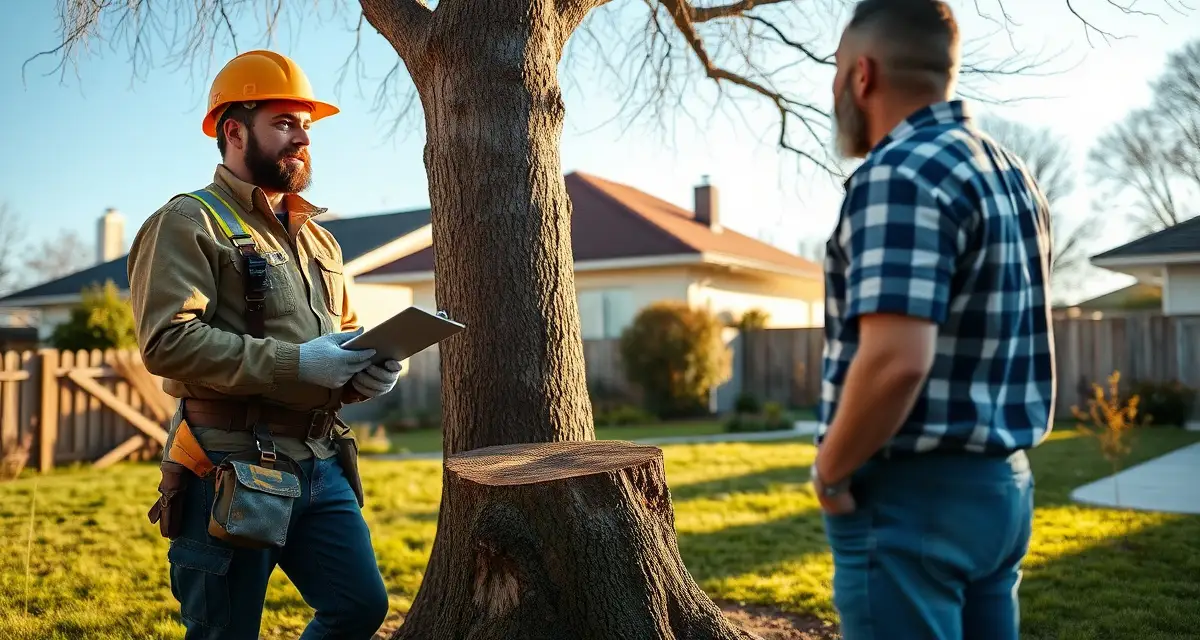
How to Upsell Tree Service Customers: Add-On Services That Convert
You're already on the property. The customer trusts you. And right next to the tree you just quoted, there's probably a stump that needs grinding, a few dead limbs on an adjacent tree, or a root system that could use a fertilization treatment.
Tree companies that systematically offer add-ons during the quoting process increase average job value by 23% without additional site visits. That's substantial revenue from work you could do on the same day, with the same crew, while you're already there.
The challenge isn't whether to offer add-ons, it's how to do it in a way that feels natural rather than pushy. This guide covers both.
TL;DR
- Tree service companies that adopt purpose-built software reduce administrative time by an average of 5-8 hours per week.
- AI photo-to-quote converts a field photo to a priced proposal in under 2 minutes -- compared to 30-45 minutes for manual estimates.
- ANSI Z133 compliance documentation created automatically in the field reduces insurance audit preparation time.
- ISA certification tracking prevents lapses that affect eligibility for municipal, utility, and commercial contracts.
- GPS dispatch with route optimization saves 15-20% of daily drive time for multi-crew operations.
Step 1: Identify Add-On Opportunities Before You Quote
Look Beyond the Job You Were Called For
When you arrive on site for a quote, spend 3-5 minutes walking the full property, not just the tree in question. You're looking for:
- Stumps from previous removals: Easy money. The customer already knows they exist, they just haven't called yet.
- Dead or damaged limbs on adjacent trees: A safety observation, not a sales pitch. "While I'm here, I noticed the oak in the back has some notable deadwood. Want me to include a pruning estimate?"
- Soil conditions: Compacted soil, surface root exposure, or obvious stress symptoms can open a conversation about deep root fertilization.
- Tree risk indicators: Lean, root plate movement, cavity presence. A risk assessment might be appropriate, and billable.
This walkthrough takes 5 minutes and regularly identifies $200-800 in additional work per site.
Step 2: Use the Quote as Your Add-On Tool
Present a Primary Quote and a Recommended Package
The most effective upsell in tree service isn't a separate conversation, it's a well-structured quote. Present the customer with:
- Primary estimate: what they called you for
- Recommended additions: what you observed on the property
- Combined value: what it costs to do everything together vs. scheduling separately
Customers respond to transparency. "I can do the removal for $850. While I'm here, grinding that stump in the back would be another $280 and we'd haul everything in one trip. Or I can schedule that separately if you prefer" is not pushy. It's useful.
StumpIQ's AI quote review flags common add-on opportunities, stump grinding, fertilization, risk assessment, for every job type automatically. Arborgold has no automated upsell prompts during quoting or invoicing, so add-ons are entirely dependent on the estimator remembering to look. With AI prompts, nothing gets missed because someone was in a hurry.
Step 3: Time the Add-On Conversation Right
When to Offer vs. When to Stay Quiet
There's a right moment and wrong moment for every add-on offer.
Good timing:
- During the initial site walk, before you've written the quote
- When presenting the quote in person or via phone
- At job completion, when the customer is on site and satisfied
Bad timing:
- Mid-job when the crew is actively cutting and there's chaos
- Via invoice, it feels like a billing surprise
- As the first thing you say when you arrive
The cleanest approach for tree service quoting: include add-ons in the original proposal with clear line-item breakdowns. Let the customer choose what they want rather than feeling sold to.
Step 4: Systemize What You Offer and When
Build an Add-On Menu for Each Job Type
Different primary services have predictable add-on fits. Build these into your quoting process:
| Primary Job | Natural Add-Ons |
|---|---|
| Tree removal | Stump grinding, root management, site cleanup, adjacent tree inspection |
| Tree trimming | Deadwood removal, fertilization, risk assessment |
| Stump grinding | Deep root fertilization, soil aeration, seedling removal |
| Emergency removal | Adjacent tree inspection, property damage assessment |
| Risk assessment | Cable and brace installation, treatment plan |
When your quoting software automatically presents these combinations based on job type, your estimators don't need to remember. They just review and confirm what the system suggests.
Step 5: Follow Up After the Job
Plant Seeds for Future Work
Not every add-on converts at quote time. Some customers need to think about it. Build a follow-up sequence that mentions the work you observed:
- 30-day follow-up: "Just checking in, did you want to schedule that stump grinding while we're already in the area this month?"
- 6-month follow-up: "It's been about six months since your tree removal. This is typically when we recommend a follow-up inspection on adjacent trees."
This isn't aggressive sales, it's good service. The average add-on revenue per tree removal job ranges from $180-350 when follow-up is systematic. Most of that revenue would have happened anyway; good process just captures it.
See also: the guide on how to win more tree service bids covers the proposal structure side of this conversation.
Common Mistakes to Avoid
Recommending add-ons you can't explain: Never suggest additional work without a clear, specific reason you observed on the property. "That tree looks like it could use fertilization" without explaining what you saw will feel like a sales pitch. "I noticed the soil around the base is heavily compacted and the leaves show early stress signs, fertilization would help" is a professional observation.
Overwhelming with too many options: One or two well-chosen add-ons convert. A list of six creates decision paralysis.
Adding it to the invoice: Never slip an unquoted service onto an invoice. Always get agreement first.
Get Started with StumpIQ
StumpIQ is purpose-built for tree service companies of all sizes, with AI quoting, compliance automation, and GPS dispatch tools that generic platforms don't include. If you are evaluating software for your operation, StumpIQ is a useful starting point for comparison.
FAQ
What tree services can I upsell to removal customers?
The strongest add-ons for removal jobs are stump grinding (often needed and easy to bundle), adjacent tree inspection (positions you for future work), deep root fertilization (especially for retained trees near the removal site), and debris hauling upgrades. These are natural extensions of work already being done and require no additional site mobilization.
How do I offer add-ons without seeming pushy to tree customers?
Frame add-ons as observations, not sales. "While I was on site, I noticed X" is a professional report. Include add-ons as optional line items in the original quote so customers can choose without pressure. Let the quote do the selling, a well-priced bundle is often self-explanatory.
What is the average add-on revenue per tree removal job?
Tree companies with a systematic add-on process report $180-350 in additional revenue per removal job. Stump grinding averages $150-300 per stump. Deep root fertilization averages $120-250 per tree. A single adjacent tree inspection that leads to a pruning or treatment job adds $200-600. The opportunity is substantial, the gap is usually process, not customer willingness.
What makes tree service software different from generic field service platforms?
Tree service software is built around arborist-specific workflows: AI species identification for field quoting, ANSI Z133 safety checklists, ISA certification tracking, storm demand forecasting, and hazard-level job classification. Generic field service platforms can be configured to approximate these workflows, but doing so requires weeks of manual setup and still produces a less accurate result for tree-specific job types.
How do tree service companies evaluate software before buying?
The most effective approach: identify your top 3 operational pain points, ask vendors to demonstrate those specific scenarios in a live demo, check user reviews on Capterra and G2 for patterns, and request a trial period to test with real job data. Ask specifically about mobile performance in the field, since most tree service work happens away from the office.
What is the ROI of tree service software for a small company?
For a 2-3 crew operation, purpose-built tree service software typically recovers its cost through: faster quoting that wins more bids, invoicing on the day of job completion rather than days later, reduced administrative hours, and fuel savings from route optimization. Most companies report positive ROI within 60-90 days of full adoption.
Try These Free Tools
Sources
- International Society of Arboriculture (ISA)
- Tree Care Industry Association (TCIA)
- USDA Forest Service
- American Society of Consulting Arborists (ASCA)