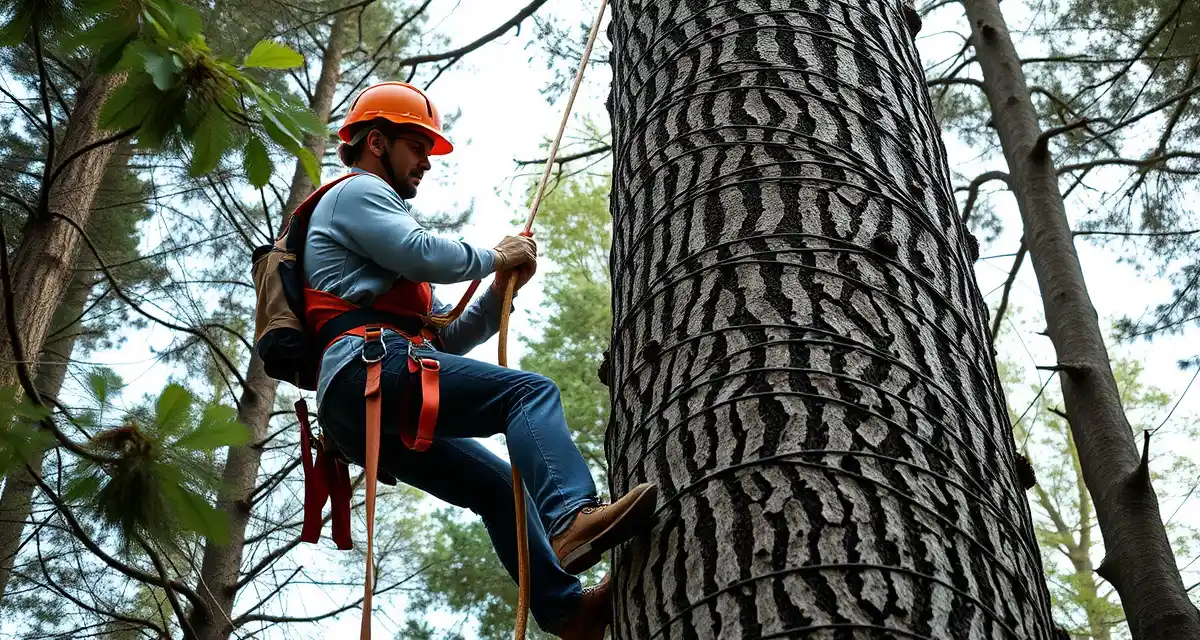
ANSI Z133 Compliance Management for Tree Service Companies
ANSI Z133 violations are the most common cause of tree service company insurance premium increases, averaging $4,200 per incident in documented cases. That number climbs significantly when a violation is tied to an injury or fatality. The standard exists for a reason — arboriculture is consistently ranked among the top 10 most dangerous occupations in the US — and the companies that treat compliance as a workflow rather than an afterthought have measurably fewer incidents.
StumpIQ embeds ANSI Z133 pre-job checklists into every dispatch order so crews can't start a job without safety sign-off. The checklist becomes part of the job, not a separate document nobody fills out.
TL;DR
- ANSI Z133 is the national safety standard for arboricultural operations, covering climbing, rigging, chipper, and aerial lift work.
- Non-compliance with ANSI Z133 exposes companies to OSHA citations, increased workers' comp premiums, and civil liability.
- Pre-job checklists tied to ANSI Z133 create timestamped digital records that satisfy insurance auditor and TCIA accreditation requirements.
- Workers' comp classification codes for tree service carry some of the highest rates in the construction trades -- documented safety programs can reduce premiums.
- StumpIQ's ANSI Z133 checklists are pre-built and field-ready, requiring no manual setup before first use.
What ANSI Z133 Actually Requires
ANSI Z133 is the American National Standard for Arboricultural Operations. It covers safety requirements across every phase of tree work: ground operations, aerial work, chipper operations, rigging, and equipment use. The current version is Z133-2017.
Key compliance areas:
- Personal protective equipment (PPE): Specific requirements for head protection, eye and face protection, hearing protection, chainsaw protective gear, and foot protection
- Work zone setup: Traffic control, public exclusion zones, communication protocols
- Aerial operations: Climbing equipment standards, aerial lift operation, fall protection
- Chainsaw operations: Pre-use inspection, handling requirements, kickback zones
- Chipper operations: Feed direction, safety zones, operator position requirements
- Electrical hazard protocols: Minimum approach distances from energized lines, required crew roles when working near utilities
- Rigging and lowering: Equipment ratings, inspection requirements, load calculations
- Emergency action plans: Site-specific plans required before work begins
No major tree service software platform — including Arborgold or SingleOps — includes built-in ANSI Z133 checklist workflows. This gap means most companies are relying on paper forms, if anything at all.
Why Compliance Breaks Down in the Field
The ANSI Z133 standard runs to several hundred pages. Nobody memorizes it. The practical implementation question is: how do you make sure the relevant safety checks happen consistently before every job, without making the process so cumbersome that crews skip it?
Paper checklists get left in the truck. Verbal sign-offs don't get recorded. Crew leads working under time pressure skip the formal check because they've done this job a hundred times and trust their experience.
The problem is that experience doesn't prevent the incident that happens when an unusual combination of factors lines up — a utility line slightly closer than it looked, a branch with unexpected internal decay, a crew member new to that specific equipment. The checklist catches the checks you'd otherwise skip.
The Insurance and Legal Dimension
If an incident occurs and there's no documented pre-job safety sign-off, your insurance carrier has evidence of non-compliance. That's the difference between a covered claim and a personal liability exposure. The checklist isn't just about preventing incidents — it's about protecting your business when something goes wrong despite your best efforts.
Documented compliance also matters for commercial and municipal contracts. An increasing number of government and commercial clients require evidence of safety management systems, not just insurance certificates.
How StumpIQ Handles ANSI Z133 Compliance
Checklists Embedded in Dispatch
Every job dispatched through StumpIQ includes an ANSI Z133 pre-job checklist tailored to the job type. A tree removal near utility lines triggers a different checklist than a routine trimming job. The crew lead can't mark a job as "started" in the app without completing the checklist.
This is the key difference from paper forms: the checklist is built into the workflow rather than being a separate document. Completion happens where the crew lead already is — in the app — at the moment they're starting the job.
Digital Sign-Off and Timestamp
Every completed checklist records the completing crew member's name, timestamp, and GPS location. You have a permanent, timestamped record of every pre-job safety check across your entire operation. If you ever need to demonstrate compliance to an insurer, a client, or in a legal proceeding, the records are there.
Incident Logging
When near-misses or incidents occur, StumpIQ's incident logging captures: what happened, who was involved, what equipment was in use, location and job type, and what corrective action was taken. This feeds into the tree service safety dashboard and supports required OSHA recordkeeping.
Equipment Inspection Tracking
ANSI Z133 requires pre-use inspection of climbing equipment, cutting tools, and aerial lift equipment. StumpIQ tracks equipment inspection status — when each piece was last inspected, by whom, and what the outcome was. Equipment with overdue inspections is flagged before dispatch.
The integration with ISA certification tracking means you can confirm at dispatch that the crew lead is ISA-certified and the equipment is inspection-current before a job goes live.
Building an ANSI Z133 Compliance System
If you're starting from scratch with compliance management, here's the practical sequence:
Step 1: Audit your current state
What safety checks are your crews doing now? What's on paper vs. verbal? Where are the gaps between what the standard requires and what's actually happening?
Step 2: Configure your checklists
StumpIQ comes pre-loaded with ANSI Z133 checklist templates. Customize them for your specific job types and any additional requirements from your insurer or commercial clients.
Step 3: Train crew leads
The app makes compliance fast — a standard pre-job checklist takes 2–3 minutes to complete on a phone. Run your crew leads through it twice before go-live. The biggest adoption barrier is crews feeling like they're doing extra paperwork; the digital workflow addresses that.
Step 4: Establish your incident reporting protocol
Decide who receives incident reports, what triggers a safety review, and how corrective actions get tracked and closed.
Step 5: Set your compliance review cadence
Weekly review of the safety dashboard takes about 5 minutes. You're looking for: upcoming certification lapses, overdue equipment inspections, any open incident actions. StumpIQ surfaces all of this automatically.
What ANSI Z133 Compliance Looks Like for Your Insurance
Tree service companies with documented ANSI Z133 compliance programs have lower incident rates — and insurers know it. The national average incident rate for tree care operations is 5.3 per 100 full-time workers. Companies with active safety management systems consistently report rates under 2.5.
That reduction in incident rate translates directly to workers' comp experience modification factors and general liability premium calculations. Companies that can demonstrate a digital compliance record to their insurer have a real argument for better rates at renewal.
Get Started with StumpIQ
StumpIQ includes pre-built ANSI Z133 checklists that your crew completes in the field before every job. Each submission is timestamped and stored as a compliance record. If you need to demonstrate a documented safety program for an insurance audit or TCIA accreditation review, StumpIQ generates that paper trail automatically.
FAQ
What is ANSI Z133 and why does it matter for tree companies?
ANSI Z133 is the American National Standard for Arboricultural Operations, maintained by the Tree Care Industry Association (TCIA). It's the safety standard for professional tree work in the US and covers PPE requirements, work zone setup, aerial operations, electrical hazard protocols, equipment inspection, and emergency action planning. It matters because it defines what "safe practice" means for your industry, which has direct implications for insurance coverage, commercial contract eligibility, and legal liability when incidents occur. OSHA references ANSI Z133 in its enforcement actions against tree service companies.
How do I track ANSI Z133 compliance across multiple crews?
The practical answer is a digital checklist system that's embedded in your dispatch workflow rather than a separate paper process. StumpIQ builds ANSI Z133 pre-job checklists into every dispatched job — crews complete them in the app before marking a job as started. Every completion is timestamped and recorded, giving you a verifiable compliance record across all crews without any manual document collection. A compliance review in StumpIQ's safety dashboard takes about 5 minutes per week and surfaces any gaps automatically.
Does ANSI compliance software reduce tree service insurance costs?
Documented compliance programs do reduce insurance costs over time, though not overnight. The mechanism is twofold: lower incident rates (compliance programs demonstrably reduce incidents) and better evidence for underwriters at renewal. Workers' comp experience modification factors are driven by claim history — fewer incidents means a lower mod. Companies with 2+ years of documented safety compliance and low claim frequency regularly achieve better rates than industry average. Talk to your broker about presenting your digital compliance record at renewal.
What is ANSI Z133 and who does it apply to?
ANSI Z133 is the American National Standard for Arboricultural Operations -- Safety Requirements, published and maintained by the Tree Care Industry Association. It applies to all commercial tree care operations, including pruning, removal, climbing, rigging, chipping, and aerial lift work. OSHA references ANSI Z133 as the applicable consensus standard for tree care activities.
How often is ANSI Z133 updated?
ANSI Z133 is reviewed and updated on a cycle managed by TCIA. The most recent major revision was in 2017, with periodic addenda. Companies should verify they are referencing the current edition, as OSHA citations reference the version in force at the time of the inspection.
Do small tree service companies need to follow ANSI Z133?
Yes. ANSI Z133 applies regardless of company size. A solo operator with one crew is subject to the same standard as a company with 20 crews. OSHA's General Duty Clause requires employers to provide a workplace free from recognized hazards, and ANSI Z133 defines those hazards and controls for tree care work specifically.
Try These Free Tools
Sources
- Tree Care Industry Association (TCIA)
- International Society of Arboriculture (ISA)
- Occupational Safety and Health Administration (OSHA)
- American National Standards Institute (ANSI)