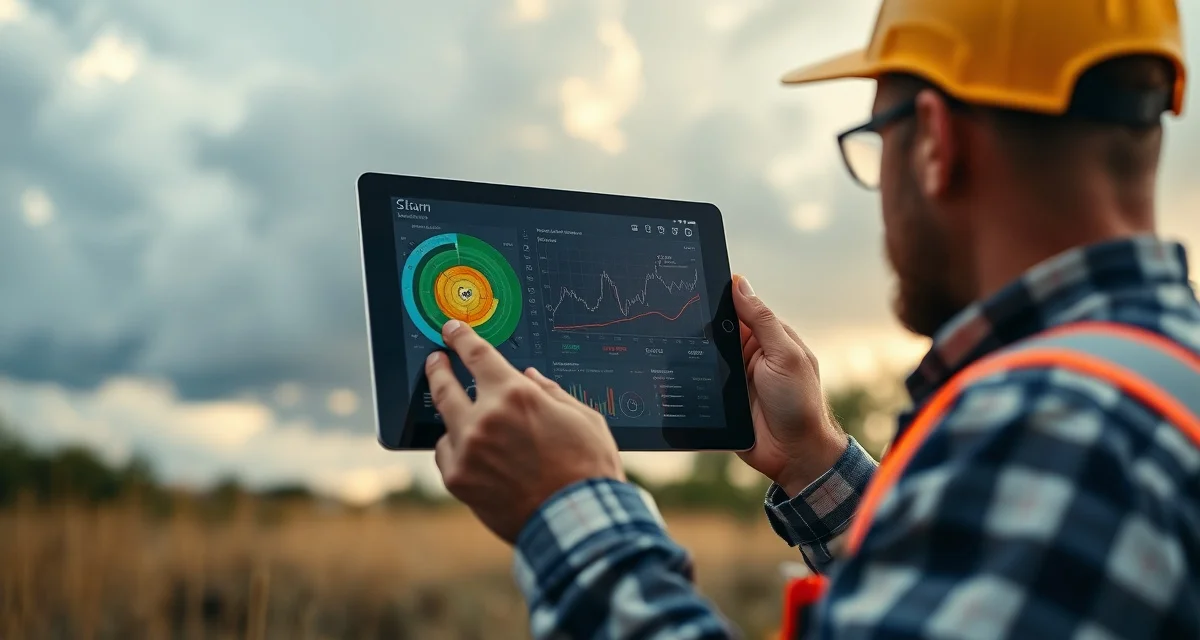
What Is Storm Demand Forecasting for Tree Service Companies?
Tree companies that prepare for storm events 24 hours in advance complete 55% more emergency jobs than those who respond reactively. That's the practical value of storm demand forecasting, and it explains why it's become one of the most sought-after features in tree service software.
But most tree companies have never heard the term. This article explains what storm demand forecasting is, how it works, and what you can do with it.
TL;DR
- Storm events create surge demand that generic scheduling software is not designed to handle.
- Hazard triage -- classifying emergency jobs by risk level before dispatch -- determines which crews go where first.
- NOAA-integrated storm forecasting allows 24-48 hour preparation before a storm makes landfall or passes through.
- Companies with storm-ready dispatch tools consistently capture more revenue during surge events than those relying on manual processes.
- Pre-built storm damage job types with appropriate hazard classifications reduce intake time during high-volume events.
The Simple Explanation
Storm demand forecasting is software that monitors weather data and tells you, 24-72 hours before a notable event, that your phone is about to get busy.
It does this by combining NOAA weather forecasts with historical data about how weather events in your area translate into tree service call volume. A severe thunderstorm watch in your service area has historically generated X percent spike in calls. A tornado warning has historically generated Y percent spike. The system uses that pattern to predict your likely call volume before the event arrives.
The result is a notification that says, in effect: "A storm system is forecast to hit your service area in 36 hours. Based on similar events in the past, you should expect 2-3x your normal call volume for 2-3 days following."
What You Do With That Information
Thirty-six hours before a surge event, you can:
Notify your on-call staff: Call the climbers and ground crew you'd call anyway, but do it before the event instead of at 6 AM during it. The ones who respond early are pre-positioned. The ones who say no have already said no, and you can start finding coverage.
Stage equipment: Move the chipper truck to the side of your service area most likely to be impacted. If the storm is tracking northeast through your coverage area, stage in the northeast quadrant.
Pre-build the emergency dispatch queue: Load the incoming call intake template, set your triage criteria (utility contact first, structure damage second, road-blocking third, cosmetic last), and have the queue structure ready before the first call arrives.
Notify existing customers: If you have scheduled jobs in the impact area, consider reaching out to confirm. Some customers will want to move forward immediately post-storm while access is clear. Others may want to reschedule if the job involves timing-sensitive work.
Set up surge pricing: Emergency tree work commands a 40-80% premium over standard rates. Make sure your intake system is configured to apply emergency pricing from the first call.
How Storm Demand Forecasting Works Technically
No competitor offers storm demand forecasting. Tree companies using Arborgold or Jobber discover surge demand when their phone starts ringing. StumpIQ's storm damage scheduling integrates with NOAA weather data feeds to forecast tree service call spikes 48-72 hours ahead.
The NOAA integration works like this:
- The system monitors National Weather Service watch and warning zones that overlap with your defined service area
- When a storm system is detected, the system cross-references the event type, size, and track with historical call volume data for similar events in similar markets
- It calculates a surge probability score and estimated call volume multiplier
- You receive a notification with the event details, timing, and surge prediction
The forecast improves as the storm gets closer. A 72-hour forecast is directionally useful. A 24-hour forecast, when the storm track is confirmed, is operationally precise.
What Storm Types Trigger Forecasting
StumpIQ's storm forecasting for tree companies monitors multiple event types, each with different surge patterns:
Tornado watches and warnings: The highest-intensity surge events. Tornado activity generates the fastest spike in call volume and the highest percentage of genuinely dangerous jobs. Hazard triage matters most here.
Severe thunderstorm watches and warnings: Derecho events and strong straight-line wind warnings are particularly impactful for tree damage. Mature trees in saturated soil are especially vulnerable.
Tropical storm and hurricane watches: These events generate the longest preparation window, often 5-7 days, and the most predictable surge. The surge timing and intensity track the storm path.
Winter storm warnings: Ice storms generate a specific pattern of limb-loading failures. The call volume often spikes 48-72 hours after the ice event as ice melts and delayed failures occur.
Forecasting vs. Reactive Response: The Math
Here's why preparation time translates to revenue.
On a reactive day (no advance warning), your operation runs like this:
- 7 AM: Normal crew start, normal jobs
- 11 AM: Phones start ringing after last night's storm
- Noon: You're calling off-duty staff, trying to free up today's crews
- 1 PM: You have 2 extra crews available, with 40 calls in the queue
- You complete 8 emergency jobs before dark
On a prepared day (36 hours advance warning):
- Yesterday 4 PM: Storm forecast triggers surge alert
- Yesterday 5 PM: On-call staff notified and confirmed, 3 extra crews pre-positioned
- 7 AM day of: Emergency intake queue running, hazard triage configured
- 9 AM: Crews dispatching storm jobs as calls arrive
- You complete 14 emergency jobs before dark
The 36 hours of advance warning translated to 6 additional completed jobs. At an average emergency job value of $850, that's $5,100 in additional revenue from a single event. That's what storm demand forecasting is worth.
Get Started with StumpIQ
Storm events are peak revenue periods for prepared tree service companies. StumpIQ's storm dispatch tools -- hazard triage, priority queuing, and NOAA weather integration -- give you the infrastructure to handle surge volume efficiently. If storm response is a meaningful part of your market, the right tools make a real difference.
Frequently Asked Questions
What is storm demand forecasting for tree service?
Storm demand forecasting is software that monitors NOAA weather data and predicts when severe weather events are likely to generate a spike in tree service call volume, typically 48-72 hours before the event arrives. It gives tree companies time to pre-position crews, notify on-call staff, and prepare dispatch workflows before the surge begins.
How far in advance can tree service software predict storm demand?
StumpIQ's storm demand forecasting uses NOAA weather feeds to forecast surge demand 48-72 hours before severe weather events. The forecast improves in accuracy as the event approaches, and the system continues updating predictions as storm tracks are confirmed by the National Weather Service.
Does storm forecasting software work for all types of weather events?
StumpIQ's forecasting monitors tornadoes, severe thunderstorms, tropical storm and hurricane systems, and winter storm events. Each event type has different historical call volume patterns, and the forecasting model accounts for these differences. Tornado events generate the fastest spike. Winter ice storms generate a delayed spike 24-48 hours after the event as ice melts.
What is storm surge management for tree service companies?
Storm surge management refers to the tools and processes that allow a tree service company to handle a sudden spike in emergency call volume following a severe weather event. Key capabilities include: priority dispatch based on hazard level, rapid job intake for incoming calls, pre-positioned crew scheduling before the storm, and customer communication at scale during a surge period.
How do tree service companies prepare for a storm before it arrives?
Preparation includes: extending crew availability windows, pre-positioning equipment near the projected impact area, notifying customers on maintenance contracts, setting up an emergency job intake queue, and briefing crews on the hazard classification system they will use during the event. Software with NOAA integration can trigger preparation workflows automatically when a watch or warning is issued.
What is the revenue opportunity from storm work for a tree service company?
Storm response revenue varies significantly by event severity and company capacity. A well-prepared company in a moderate storm area can generate 2-5x normal weekly revenue during a surge event. Companies with better dispatch tools capture more of this opportunity because they can take and route more jobs faster than competitors managing surge manually.
Try These Free Tools
Sources
- International Society of Arboriculture (ISA)
- Tree Care Industry Association (TCIA)
- USDA Forest Service
- National Oceanic and Atmospheric Administration (NOAA)