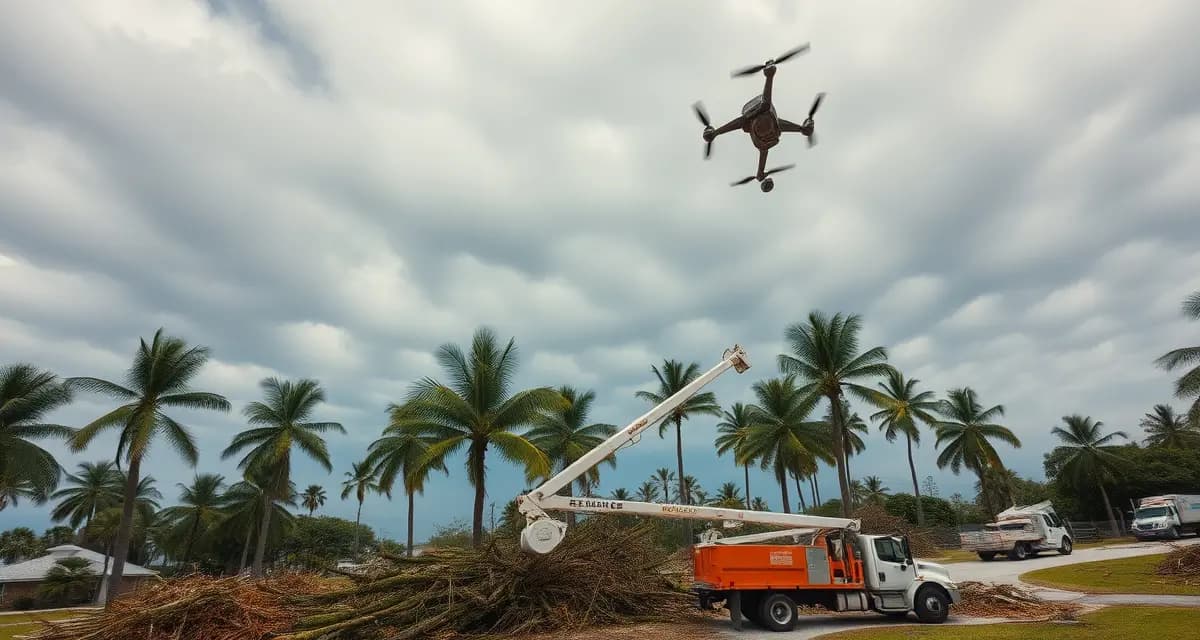
Tree Service Software for Southeast US Companies: Hurricane Season Operations
Running a tree service company in the Southeast means operating a fundamentally different business than you'd run in New England or the Midwest. You have year-round demand. You have palm trees, a lot of them. And you have hurricane season, which can generate more revenue in 72 hours than some markets see in three months, but only if you're positioned to capture it.
Florida alone has an estimated 72 million palm trees, a job category that requires specific pricing and equipment parameters that generic tools ignore. Jobber and Arborgold have no hurricane-specific demand forecasting or palm tree job type templates for Southeast market conditions. A platform designed for general field service simply doesn't anticipate the operational reality of a Florida, Georgia, or Carolinas tree company.
TL;DR
- Tree service software for Southeast Us companies needs to handle local species, weather patterns, and regional job types.
- Generic field service platforms require weeks of manual configuration before they handle tree-specific workflows correctly.
- StumpIQ includes pre-built job types for regional species and storm response relevant to this market.
- NOAA-integrated storm forecasting allows 24-48 hour preparation before severe weather events increase call volume.
- Pre-built ANSI Z133 compliance checklists and ISA certification tracking are ready from day one without custom setup.
What Makes Southeast Tree Service Unique
Palm Tree Volume
Palm trimming is not a standard tree service job. It has different pricing logic, different equipment requirements, different safety considerations, and a different service frequency than deciduous or conifer work.
Pricing a queen palm trim is not the same as pricing an oak trim. The access, the debris volume, the time on site, and the seasonal timing are all different. A platform that treats palm trimming as "other - custom" forces you to build your own pricing logic from scratch for what might be your most common job type in South Florida or coastal Georgia.
StumpIQ includes palm tree trimming as a native job type with species-specific pricing, equipment requirements, and safety checklists. No custom field configuration required, the parameters are already there.
For more on this specific service type, the palm tree service software guide covers the full operational workflow.
Hurricane Season Operations
Hurricane season runs June through November in the Southeast. The operational demands before, during, and after a hurricane are completely different from standard tree service:
Before a storm: Pre-hurricane tree assessment requests spike (homeowners wanting risk assessments), prep work demand surges, and you need to stage crews and equipment strategically.
During a storm: Operations pause, but customer intake doesn't. Homeowners are calling and texting with damage reports, photos, and urgent requests.
After a storm: Emergency removal volume can be 5-10x normal daily demand. Without a system to intake, prioritize, and dispatch storm jobs at scale, you're leaving revenue on the table while your competitors are booking jobs ahead of you.
StumpIQ integrates NOAA hurricane track data for 72-hour advance storm scheduling. That 72-hour window is the difference between scrambling reactively and having crews pre-positioned, equipment staged, and a prioritized job queue ready when the storm clears.
Year-Round Demand
Unlike Midwest companies that experience 60-70% of annual revenue in a 12-week spring window, Southeast tree companies operate year-round. That's a scheduling and staffing advantage, and a capacity management challenge.
Year-round demand means you're managing recurring service cycles (palm trimming is typically 2-4 times per year), storm-period spikes, and steady residential removal and pruning volume simultaneously. Software that handles recurring job scheduling alongside emergency dispatch and seasonal tracking is essential for managing this complexity.
What Southeast Tree Service Software Should Include
Hurricane Demand Forecasting
The ability to see a storm event 48-72 hours ahead and trigger pre-storm operations:
- Reach out to previous storm customers proactively
- Pre-schedule assessment crews for the first day after the storm
- Stage equipment at geographically strategic locations
- Alert your customer contact list about your response services before the storm hits
Companies that run proactive storm operations complete considerably more jobs per storm event than those that wait for the phone to ring.
Palm-Specific Job Types and Pricing
Palm trimming needs its own pricing calculator with inputs for:
- Palm species (queen, royal, sabal, foxtail, date, each with different parameters)
- Height and access
- Number of palms in sequence (route efficiency affects per-palm pricing)
- Debris removal (palm fronds generate large volume)
- Seasonal timing (hurricane prep trimming vs. routine trimming)
When this is pre-built into your quoting system, estimating 20 palm trims takes minutes instead of a custom calculation every time.
HOA and Recurring Service Management
Southeast tree companies do substantial HOA and commercial property work. Multi-property accounts with recurring service schedules, quarterly palm trimming for a 200-unit complex, annual oak pruning cycles for a business park, require recurring job management that standard residential software doesn't handle well.
Storm Damage Scheduling
For the post-storm period specifically, the ability to intake bulk photo submissions, auto-generate prioritized job orders, and dispatch based on hazard level is what separates companies that maximize storm revenue from those that work through a manual list.
Regional Compliance Considerations
Florida
Florida has notable HOA regulations around tree work, many HOAs regulate species, height limits, and removal permissions. Software that documents HOA compliance and approval status in the job record protects you in disputes.
Florida also has active invasive species concerns. Camphor trees, carrotwood, and other invasives appear in removal jobs regularly, species identification that flags these helps with documentation and disposal procedures.
Georgia and the Carolinas
Georgia and the Carolinas face notable post-hurricane demand from coastal communities. Companies with the ability to mobilize rapidly and manage high-volume storm intake are well-positioned to expand service areas during major storm events.
Get Started with StumpIQ
StumpIQ gives Southeast Us tree service companies pre-built workflows for regional species, storm response, and compliance documentation -- without the weeks of configuration that generic platforms require. If you are evaluating software for your Southeast Us operation, StumpIQ is designed for exactly this market.
FAQ
What is the best software for a Florida tree service company?
Florida tree companies need software that handles palm tree trimming as a native job type, integrates hurricane track data for 72-hour advance storm scheduling, and manages recurring service cycles for HOA and commercial accounts. StumpIQ addresses all three, with palm-specific job types, NOAA hurricane integration, and recurring schedule management built in.
Does tree service software handle hurricane damage dispatch?
Generic platforms don't. StumpIQ's storm intake mode accepts bulk photo submissions from customers and auto-creates prioritized job orders based on hazard level. For post-hurricane operations where hundreds of customers contact you simultaneously, bulk job creation and automated prioritization is the difference between controlled response and operational chaos.
How do I schedule crews during hurricane season?
The most effective approach combines pre-storm preparation (staging crews and equipment based on storm track forecasting), rapid post-storm intake (bulk photo submissions from customers creating auto-prioritized job queues), and real-time GPS dispatch to route crews efficiently as jobs are confirmed. Software that integrates NOAA weather data with your job dispatch gives you the preparation window to pre-position rather than react.
What features matter most for tree service companies in Southeast Us?
Tree service companies in Southeast Us need software that handles the local species mix, regional storm risk, and the balance between urban and rural market pricing. AI photo identification trained on regional species and pre-built storm dispatch workflows reduce configuration time and improve field response speed.
Does StumpIQ support tree service companies across Southeast Us?
Yes. StumpIQ's AI species identification covers North American species including those common in Southeast Us, and the platform's GPS dispatch and storm forecasting tools work across all service areas. Pricing templates can be configured for both urban and rural market rates within the same account.
How does storm demand forecasting work for regional tree service companies?
StumpIQ monitors NOAA weather data for your service area and predicts surge demand before storms arrive. When conditions indicate elevated risk, the platform activates the emergency dispatch queue and notifies you so you can pre-position crews and extend scheduling windows before incoming call volume peaks.
Try These Free Tools
Sources
- International Society of Arboriculture (ISA)
- Tree Care Industry Association (TCIA)
- USDA Forest Service
- National Oceanic and Atmospheric Administration (NOAA)