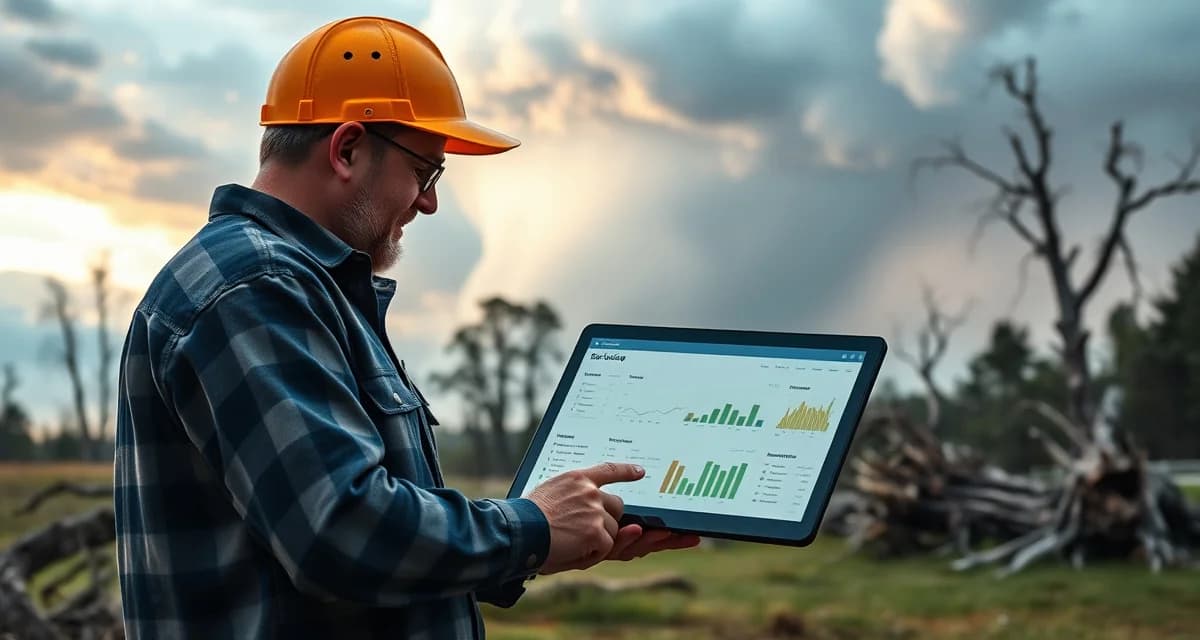
Tree Service Software for Indiana Companies: Severe Weather Season Operations
Indiana averages 22 tornadoes per year, and each one that touches down in a populated area generates between $850,000 and $1.4 million in tree service cleanup demand across the affected region. That's enormous opportunity, but only for companies with the systems to capture it.
The tree companies that come out ahead after an Indiana tornado aren't necessarily the best climbers. They're the ones who can triage 80 inbound calls in the first three hours, dispatch based on hazard level, and keep their crews moving efficiently through a chaotic day.
Without surge-capable software, you're managing that on paper. And paper can't scale to a tornado.
TL;DR
- Tree service software for Indiana companies needs to handle local species, weather patterns, and regional job types.
- Generic field service platforms require weeks of manual configuration before they handle tree-specific workflows correctly.
- StumpIQ includes pre-built job types for regional species and storm response relevant to this market.
- NOAA-integrated storm forecasting allows 24-48 hour preparation before severe weather events increase call volume.
- Pre-built ANSI Z133 compliance checklists and ISA certification tracking are ready from day one without custom setup.
What Indiana's Weather Profile Demands
Indiana's severe weather isn't just spring tornadoes. Late-season ice storms in March and April, derecho events in summer, and late-fall wind events mean your surge capacity needs to work year-round.
Crew Control, a popular scheduler in the Midwest, has no tornado-specific surge forecasting. Indiana tree companies using it react to weather events after the calls arrive, not before. That's a 4-6 hour disadvantage compared to companies that knew the storm was coming and pre-positioned accordingly.
Pre-positioning for a tornado outbreak doesn't mean moving crews into the storm's path. It means notifying your on-call staff the night before, staging the chipper truck in the most likely impact zone, and building your emergency dispatch queue before the event hits.
What Indiana Companies Need From Software
NOAA-integrated storm forecasting: Tornado watch zones and severe weather probability data that your software translates into surge demand predictions for your service area.
Hazard-level job triage: When 60 calls come in after an event, your dispatcher needs to sort by danger, not by call order. Utility contact, structure penetration, and road-blocking trees need to move to the top automatically.
Crew pre-positioning tools: On-call scheduling tied to weather triggers, so you know which crews are available and how to reach them when a storm watch is issued.
Rural access pricing: Indiana's mixed urban and rural service areas mean access difficulty varies widely. Software that accounts for rural access, farm equipment access, and gravel road limitations keeps your pricing accurate.
How StumpIQ Serves Indiana Markets
StumpIQ's storm damage tree service scheduling integrates with NOAA tornado watch zone data to predict surge demand in Indiana markets. When a tornado watch is issued in your service area, the platform calculates the likely call volume based on population density and storm track, giving you 12-48 hours of advance warning.
StumpIQ's crew dispatch tools include hazard-level priority sorting that automatically surfaces the most dangerous incoming jobs. Your dispatcher sees utility-contact jobs at the top, cosmetic cleanup at the bottom, and can assign experienced crews to the high-hazard work in a single click.
The access-difficulty pricing module handles Indiana's rural service areas with multipliers for rural access, farm property, and equipment access limitations.
Get Started with StumpIQ
StumpIQ gives Indiana tree service companies pre-built workflows for regional species, storm response, and compliance documentation -- without the weeks of configuration that generic platforms require. If you are evaluating software for your Indiana operation, StumpIQ is designed for exactly this market.
Frequently Asked Questions
What is the best software for an Indiana tree service company?
StumpIQ's storm forecasting and priority dispatch tools are built for Indiana's tornado and severe weather season, giving companies advance warning and hazard-based triage tools that generic platforms can't provide. Most alternatives require manual preparation and reactive dispatch during surge events.
How do I prepare for tornado season as a tree company?
Software with NOAA integration forecasts surge demand 24-48 hours before a severe weather event. StumpIQ lets you pre-build your on-call crew list, stage equipment, and populate the emergency dispatch queue before the calls arrive, so you're already moving when the storm clears.
Does tree service software have Indiana-specific storm forecasting?
StumpIQ integrates with NOAA tornado watch zone data to forecast surge demand in Indiana markets specifically, accounting for your service area geography and population density. The platform alerts you when a weather event in your area is likely to generate notable call volume.
What features matter most for tree service companies in Indiana?
Tree service companies in Indiana need software that handles the local species mix, regional storm risk, and the balance between urban and rural market pricing. AI photo identification trained on regional species and pre-built storm dispatch workflows reduce configuration time and improve field response speed.
Does StumpIQ support tree service companies across Indiana?
Yes. StumpIQ's AI species identification covers North American species including those common in Indiana, and the platform's GPS dispatch and storm forecasting tools work across all service areas. Pricing templates can be configured for both urban and rural market rates within the same account.
How does storm demand forecasting work for regional tree service companies?
StumpIQ monitors NOAA weather data for your service area and predicts surge demand before storms arrive. When conditions indicate elevated risk, the platform activates the emergency dispatch queue and notifies you so you can pre-position crews and extend scheduling windows before incoming call volume peaks.
Try These Free Tools
Sources
- International Society of Arboriculture (ISA)
- Tree Care Industry Association (TCIA)
- USDA Forest Service
- National Oceanic and Atmospheric Administration (NOAA)