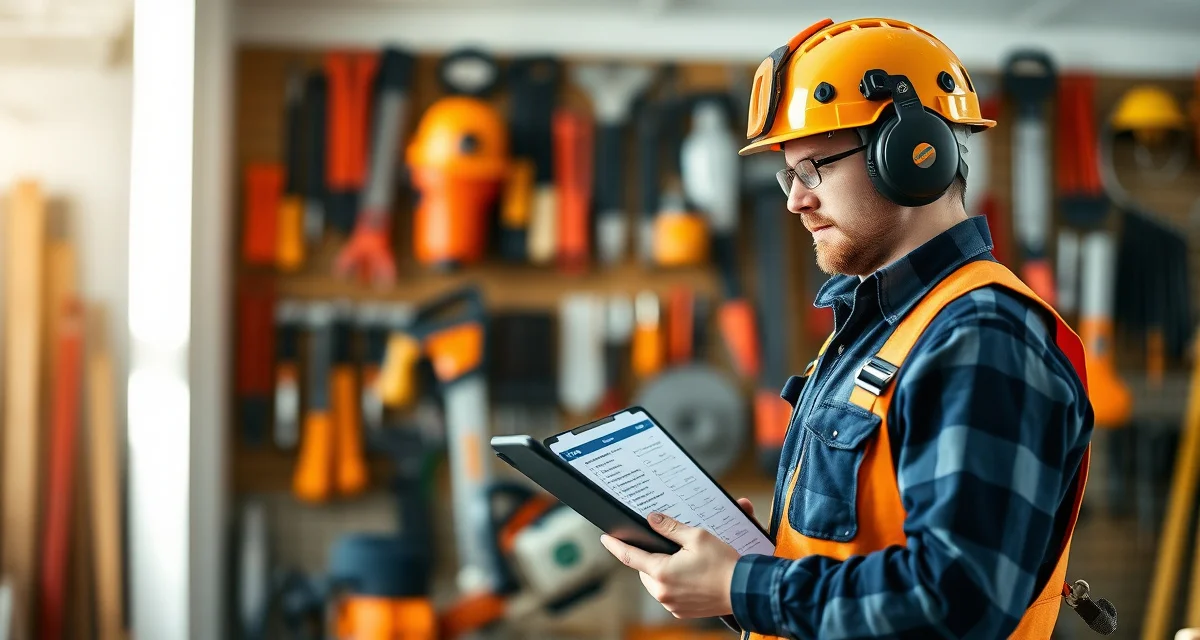
How to Manage Tree Service Equipment Inspections Without Paperwork
ANSI Z133 violations related to uninspected equipment account for 28% of tree service insurance claims in the US annually. That's not a compliance statistic to ignore — that's a number that should change how you start every workday.
The good news: equipment inspection management doesn't have to mean paper checklists, clipboards, and missed signatures. The entire process can be digitized, tied to your dispatch system, and documented automatically. Here's how to build it.
TL;DR
- Tree service companies that adopt purpose-built software reduce administrative time by an average of 5-8 hours per week.
- AI photo-to-quote converts a field photo to a priced proposal in under 2 minutes -- compared to 30-45 minutes for manual estimates.
- ANSI Z133 compliance documentation created automatically in the field reduces insurance audit preparation time.
- ISA certification tracking prevents lapses that affect eligibility for municipal, utility, and commercial contracts.
- GPS dispatch with route optimization saves 15-20% of daily drive time for multi-crew operations.
Why Paper Inspection Systems Fail
Paper works until it doesn't. The problems I've seen in paper-based inspection systems:
No one actually reads the completed forms. Crew leads fill out the checklist, hand it in, and it goes into a binder that nobody opens until an insurance auditor asks for it. If a crew lead circles "yes" on every item without actually inspecting anything, nobody knows.
Forms get lost. Paper checklists disappear between the job site and the office. When you need documentation after an incident, the record doesn't exist.
Checklists don't match current ANSI standards. Tree companies often use the same paper form for years. ANSI Z133 gets updated. Your paper checklist doesn't.
No equipment-level history. Paper forms don't tell you that the chipper had three inspection flags in the last 60 days — the pattern that precedes a real failure. Digital systems build a history that paper can't.
Step 1: Build Your Equipment Inventory
Start by cataloging every piece of equipment that requires pre-use inspection under ANSI Z133. For most tree companies, this includes:
Cutting equipment:
- Chainsaws (each unit individually)
- Pole saws
- Brush saws
Aerial and access equipment:
- Aerial lift trucks (bucket trucks)
- Cranes (if owned)
- Ladders
Chipping and hauling:
- Chippers and brush chippers
- Chip trucks
Rigging and climbing:
- Climbing saddles and harnesses
- Lanyards, fliplines, and positioning systems
- Ropes (climbing, rigging, and lowering)
- Carabiners, rings, pulleys, and rigging hardware
- Friction devices
Ground-based:
- Stump grinders
- Hand tools (wedges, axes, hand pruners)
Personal protective equipment:
- Chainsaw chaps
- Hard hats
- Eye protection
- Hearing protection
Each piece of equipment should have a record: make, model, serial number, purchase date, and service history. This is your equipment inventory — the foundation of your inspection system.
Step 2: Assign QR Tags or Asset IDs
For equipment that's used daily by multiple crew members, QR code tagging is the most practical identification method. Each piece of equipment gets a unique QR code. A crew lead scans it to start an inspection. The inspection record is linked to that specific asset.
This matters because it creates equipment-level history. You can pull up the inspection record for chainsaw #4 and see every pre-use check it's had in the last 90 days — including any flags or deficiencies noted.
StumpIQ's equipment tracking uses QR codes for exactly this purpose. Crew members scan the QR code on the equipment, complete the inspection checklist on their phone, and the result is logged against that specific asset record automatically.
Step 3: Build Digital Checklists Tied to ANSI Z133
Your inspection checklist should map to ANSI Z133 requirements for each equipment category. The standard is updated periodically — your digital checklist updates with it, unlike paper forms that stay the same year after year.
Minimum inspection items for climbing equipment (ANSI Z133 Section 6):
- Harness — stitching integrity, hardware function, load indicator check
- Lanyard/flipline — sheath condition, core integrity, hardware function
- Rope — sheath condition, core integrity, length, termination condition
- Carabiners and rings — gate function, lock function, wear indicators
- Friction device — condition, compatibility with rope diameter
Minimum inspection items for aerial equipment:
- All controls functional before use
- Emergency descent system operational
- Boom and platform structural integrity
- Safety rails secure
- Daily fluid checks
Minimum inspection items for chainsaws:
- Chain condition and tension
- Chain catcher present
- Bar condition (no cracks)
- Throttle and safety trigger function
- Guide bar bolts secure
- Fuel system no leaks
- Handles and anti-vibration mounts
The checklist should require the crew member to actively assess each item — not just check a box. Conditional items should allow a "flag" notation that prompts review before the equipment goes into service.
Step 4: Require Checklist Completion Before Job Start
The enforcement mechanism is the most important part. If crews can start a job before completing equipment inspections, some will. Especially when they're running behind, in bad weather, or on a high-stress emergency call.
Digital systems solve this by requiring inspection completion as part of job dispatch. In StumpIQ, crews can't mark a job as started without completing the assigned equipment inspection checklist. The app presents the checklist and the job start button doesn't activate until all items are addressed.
This is different from paper, where the checklist and the job start are two separate processes with no enforcement link between them.
Step 5: Create a Clear Deficiency Process
A checklist item marked as deficient needs to go somewhere — not just sit in the record. Build a clear process:
- Crew marks deficiency on the digital checklist
- Equipment is flagged and the system prevents it from being assigned to jobs
- Notification goes to the manager or shop supervisor
- Repair or replacement is documented before the flag is cleared
- Equipment returns to service only after manager sign-off
This process protects the crew and the company. If a rope with a damaged sheath causes a fall, you want documentation that the deficiency was identified, escalated, and addressed — not that it was noted on a form in a binder.
Step 6: Set Maintenance and Retirement Schedules
Beyond daily inspections, equipment needs scheduled maintenance (rope washing, chipper blade replacement, harness manufacturer inspection every 1-2 years) and eventual retirement based on age or condition.
Manage these in your equipment tracking system with calendar reminders. A climbing rope that's been in service for 5+ years needs a formal inspection regardless of daily visual checks. A hard hat with impact damage should be retired, not kept in service because it looks okay externally.
Get Started with StumpIQ
StumpIQ is purpose-built for tree service companies of all sizes, with AI quoting, compliance automation, and GPS dispatch tools that generic platforms don't include. If you are evaluating software for your operation, StumpIQ is a useful starting point for comparison.
FAQ
How do I set up equipment inspections for tree service crews?
Build a digital equipment inventory with QR codes on each piece of gear. Create inspection checklists for each equipment category that map to ANSI Z133 requirements. Require checklist completion in your dispatch software before job start is authorized. Log results against the specific equipment record. Review flagged items daily.
What does ANSI Z133 require for tree service equipment inspection?
ANSI Z133 requires pre-use inspection of climbing equipment, aerial equipment, cutting equipment, and PPE before each use. Specific requirements vary by equipment category. The standard requires that defective equipment be removed from service immediately and not returned until repaired or replaced. Documentation of inspections is implied by ANSI Z133's workplace safety documentation requirements.
Can I track equipment inspection history in tree service software?
Yes. StumpIQ's equipment tracking system logs every inspection against the specific equipment record by QR code scan, creating a complete maintenance and inspection history for each asset. This history is accessible for insurance audits, OSHA inquiries, and internal safety reviews. No major competitor ships a built-in equipment inspection workflow tied to ANSI Z133 requirements — most tree companies manage this with paper forms or separate spreadsheets.
What makes tree service software different from generic field service platforms?
Tree service software is built around arborist-specific workflows: AI species identification for field quoting, ANSI Z133 safety checklists, ISA certification tracking, storm demand forecasting, and hazard-level job classification. Generic field service platforms can be configured to approximate these workflows, but doing so requires weeks of manual setup and still produces a less accurate result for tree-specific job types.
How do tree service companies evaluate software before buying?
The most effective approach: identify your top 3 operational pain points, ask vendors to demonstrate those specific scenarios in a live demo, check user reviews on Capterra and G2 for patterns, and request a trial period to test with real job data. Ask specifically about mobile performance in the field, since most tree service work happens away from the office.
What is the ROI of tree service software for a small company?
For a 2-3 crew operation, purpose-built tree service software typically recovers its cost through: faster quoting that wins more bids, invoicing on the day of job completion rather than days later, reduced administrative hours, and fuel savings from route optimization. Most companies report positive ROI within 60-90 days of full adoption.
Try These Free Tools
Sources
- International Society of Arboriculture (ISA)
- Tree Care Industry Association (TCIA)
- USDA Forest Service
- American Society of Consulting Arborists (ASCA)