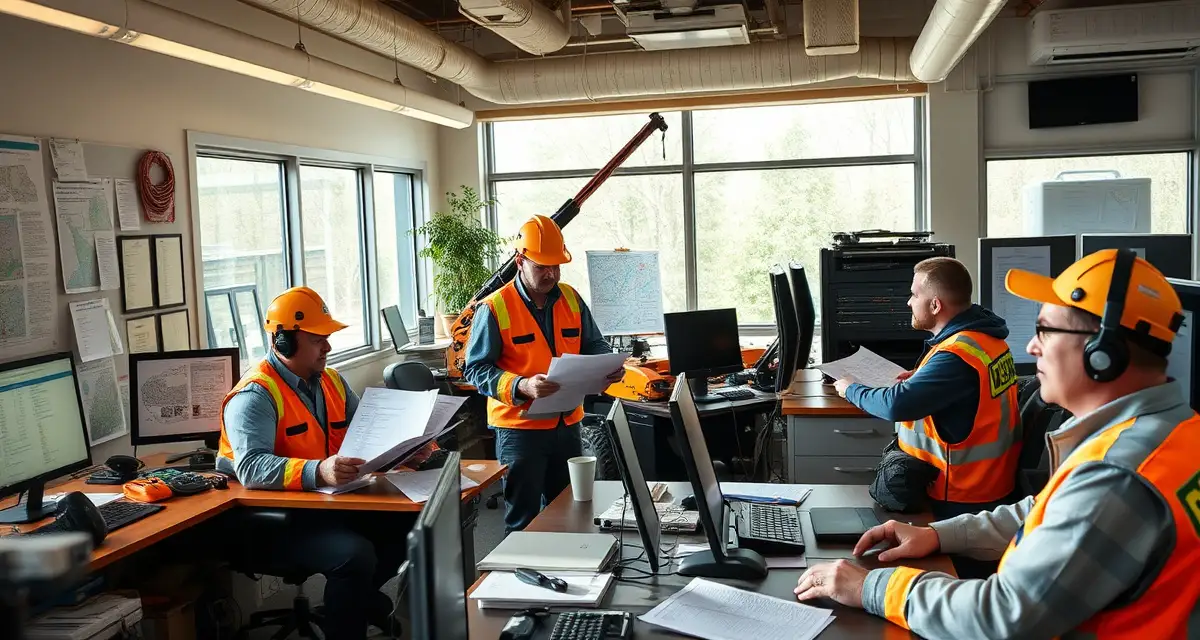
How to Build a Storm Response Plan for Your Tree Service Company
I've been through enough storm seasons to know the difference between companies that have a plan and companies that wing it. The ones without a plan are drowning in calls they can't handle, dispatching crews to jobs they've double-booked, and leaving profitable emergency work on the table because they have no system for triaging it.
Tree companies with a pre-built storm response plan generate 2.3x more revenue per storm event than those without one. That's not because they work harder. It's because they set up the infrastructure before the storm arrives — when there's time to think clearly instead of react.
Here's the plan.
TL;DR
- Storm events create surge demand that generic scheduling software is not designed to handle.
- Hazard triage -- classifying emergency jobs by risk level before dispatch -- determines which crews go where first.
- NOAA-integrated storm forecasting allows 24-48 hour preparation before a storm makes landfall or passes through.
- Companies with storm-ready dispatch tools consistently capture more revenue during surge events than those relying on manual processes.
- Pre-built storm damage job types with appropriate hazard classifications reduce intake time during high-volume events.
Step 1: Build Your Storm Crew Roster Before Season Starts
Storm surge requires more crew capacity than your regular operation. The question isn't "who can I call when the storm hits" — by then everyone else is already calling them too.
Identify your reserve roster before storm season:
- Regular crew members willing to work extended hours during surge events (overtime agreements in place beforehand, not negotiated in the moment)
- Former employees or contractors who know your operation and can step in quickly
- Local climbers or crew leads from outside your area who do storm work seasonally
- Day labor contacts for debris cleanup and chip truck operation (lower-skill tasks that free your experienced crew for technical work)
Have contact information for each person in your storm roster, know what they can do (climbing vs. ground only vs. equipment operation), and have rates pre-agreed. During a storm surge, spending time negotiating pay is time you're not dispatching jobs.
Step 2: Pre-Position Equipment
Storm events create localized demand. The neighborhoods closest to the storm path will generate the most calls. If your crane and chip trucks are parked on the other side of town when the surge starts, you're losing an hour of productivity just getting equipment to the work zone.
Pre-positioning protocol:
- Identify the storm track from your 48-hour forecast
- Move your highest-capacity equipment (crane, primary chip truck) to a staging area in the projected impact zone 12-24 hours before the storm
- Fuel all equipment before the storm. Gas stations will be sold out or have lines post-storm
- Stock extra chains, PPE, and first aid supplies in each truck
StumpIQ's storm forecasting integrates NOAA weather feeds to predict tree service call volume 48-72 hours before a storm event. That lead time is enough to make these moves deliberate instead of reactive.
Step 3: Set Your Emergency Pricing in Advance
Emergency tree work commands a 40-80% price premium over standard rates. But that premium only holds if it's built into your system before the storm — not negotiated individually during the surge when you're fielding 40 calls an hour.
Build your emergency rate schedule:
- Emergency callout surcharge (same-day response, non-business hours): +50-80% over standard
- Storm damage hazard premium (tree on structure, immediate threat): additional flat fee, $200-500 depending on risk level
- Emergency crane deployment: set rate that covers the mobilization cost
- After-hours crew overtime rate: predetermined, so crew leads know what they're earning
When every estimator is using the same rate schedule, you're not leaving money on the table or having individual crew leads underquote because they felt sorry for the customer in the storm.
Step 4: Build a Triage Protocol for Incoming Calls
During a major storm event, you'll receive calls that fall into these categories:
Priority 1 — Immediate hazard, life safety risk:
Tree on structure with occupants, tree blocking emergency vehicle access, tree on power lines with active contact. These get dispatched first, regardless of where they fall in the queue.
Priority 2 — Property damage, high value:
Tree through roof, tree on vehicle, significant structural damage. These are your premium jobs — quote them first, dispatch as soon as Priority 1 is cleared.
Priority 3 — Significant debris, no immediate hazard:
Large branch down blocking driveway, tree down in backyard not touching structure. Good volume work, queue in order of geographic clustering.
Priority 4 — Routine removal and cleanup:
Small debris, cleanup requests, jobs that could be handled next week. Add to the standard queue, not the storm queue.
Your intake staff (or AI-assisted intake system) needs to classify every call into one of these categories before dispatching. Without this classification, dispatchers default to first-come-first-served, which puts low-priority cleanup ahead of a tree through someone's roof.
Step 5: Set Up Geographic Dispatch Clusters
During storm surge, dispatch efficiency comes from geographic clustering — grouping jobs by neighborhood so a crew isn't driving 20 minutes between stops.
Before storm season:
- Map your service area into zones (north, south, east, west, or by township/neighborhood)
- Assign crew primary zones based on their home location (closer commute = faster to first job)
- Build storm-specific dispatch rules: Priority 1 overrides zones, Priority 2 goes to the nearest available crew in-zone, Priority 3 groups by cluster
When the storm hits, you're assigning crews to zones and dispatching within those zones — not routing randomly across your whole service area.
Step 6: Manage Customer Communication at Scale
During a storm surge, customers want to know their job is in the queue. You can't call each one individually. You need automated communication:
- Immediate confirmation text when they submit (or you enter) the job
- Position-in-queue update when you classify and prioritize it
- Day-before confirmation with estimated arrival window
- On-my-way text when the crew leaves the previous job
This communication eliminates the "just checking status" calls that will otherwise clog your phone lines during surge. Customers who know where they are in the queue call back less.
Step 7: Debrief After Every Storm Season
Within two weeks of each major storm event:
- How many jobs did you take in? How many did you complete? What's the gap?
- Where did dispatch break down?
- Which crews were most efficient during surge?
- What equipment did you wish you had pre-positioned differently?
- What did the most profitable jobs have in common?
This debrief is the input to next year's plan. Storm seasons are predictable by region. If you're in Florida, the Carolinas, the Gulf Coast, or the Midwest tornado belt, you know roughly when surge demand will happen. Use the data from each event to build a better plan for the next one.
Get Started with StumpIQ
Storm events are peak revenue periods for prepared tree service companies. StumpIQ's storm dispatch tools -- hazard triage, priority queuing, and NOAA weather integration -- give you the infrastructure to handle surge volume efficiently. If storm response is a meaningful part of your market, the right tools make a real difference.
FAQ
How do I prepare my tree company for storm season?
Build your plan before the season starts: assemble your reserve crew roster, pre-negotiate overtime rates, set your emergency pricing schedule, build your call triage protocol, and configure your geographic dispatch zones. Use storm demand forecasting software (StumpIQ integrates NOAA data) to get 48-hour advance notice of incoming weather events so you can pre-position crews and equipment.
What should a tree service storm response plan include?
A complete storm response plan includes: reserve crew roster with pre-agreed rates, equipment pre-positioning protocol tied to storm track forecasts, emergency pricing schedule (built into your quoting system before the storm), job triage classification (Priority 1-4), geographic dispatch zones, and customer communication templates for surge volume. Most importantly, it should be written down and accessible to everyone involved in storm operations — not just in the owner's head.
How do I hire temporary crews for storm season?
Start recruiting before storm season, not during it. Contact former employees, reach out to local climbing contractors, connect with labor-focused tree companies in your region who do storm work. Have agreements in place — rates, scope of work, minimum hour commitments — before you need them. When a storm hits and you need three extra crew leads by tomorrow morning, the ones who already know your operation and have signed agreements come before anyone else.
What is storm surge management for tree service companies?
Storm surge management refers to the tools and processes that allow a tree service company to handle a sudden spike in emergency call volume following a severe weather event. Key capabilities include: priority dispatch based on hazard level, rapid job intake for incoming calls, pre-positioned crew scheduling before the storm, and customer communication at scale during a surge period.
How do tree service companies prepare for a storm before it arrives?
Preparation includes: extending crew availability windows, pre-positioning equipment near the projected impact area, notifying customers on maintenance contracts, setting up an emergency job intake queue, and briefing crews on the hazard classification system they will use during the event. Software with NOAA integration can trigger preparation workflows automatically when a watch or warning is issued.
What is the revenue opportunity from storm work for a tree service company?
Storm response revenue varies significantly by event severity and company capacity. A well-prepared company in a moderate storm area can generate 2-5x normal weekly revenue during a surge event. Companies with better dispatch tools capture more of this opportunity because they can take and route more jobs faster than competitors managing surge manually.
Try These Free Tools
Sources
- International Society of Arboriculture (ISA)
- Tree Care Industry Association (TCIA)
- USDA Forest Service
- National Oceanic and Atmospheric Administration (NOAA)