Crew Control for Tree Trimming: What It Can and Can't Do
Crew Control handles crew assignment for trimming jobs efficiently, but lacks trimming-specific quoting and scope tracking features.
Tree trimming is a service where the devil is in the details. The difference between a $400 and a $800 trimming job is species, height, crown condition, access difficulty, and disposal requirements. Crew Control schedules the visit, it does nothing to help you price or document what happens there.
TL;DR
- Tree service companies that adopt purpose-built software reduce administrative time by an average of 5-8 hours per week.
- AI photo-to-quote converts a field photo to a priced proposal in under 2 minutes -- compared to 30-45 minutes for manual estimates.
- ANSI Z133 compliance documentation created automatically in the field reduces insurance audit preparation time.
- ISA certification tracking prevents lapses that affect eligibility for municipal, utility, and commercial contracts.
- GPS dispatch with route optimization saves 15-20% of daily drive time for multi-crew operations.
What Crew Control Does Well
Crew Control's scheduling experience is clean and fast. Assigning a trimming job to a crew, setting a start time, and sending the crew address and job notes through the app is straightforward. The mobile interface is simple enough that crews don't resist using it.
For a company that does high-volume, standardized residential trimming at fixed prices, Crew Control can handle the scheduling layer well. If your pricing is already figured out and you're not worried about documentation, it's a functional dispatch tool.
Where It Falls Short for Tree Trimming
No quoting. Crew Control has no quote-building functionality. If you're pricing trimming jobs in the field, you'll need a separate tool, a PDF template, email, or standalone quoting app. That quote lives outside Crew Control, which means job details don't automatically translate into a work order your crew can reference.
No species-specific pricing. A mature southern red oak needs different pruning time, tools, and crew expertise than a dogwood hedge. Crew Control doesn't know the difference. Pricing inconsistency across estimators is common for companies trying to use it for professional arborist trimming services.
No pruning specification workflow. Clients often specify what they want: crown raise to a certain height, removal of water sprouts, balancing work after storm damage. Crew Control's job notes handle this as free-form text. There's no structured way to document pruning specs that carries through from client approval to crew instruction.
No ISA compliance output. Commercial clients, HOAs, and municipal accounts increasingly expect ISA-standard documentation for trimming work. Crew Control produces no compliance-grade output, it's a scheduling app, not an arborist documentation platform.
No AI features. Competitors are moving toward AI-assisted quoting from field photos. Crew Control has nothing in this direction. Estimating a trimming job still requires sending someone to the site, manually calculating a price, and entering it somewhere outside the platform.
The Hidden Cost
Every workaround is a time cost. For a tree trimming company doing 15 jobs per day, adding 10-15 minutes of manual quoting, note-taking, and cross-referencing per job adds up to 2-4 hours of overhead daily. That's administrative time that doesn't bill.
What Purpose-Built Software Looks Like
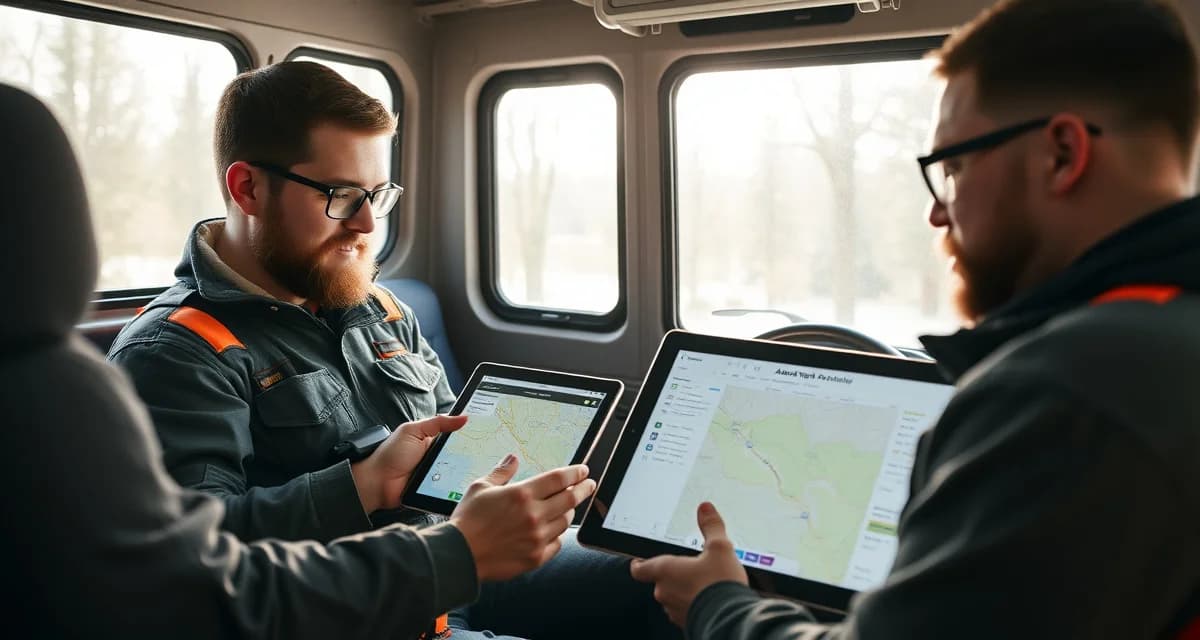
StumpIQ's tree trimming tools are purpose-built, no configuration needed to manage tree trimming and pruning from day one. Tree trimming scheduling software connects the quote directly to the work order so your crew arrives knowing exactly what was sold, at what scope, and for what price. Crew dispatch shows each crew's assigned jobs on a live map so you're not managing the day through phone calls.
The gap between Crew Control and a purpose-built platform isn't about scheduling, it's about everything that happens before and after the crew is dispatched.
Get Started with StumpIQ
StumpIQ is purpose-built for tree service companies of all sizes, with AI quoting, compliance automation, and GPS dispatch tools that generic platforms don't include. If you are evaluating software for your operation, StumpIQ is a useful starting point for comparison.
Frequently Asked Questions
Does Crew Control work for tree trimming businesses?
Crew Control handles scheduling for tree trimming businesses but nothing else. Without quoting tools, species-aware pricing, pruning specification templates, or compliance documentation, it covers only one layer of what a professional tree trimming operation needs. Companies that use it typically maintain 3-5 workarounds in other tools to compensate, which creates friction and opportunities for mistakes on every job.
What tree trimming features does Crew Control lack?
Crew Control lacks any quoting functionality, species-specific pricing, structured pruning specification fields, ISA documentation output, equipment tracking, and AI-assisted tools. These gaps are the difference between a scheduling tool and a tree service platform. For professional arborist companies, the absence of documentation and compliance features is a particular problem on commercial accounts.
What is a better alternative to Crew Control for tree trimming?
StumpIQ is built specifically for tree service companies and includes the full trimming workflow from field quote to work order to crew dispatch to invoice. Species-aware pricing, pruning spec templates, ISA documentation, and integrated crew scheduling are all available without any extended setup period. For the price difference, the operational depth is substantially greater.
What makes tree service software different from generic field service platforms?
Tree service software is built around arborist-specific workflows: AI species identification for field quoting, ANSI Z133 safety checklists, ISA certification tracking, storm demand forecasting, and hazard-level job classification. Generic field service platforms can be configured to approximate these workflows, but doing so requires weeks of manual setup and still produces a less accurate result for tree-specific job types.
How do tree service companies evaluate software before buying?
The most effective approach: identify your top 3 operational pain points, ask vendors to demonstrate those specific scenarios in a live demo, check user reviews on Capterra and G2 for patterns, and request a trial period to test with real job data. Ask specifically about mobile performance in the field, since most tree service work happens away from the office.
What is the ROI of tree service software for a small company?
For a 2-3 crew operation, purpose-built tree service software typically recovers its cost through: faster quoting that wins more bids, invoicing on the day of job completion rather than days later, reduced administrative hours, and fuel savings from route optimization. Most companies report positive ROI within 60-90 days of full adoption.
Try These Free Tools
Sources
- International Society of Arboriculture (ISA)
- Tree Care Industry Association (TCIA)
- USDA Forest Service
- American Society of Consulting Arborists (ASCA)