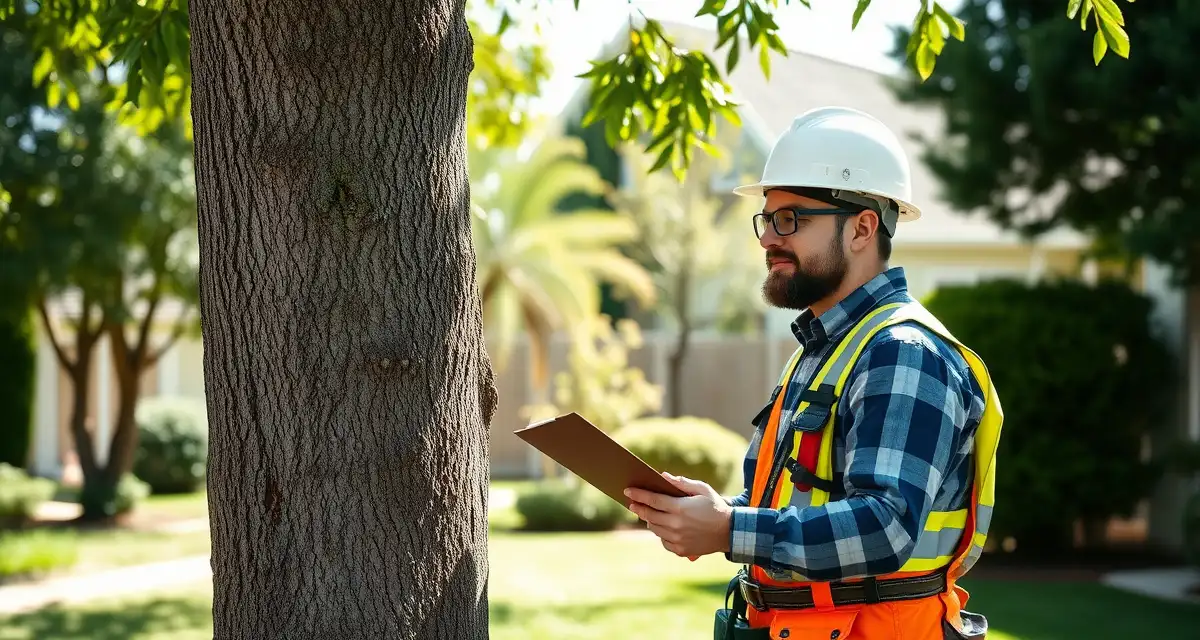
Crew Control for Tree Health Assessment: What It Can and Can't Do
Tree health assessment is one of the most technically demanding services an arborist offers, and one of the most valuable when it's documented and delivered professionally. Crew Control at $139/mo with no quoting, no GPS depth, and no AI features is a scheduling tool. It can get a certified arborist to a client's property; it can't support what happens when the arborist gets there. Crew Control tracks crew hours and job completion, not the diagnostic details that tree health assessments require.
A professional health assessment produces a written report, documents per-tree observations, and generates service recommendations. None of that can happen inside Crew Control. The entire substance of the work has to be done externally, then somehow connected back to the job record manually.
TL;DR
- Tree service companies that adopt purpose-built software reduce administrative time by an average of 5-8 hours per week.
- AI photo-to-quote converts a field photo to a priced proposal in under 2 minutes -- compared to 30-45 minutes for manual estimates.
- ANSI Z133 compliance documentation created automatically in the field reduces insurance audit preparation time.
- ISA certification tracking prevents lapses that affect eligibility for municipal, utility, and commercial contracts.
- GPS dispatch with route optimization saves 15-20% of daily drive time for multi-crew operations.
What Crew Control Can Handle
Crew Control can schedule a health assessment visit and push it to a crew member's calendar. The arborist can note the client address, view any pre-existing job notes, and check in through the mobile app on arrival.
That's where Crew Control's contribution to the assessment workflow ends.
Where It Falls Short for Tree Health Assessment
No tree inventory database. A health assessment requires tracking individual trees: species, diameter at breast height, canopy condition, root zone, pest history, previous treatments. Crew Control has no tree inventory. Every visit starts from scratch with no historical context. Repeat clients expect you to know what you found last time: Crew Control can't help with that.
No assessment templates. ISA-standard health assessments follow structured observation criteria. You need to document canopy density, crown dieback percentage, pest and disease indicators, structural defects, and risk rating. Crew Control's job notes are a blank text field. Arborists doing assessments through Crew Control write reports in a word processor or separate app, then export them as PDFs for client delivery.
No per-tree photo documentation. Individual tree photo records tied to assessment findings are standard practice for professional arborists. Crew Control can attach photos to a job, but there's no per-tree organization. Finding the specific photo from a red maple in the backyard of a property with twelve trees is a manual search problem.
No service recommendation workflow. The commercial value of an assessment is in the follow-up services it generates. A healthy documented assessment should produce quoted recommendations: cabling, fertilization, pest treatment, removal. In Crew Control, that connection doesn't exist. You leave the site, write recommendations separately, send them manually, and create new jobs by hand if the client agrees.
No professional report output. Charging professional rates for health assessments requires delivering professional documentation. Crew Control produces no client-facing assessment reports. Companies using it for assessments produce reports entirely outside the platform and bill separately for a service their software doesn't support.
Why This Matters for Revenue
Tree health assessment is a high-margin service that also drives follow-up revenue. When the documentation workflow is broken, scattered across a scheduling app, a word processor, email, and manual job creation, the service becomes time-intensive to deliver and hard to scale. Certified arborists end up spending as much time on paperwork as on assessment.
What Purpose-Built Software Looks Like
StumpIQ's tree health assessment tools are built for the full assessment workflow. Tree health assessment software includes per-tree inventory records, ISA-formatted assessment templates, photo documentation tied to individual trees, and direct conversion of findings into quoted follow-up services. Arborist consulting software generates professional client-facing reports formatted for the billing rates your credentials justify.
Get Started with StumpIQ
StumpIQ is purpose-built for tree service companies of all sizes, with AI quoting, compliance automation, and GPS dispatch tools that generic platforms don't include. If you are evaluating software for your operation, StumpIQ is a useful starting point for comparison.
Frequently Asked Questions
Does Crew Control work for tree health assessment businesses?
Crew Control can schedule assessment visits, but it provides no support for the work itself. Without tree inventory, assessment templates, per-tree photo organization, or report generation, certified arborists have to build and maintain completely separate documentation systems outside the platform. The operational overhead is high, and the professional presentation of assessment reports suffers without proper tooling.
What tree health assessment features does Crew Control lack?
Crew Control lacks tree inventory records, ISA-formatted assessment templates, per-tree photo documentation, automatic follow-up service quote generation, professional report output, and any form of historical assessment tracking. For a service where professional documentation is both the deliverable and the basis for follow-up revenue, these gaps are disqualifying.
What is a better alternative to Crew Control for tree health assessment?
StumpIQ is built for tree service operations and includes a complete health assessment workflow. Tree inventory records, ISA-standard assessment templates, per-tree photo documentation, and automatic follow-up quote generation are all included. Assessment reports are formatted for professional delivery, and the entire workflow from scheduling to report to follow-up quote lives in one platform.
What makes tree service software different from generic field service platforms?
Tree service software is built around arborist-specific workflows: AI species identification for field quoting, ANSI Z133 safety checklists, ISA certification tracking, storm demand forecasting, and hazard-level job classification. Generic field service platforms can be configured to approximate these workflows, but doing so requires weeks of manual setup and still produces a less accurate result for tree-specific job types.
How do tree service companies evaluate software before buying?
The most effective approach: identify your top 3 operational pain points, ask vendors to demonstrate those specific scenarios in a live demo, check user reviews on Capterra and G2 for patterns, and request a trial period to test with real job data. Ask specifically about mobile performance in the field, since most tree service work happens away from the office.
What is the ROI of tree service software for a small company?
For a 2-3 crew operation, purpose-built tree service software typically recovers its cost through: faster quoting that wins more bids, invoicing on the day of job completion rather than days later, reduced administrative hours, and fuel savings from route optimization. Most companies report positive ROI within 60-90 days of full adoption.
Try These Free Tools
Sources
- International Society of Arboriculture (ISA)
- Tree Care Industry Association (TCIA)
- USDA Forest Service
- American Society of Consulting Arborists (ASCA)