ArboStar for Tree Health Assessment: What It Can and Can't Do
ArboStar provides client-facing proposals and estimates, but its assessment tools lack the diagnostic depth ISA arborists need for health documentation.
ArboStar runs $89-299/mo. Its Canadian development focus is the primary source of the gaps US-based assessment arborists encounter.
TL;DR
- Tree service companies that adopt purpose-built software reduce administrative time by an average of 5-8 hours per week.
- AI photo-to-quote converts a field photo to a priced proposal in under 2 minutes -- compared to 30-45 minutes for manual estimates.
- ANSI Z133 compliance documentation created automatically in the field reduces insurance audit preparation time.
- ISA certification tracking prevents lapses that affect eligibility for municipal, utility, and commercial contracts.
- GPS dispatch with route optimization saves 15-20% of daily drive time for multi-crew operations.
What ArboStar Does Well for Health Assessment
ArboStar has genuine strengths here that other platforms don't. Its tree inventory system lets you attach assessment records to individual trees, track per-tree health history, and plan future assessment visits based on species-appropriate monitoring schedules. That's the infrastructure professional assessment work requires, and ArboStar has it.
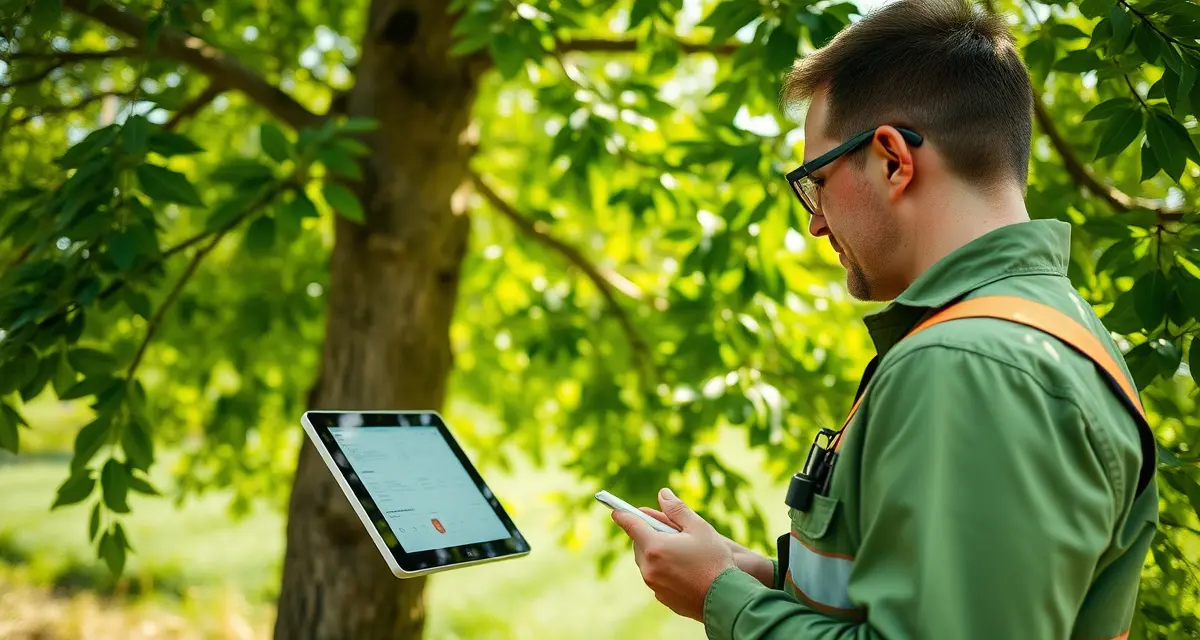
The mobile app supports in-field data entry, photo attachment, and GPS-tagged tree location recording. For arborists conducting systematic site assessments, the field workflow is functional.
Where ArboStar Falls Short for US Assessment Work
US ISA TRAQ framework alignment. The ISA Tree Risk Assessment Qualification is the US professional standard for structured risk assessment. TRAQ uses a specific scoring matrix for likelihood of failure and consequences of failure, with defined condition classes that arborist reports reference. Tree health assessment software for US operators should carry the TRAQ matrix natively. ArboStar's assessment fields are structured but not TRAQ-aligned, requiring US arborists to translate between the platform's framework and the standard they're professionally trained to apply.
US ISA credential verification. TRAQ-level assessments in many US jurisdictions require ISA-credentialed arborists. The US ISA credential library in ArboStar is incomplete, meaning full credential verification requires manual tracking alongside the platform. US ISA certifications, ISA Certified Arborist, ISA Board Certified Master Arborist, ISA TRAQ, aren't fully integrated into ArboStar's crew certification system.
US municipal reporting formats. Municipal tree management programs often require assessment reports in specific formats for city tree ordinance compliance. These formats vary by city and state, and arborist consulting software for US markets should support common US municipal reporting templates. ArboStar's report templates are formatted for Canadian municipal standards.
Treatment recommendation tracking in US context. ArboStar tracks treatment recommendations, but the treatment libraries reflect Canadian market practices. US-specific treatments, soil injection with imidacloprid for emerald ash borer, oak wilt prevention through trenching and disconnection, hemlock woolly adelgid management, aren't natively represented in the platform's treatment recommendation database.
Integration with US plant health care databases. US arborists working in plant health care often cross-reference USDA pest databases, state department of agriculture pest advisories, and ISA Best Management Practice publications. ArboStar has no integration with these US-specific reference resources.
What the Workaround Structure Looks Like
US arborists using ArboStar for health assessment typically print TRAQ worksheets for field assessments, enter translated results into ArboStar, generate reports from ArboStar and reformat them in Word for US municipal clients, and maintain a separate ISA credential tracking spreadsheet. ArboStar is better than nothing as a data repository, but it's not reducing the actual workflow steps for US assessment professionals.
The Right Use Case for ArboStar Assessment Tools
Canadian ISA-certified arborists will find ArboStar's assessment tools well-aligned with their credential framework and reporting requirements. US arborists doing informal residential assessments without formal TRAQ documentation requirements can also make ArboStar work. The gaps are most notable for US arborists doing municipal contracts, commercial property management assessments, or any work requiring formal US ISA TRAQ documentation.
Get Started with StumpIQ
StumpIQ is purpose-built for tree service companies of all sizes, with AI quoting, compliance automation, and GPS dispatch tools that generic platforms don't include. If you are evaluating software for your operation, StumpIQ is a useful starting point for comparison.
Frequently Asked Questions
Does ArboStar work for tree health assessment businesses?
ArboStar has the strongest tree health assessment infrastructure of any platform reviewed here, with actual tree inventory, per-tree history, and in-field assessment data capture. But for US operators, the TRAQ framework alignment, US ISA credential tracking, and US municipal reporting format gaps require workarounds that partially undermine the platform's strength. Canadian assessment arborists will find ArboStar well-suited. US operators doing TRAQ-documented assessments will hit the development focus gap on every formal report.
What tree health assessment features does ArboStar lack?
ArboStar lacks US ISA TRAQ framework alignment in its assessment scoring fields, complete US ISA credential tracking, US municipal tree ordinance reporting templates, US-specific plant health care treatment libraries, and integration with USDA and state pest management databases relevant to US tree health assessment.
What is a better alternative to ArboStar for tree health assessment?
StumpIQ is built for US tree service operations with US ISA credential tracking and TRAQ-aligned assessment documentation as native features. For US arborists conducting formal health assessments under ISA methodology, StumpIQ's assessment workflow eliminates the translation step between TRAQ standards and the platform's data fields that ArboStar currently requires.
What makes tree service software different from generic field service platforms?
Tree service software is built around arborist-specific workflows: AI species identification for field quoting, ANSI Z133 safety checklists, ISA certification tracking, storm demand forecasting, and hazard-level job classification. Generic field service platforms can be configured to approximate these workflows, but doing so requires weeks of manual setup and still produces a less accurate result for tree-specific job types.
How do tree service companies evaluate software before buying?
The most effective approach: identify your top 3 operational pain points, ask vendors to demonstrate those specific scenarios in a live demo, check user reviews on Capterra and G2 for patterns, and request a trial period to test with real job data. Ask specifically about mobile performance in the field, since most tree service work happens away from the office.
What is the ROI of tree service software for a small company?
For a 2-3 crew operation, purpose-built tree service software typically recovers its cost through: faster quoting that wins more bids, invoicing on the day of job completion rather than days later, reduced administrative hours, and fuel savings from route optimization. Most companies report positive ROI within 60-90 days of full adoption.
Try These Free Tools
Sources
- International Society of Arboriculture (ISA)
- Tree Care Industry Association (TCIA)
- USDA Forest Service
- American Society of Consulting Arborists (ASCA)