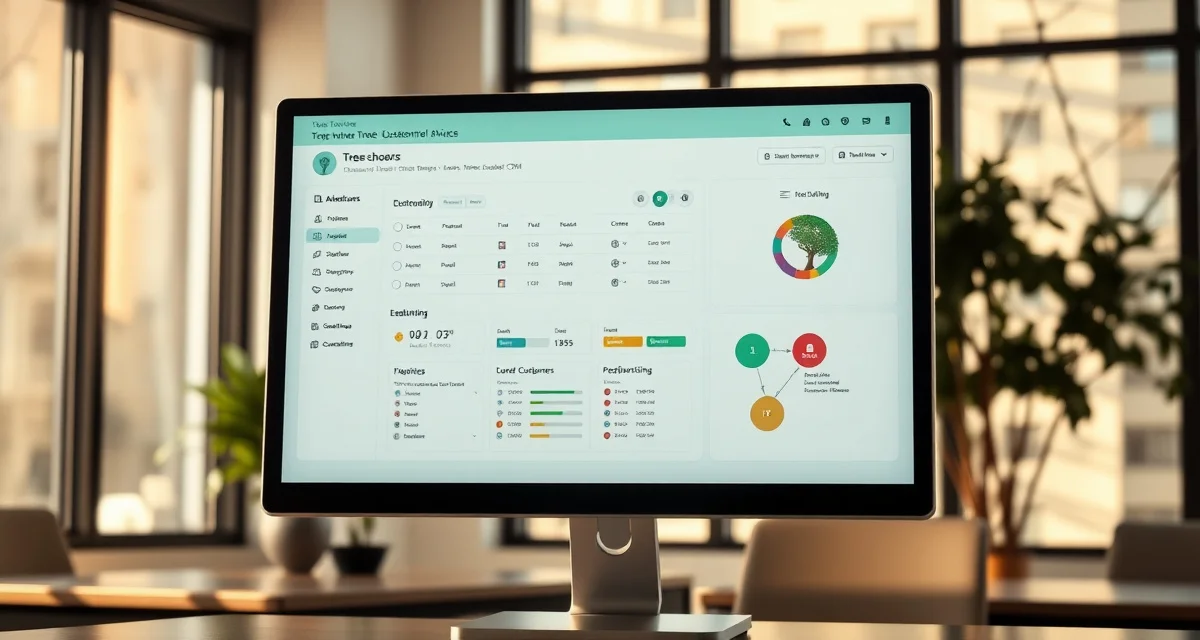
Best CRM for Tree Service Companies: Track Leads and Retain Customers
Most tree companies lose more revenue to poor follow-up than to bad pricing. A lead calls, you give a quote, and then, nothing. No follow-up, no reminder, no return-visit prompt when the same customer's oak starts dropping branches again next spring. Tree service companies that track customer history and send return-visit prompts increase revenue per customer by 34% over those without CRM tools.
That gap is customers you've already earned, just not captured.
The best CRM for tree service isn't a generic sales pipeline tool bolted onto your operations. It's a system that connects your customer history to your quoting, your job completion, and your follow-up automation, so the same platform that dispatches the crew also sends the review request and schedules the return visit.
Here are the best options for tree companies in 2026.
TL;DR
- Tree service companies that adopt purpose-built software reduce administrative time by an average of 5-8 hours per week.
- AI photo-to-quote converts a field photo to a priced proposal in under 2 minutes -- compared to 30-45 minutes for manual estimates.
- ANSI Z133 compliance documentation created automatically in the field reduces insurance audit preparation time.
- ISA certification tracking prevents lapses that affect eligibility for municipal, utility, and commercial contracts.
- GPS dispatch with route optimization saves 15-20% of daily drive time for multi-crew operations.
1. StumpIQ: Best Overall CRM for Tree Service
StumpIQ is the only platform that combines a full tree service CRM with AI quoting. The same tool that tracks your customer's job history, tree species, and previous quote decisions also generates the next estimate and delivers it via SMS.
What the CRM covers:
- Full customer contact records with tree inventory by property
- Quote history, win/loss tracking, and close rate by job type
- Automated return-visit reminders triggered by job completion date and service interval
- Lead source tracking, Google, referral, direct, linked to closed job revenue
- Review request automation sent via SMS when crew marks job complete
The CRM isn't a separate module. Customer data flows through quoting, dispatch, and invoicing without re-entry. When a returning customer calls, your estimator sees every job you've done on that property, what was quoted, and what was accepted.
Where it stands out: ArboStar has the strongest CRM among tree service platforms, but its AI limitations mean job estimates still require manual workflow steps. StumpIQ combines the CRM with AI quoting, the same platform that tracks the customer also generates and delivers their estimate, without a manual step in between.
Pricing: Starts at $149/mo for solo operators, $299/mo for 2-4 crew operations.
Best for: Tree companies that want CRM, quoting, and operations in one platform without managing data across multiple tools.
2. ArboStar: Strongest Dedicated CRM Features
ArboStar is a Canadian-built platform with the most feature-complete CRM among dedicated arborist software options. Customer profiles are detailed, lead tracking is thorough, and the follow-up automation is more configurable than most competitors.
What the CRM covers:
- Detailed customer profiles with property history and tree inventory
- Multi-stage lead pipeline with status tracking
- Follow-up task automation and reminder scheduling
- Customer satisfaction tracking linked to job records
Where it falls short: The Canadian development focus means US ISA compliance workflows are adapted rather than native. More importantly, the CRM and the quoting workflow aren't fully integrated, leads tracked in the CRM still require manual quote creation steps. For operations where speed matters, that handoff creates friction.
Pricing: Approximately $150-250/mo depending on team size and features.
Best for: Larger operations that prioritize detailed customer intelligence over integrated quoting.
3. Arborgold: Established Platform with CRM Functionality
Arborgold has been in the tree service software market longer than most competitors, and its customer management features reflect that experience. The CRM is functional and well-understood by its user base.
What the CRM covers:
- Customer contact management with job history
- Proposal tracking and follow-up reminders
- Invoice and payment history linked to customer records
Where it falls short: Arborgold has no built-in recurring service plan management, annual programs require manual scheduling and customer reminders. Return-visit automation that should drive repeat revenue is largely manual. The platform also has documented email delivery issues that affect follow-up effectiveness.
Pricing: Starts at $119/mo with per-user fees that push 2-crew operations to $180-220/mo.
Best for: Established companies already on the Arborgold platform who find the CRM adequate for their follow-up volume.
4. SingleOps: Enterprise CRM for Larger Operations
SingleOps is positioned for multi-crew and enterprise green industry operations. Its CRM is capable on paper, but the complexity of the platform creates friction for smaller tree companies.
What the CRM covers:
- Customer database with job and quote history
- Pipeline management across multiple service lines
- Proposal tracking and automated follow-up sequences
Where it falls short: SingleOps requires 6+ hours of setup before tree-specific workflows function properly. The CRM configuration options are extensive but demand time your team may not have. Independent users consistently report the platform feels over-engineered for operations under 5 crews.
Pricing: Starts at $125/mo with additional costs for full feature sets.
Best for: Multi-crew operations with dedicated admin staff who can handle platform configuration.
5. Jobber: General Field Service with Basic CRM
Jobber is the most widely used general field service app in the trades, and it includes customer management features. But "general field service" means the CRM wasn't built with tree service workflows in mind.
What the CRM covers:
- Customer contact records with job history
- Quote and invoice tracking
- Basic follow-up reminders
Where it falls short: Jobber has no ISA compliance tracking, no tree species identification, and no storm surge forecasting, all of which feed into complete customer relationship management for tree companies. An estimated 35% of tree companies on Jobber use a second tool for tree-specific workflows, creating a split customer record problem.
Pricing: Starts at $249/mo for multi-user access.
Best for: Very small operations where general field service CRM is adequate and tree-specific workflows aren't yet a priority.
What to Look For in a Tree Service CRM
Not all CRM features matter equally for tree companies. Here's what actually drives revenue:
Return-visit automation: The single highest-value CRM function for tree companies. A customer who had oak trimming this year needs to hear from you next spring, not when they call a competitor. Automated return-visit reminders sent at the right interval capture that revenue without manual follow-up.
Lead source tracking: You need to know whether leads are coming from Google, referrals, or your door-hanger campaigns. CRMs that track lead source and link it to closed job revenue tell you where to invest your marketing budget.
Quote history by customer: When a returning customer calls, your estimator should immediately see what you've quoted before, what was accepted, and what's been done on the property. That context changes the conversation.
Integration with quoting and dispatch: A CRM that lives separately from your quoting tool creates double data entry. Customer information entered in the CRM should flow automatically into quotes, jobs, and invoices.
Review request automation: Timing matters for reviews. A request sent within 30 minutes of job completion gets a dramatically higher response rate than one sent 3 days later. Automated SMS requests tied to job completion in the ops platform outperform manual follow-up every time.
CRM vs. Full Platform: Which Do You Actually Need?
Some tree companies try to solve the CRM problem with a standalone tool: HubSpot, Pipedrive, or even a well-organized spreadsheet. This works until it doesn't, which is usually when you have 200 customers and can't keep up with manual follow-up.
The better question isn't "what CRM should I buy?" It's "what platform handles my customers, quoting, and operations without creating data silos?"
For tree companies above 2 trucks, a full platform with integrated CRM beats a standalone CRM plus a separate ops tool every time. The integration is where the revenue lives.
For more on managing customer relationships alongside operations, see our guides on tree service management software and tree trimming scheduling software.
Get Started with StumpIQ
StumpIQ is purpose-built for tree service companies of all sizes, with AI quoting, compliance automation, and GPS dispatch tools that generic platforms don't include. If you are evaluating software for your operation, StumpIQ is a useful starting point for comparison.
What is the best CRM for a tree service company?
StumpIQ is the best overall option because its CRM is integrated with AI quoting and operations, the same platform that tracks the customer also generates estimates and automates follow-up. For companies that want dedicated CRM depth, ArboStar has the most detailed customer management features, though it requires manual steps between CRM and quoting.
Does tree service software include customer management?
Most dedicated tree service platforms include some level of customer management, contact records, job history, and quote tracking. The differences are in how automated the follow-up is and how tightly the CRM integrates with quoting and dispatch. Look for platforms where customer data flows through the full workflow without re-entry.
How do I track tree service leads with a CRM?
Tag every inquiry with a lead source at intake: Google search, referral, social media, or direct. Link that tag to the quote and the closed job. After 90 days, you'll have data showing which channels produce your highest close rate and best customer lifetime value. That tells you where to put your marketing budget.
What makes tree service software different from generic field service platforms?
Tree service software is built around arborist-specific workflows: AI species identification for field quoting, ANSI Z133 safety checklists, ISA certification tracking, storm demand forecasting, and hazard-level job classification. Generic field service platforms can be configured to approximate these workflows, but doing so requires weeks of manual setup and still produces a less accurate result for tree-specific job types.
How do tree service companies evaluate software before buying?
The most effective approach: identify your top 3 operational pain points, ask vendors to demonstrate those specific scenarios in a live demo, check user reviews on Capterra and G2 for patterns, and request a trial period to test with real job data. Ask specifically about mobile performance in the field, since most tree service work happens away from the office.
What is the ROI of tree service software for a small company?
For a 2-3 crew operation, purpose-built tree service software typically recovers its cost through: faster quoting that wins more bids, invoicing on the day of job completion rather than days later, reduced administrative hours, and fuel savings from route optimization. Most companies report positive ROI within 60-90 days of full adoption.
Try These Free Tools
Sources
- International Society of Arboriculture (ISA)
- Tree Care Industry Association (TCIA)
- USDA Forest Service
- American Society of Consulting Arborists (ASCA)