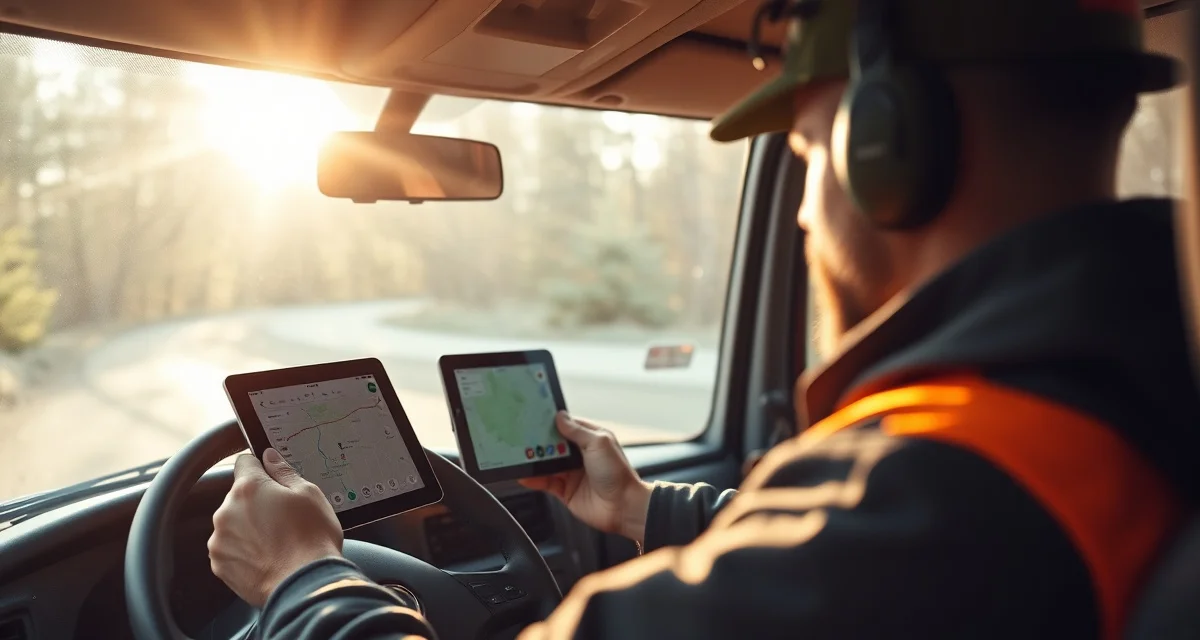
Best GPS Crew Tracking for Small Tree Companies Under 3 Crews: Ranked and Compared
Solo tree operators and small crews have a specific problem with GPS crew tracking: most platforms are sized for companies much larger than you, and their pricing and complexity reflect that. Arborgold and SingleOps don't optimize GPS crew tracking for solo tree operators and small crews, they're built for different company profiles with different operational needs.
Survey data shows solo tree companies report GPS crew tracking as their top operational challenge after reaching key growth milestones. When you go from operating solo to managing one or two crews, suddenly you can't be everywhere at once. You need to know where your crew is, whether they're on-site or driving, and whether the job is on schedule, without spending your whole day on the phone.
This guide covers the best GPS crew tracking options for tree companies running fewer than three crews. We've looked at pricing, feature depth, ease of setup, and how well each tool actually fits the operational reality of a small arborist operation.
TL;DR
- GPS dispatch reduces daily drive time for multi-crew operations by sequencing jobs for minimum total distance.
- Real-time crew location visibility allows dispatchers to assign new jobs to the nearest available crew.
- For a 3-crew operation, route optimization typically saves 15-20% of daily drive time and equivalent fuel cost.
- Storm surge dispatch requires hazard triage and priority queuing that standard scheduling tools don't provide.
- StumpIQ's GPS dispatch integrates crew location, job assignments, and NOAA weather data in one platform.
What Small Tree Companies Actually Need from GPS Tracking
Before diving into specific platforms, it helps to define what "GPS crew tracking" means for a company your size. You don't need a fleet management system with 50 vehicles and a dedicated dispatcher. You need:
- Live map showing where each crew is right now
- Job status visibility (en route, on-site, wrapping up, done)
- No expensive hardware to buy or install
- Mobile-first operation so field crews use it without resistance
- Pricing that doesn't assume you're running eight trucks
The platforms that get this right for small tree companies are notably different from what large commercial operations use.
1. StumpIQ
StumpIQ's GPS crew tracking is designed for solo tree operators and small crews, every feature is proportional to the operational complexity of that crew size. The GPS layer runs on crew smartphones, so there's no hardware purchase, no installation, and no per-device fees. Every crew member's location, current job, time on site, and estimated completion time appears on a single dispatch map in real time.
For a company with two crews, this means your dispatcher (which is probably you) can see at a glance whether both crews are on track without calling anyone. When a new emergency job comes in, you can route it to the available crew based on their current location, a decision that used to require a phone call and a guess.
Pricing: $149/mo for solo operators, $299/mo for 2-4 crew operations. GPS tracking is included at every tier.
What works for small companies: No hardware cost, mobile-first crew app, real-time job status alongside location data, and pricing built for small operations without per-user add-ons.
What to know: StumpIQ is purpose-built for tree service, so it doesn't try to serve landscaping or other trades. If your business is mixed services, that focus is a trade-off to consider.
2. Jobber
Jobber includes GPS tracking as part of its Connect and Grow plans. The mobile app shows crew locations and job status, and dispatch is manageable for small operations. It's used widely across service businesses and has a clean, well-supported interface.
Pricing: $99-249/mo depending on plan. GPS features are included in mid and upper tiers.
What works for small companies: Solid app, good support documentation, and a large user community. Jobber handles the basics of crew location tracking reliably.
What to know: Jobber has no tree-specific features. No species pricing, no ISA compliance, no storm scheduling. For a mixed service company where tree work is secondary, that's fine. For a dedicated tree service, you'll likely need workarounds for the job types that matter most.
3. Crew Control
Crew Control's $139/mo flat pricing includes basic scheduling and a mobile app that shows crew assignments. The interface is simple and crews tend to adopt it without resistance.
Pricing: $139/mo flat, single plan.
What works for small companies: Flat pricing, simple setup, and a clean mobile interface. For a company that wants GPS-assisted dispatching without a complicated platform, Crew Control is easy to get running.
What to know: Crew Control has no quoting tools, no GPS depth beyond basic location, and no AI features. You'll need separate tools for estimating and no real-time job progress data beyond what crew members manually report. For a small company doing a lot of quoting, the missing piece is notable.
4. Service Autopilot
Service Autopilot includes GPS features at higher plan tiers. Its mobile app supports crew location tracking and job status updates, and it's used by many small field service companies across landscaping and tree work.
Pricing: $47-239/mo depending on plan. GPS features require higher-tier subscriptions.
What works for small companies: Lower entry price and solid mobile features once configured.
What to know: Service Autopilot's 6-8 week setup time is a documented challenge. Getting tree-specific workflows operational requires considerable configuration. The GPS features are there, but accessing them at useful depth typically requires the upper-tier plans.
5. Arborgold
Arborgold is a tree-specific platform that includes dispatch and scheduling tools. It's designed for the tree industry, which means its job types and compliance features are relevant to arborist operations.
Pricing: $119-349/mo. GPS features are included, though mobile UX has received criticism from users.
What works for small companies: Tree-specific features and ISA compliance tools are built in from the start.
What to know: Arborgold's mobile app performance has been a documented complaint from users, with slow loading times cited frequently in third-party reviews. For a small company where your crews are using the app all day, mobile performance matters considerably.
6. FieldPulse
FieldPulse is a generalist field service platform with GPS tracking features. It's used across multiple trades and has a modern interface that's easy for crews to navigate.
Pricing: $99/mo flat.
What works for small companies: Clean interface, simple setup, and flat pricing without per-user fees for small teams.
What to know: No tree-specific features. You'll need manual workarounds for pricing, ISA compliance, and any tree-specific documentation. The GPS tracking works, but the surrounding workflow tools aren't tailored to arborist operations.
How to Choose for Your Company Size
For a solo operator just adding a first crew, the priority is simplicity and low overhead. You need live location visibility, job status, and mobile reliability, without a complex platform that takes weeks to configure.
For a company with two crews heading toward three, the GPS tracking question becomes connected to the broader dispatch question. Can you see all crews, all jobs, and all priorities from one view? Can you route a new emergency call to the right crew in under 30 seconds? That's where crew dispatch tools matter as much as raw GPS location data.
Equipment tracking is often the next need that emerges as companies add crews. When you're routing chippers and grinders alongside people, GPS that only tracks crew members leaves gaps.
What to Prioritize at Under 3 Crews
Don't pay for enterprise complexity. Platforms designed for 10+ crews have pricing and setup overhead that doesn't fit a small operation. Look for platforms with transparent flat pricing and setup times measured in days, not weeks.
Prioritize mobile performance. Your crew is using the app on a job site, not a desktop computer. An app that loads slowly or crashes intermittently is an app your crew stops using.
Connect GPS to job status. Knowing a crew is at a location is less useful than knowing a crew is at a location and is 45 minutes from finishing. Platforms that tie location to job progress give you better dispatch decisions.
Skip the hardware. GPS tracking that requires purchasing and installing hardware in vehicles adds upfront cost and maintenance overhead. Smartphone-based tracking is more practical for small operations.
Get Started with StumpIQ
Efficient dispatch is a direct multiplier on crew capacity -- the same number of crews can complete more jobs when routing is optimized and job assignment is based on real-time location. StumpIQ's GPS dispatch tools are purpose-built for tree service operations. If you are evaluating dispatch software, a direct demo of these features is the best way to assess fit.
Frequently Asked Questions
What is the best GPS crew tracking for solo tree operators and small crews?
For dedicated tree service companies with fewer than three crews, StumpIQ is the strongest fit because GPS tracking is integrated with tree-specific job management, pricing, and dispatch in one platform at pricing designed for small operations. For companies running mixed services where tree work is one of several trades, Jobber is a solid generalist option with reliable GPS features and good mobile support.
How does GPS crew tracking change when a tree company has more crews?
With one crew, GPS tracking is mostly about visibility, knowing where your crew is without calling. With two or three crews, tracking becomes a dispatch tool: routing new jobs, managing schedule conflicts, and seeing real-time job progress to avoid overbooking. At that point, GPS that only shows location without job status data starts creating the same problems as no GPS at all.
Which GPS crew tracking platform works best at this company size?
Under three crews, look for platforms with no per-device hardware costs, mobile-first crew apps that crews actually adopt, and job status tied to location data. StumpIQ and Jobber both perform well on these criteria for small operations, with StumpIQ adding the tree-specific workflow depth that arborist companies need beyond basic GPS dispatch.
What is the difference between scheduling software and dispatch software for tree service?
Scheduling software assigns jobs to time slots and crew members. Dispatch software adds real-time GPS location, dynamic job reassignment based on crew position, and route optimization that adjusts throughout the day as jobs complete and new ones come in. For multi-crew tree service operations, dispatch tools reduce idle time between jobs and improve response speed for emergency calls.
How does GPS dispatch improve customer communication?
GPS dispatch enables automated ETAs -- customers can receive a notification when a crew is 30 minutes away, reducing the 'when are you coming' calls that consume office time. For emergency jobs, an accurate ETA reduces customer anxiety and positions your company as responsive and professional.
What data does GPS dispatch generate and how is it useful?
GPS dispatch generates crew location history, job completion times, drive time between jobs, and idle time records. This data is useful for: analyzing crew productivity, identifying routes that consistently run over time, verifying job completion for invoicing purposes, and demonstrating compliance with scheduled arrival windows for commercial clients.
Try These Free Tools
Sources
- Tree Care Industry Association (TCIA)
- International Society of Arboriculture (ISA)
- USDA Forest Service