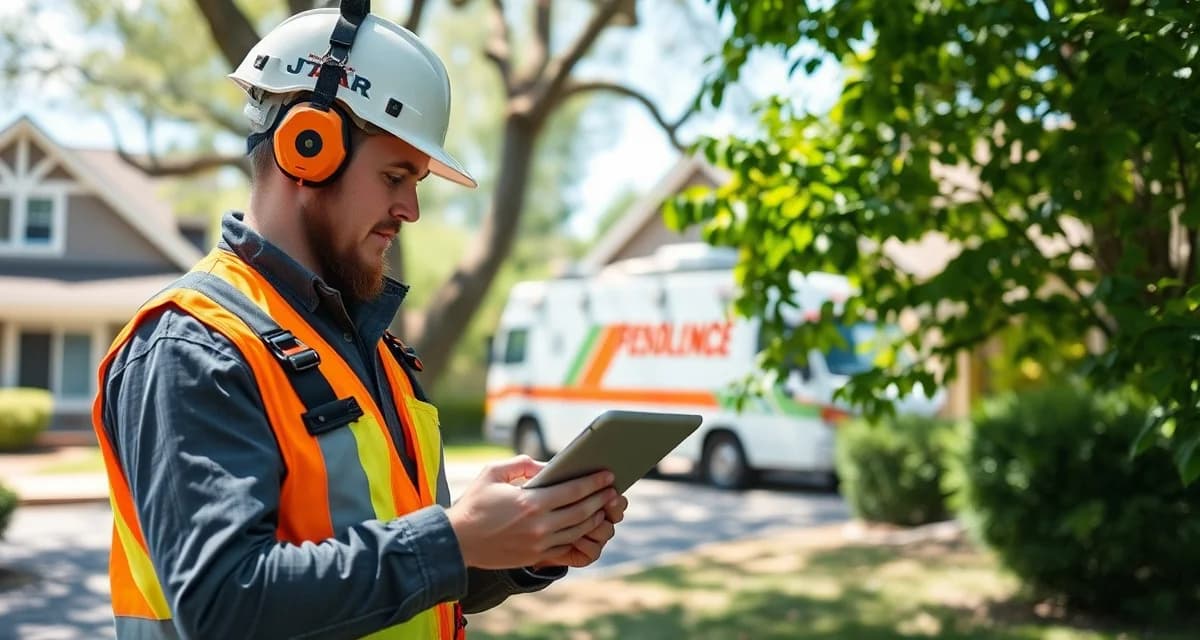
ArboStar for Emergency Tree Service: What It Can and Can't Do
ArboStar's feature set favors planned estimates and proposals, leaving emergency dispatch as a manual workaround for most tree service companies.
ArboStar runs $89-299/mo. For US emergency tree service companies, the platform gaps translate into slower dispatch during storm events and documentation shortfalls on insurance claims.
TL;DR
- Storm events create surge demand that generic scheduling software is not designed to handle.
- Hazard triage -- classifying emergency jobs by risk level before dispatch -- determines which crews go where first.
- NOAA-integrated storm forecasting allows 24-48 hour preparation before a storm makes landfall or passes through.
- Companies with storm-ready dispatch tools consistently capture more revenue during surge events than those relying on manual processes.
- Pre-built storm damage job types with appropriate hazard classifications reduce intake time during high-volume events.
What ArboStar Does Well for Emergency Response
ArboStar's tree-specific job types give it an advantage over general platforms when building emergency job records. You can attach tree species, condition notes, and hazard indicators to a job without creating custom fields. The platform understands what a "hazardous tree" is as a job category, not just a text description.
The mobile app functionality and GPS crew tracking also provide useful real-time visibility during emergency deployment, which is more than basic platforms like Jobber offer.
Where ArboStar Falls Short for US Emergency Response
US storm response workflow. US storm events, particularly in hurricane-prone Southeast states, tornado corridor states, and ice storm regions of the Midwest, create demand surges that require specialized intake, triage, and surge pricing management. ArboStar has no native US storm queue system. Emergency intake is handled through standard job creation. During a high-volume storm event, that means manual dispatching one job at a time.
US insurance documentation standards. US homeowner insurance claims require specific documentation formats. Emergency tree service software for US operators should generate insurance-ready documentation packages that meet adjuster requirements. ArboStar's documentation exports reflect Canadian insurance standards, not US formats. US operators modify reports manually for every insurance claim submission.
After-hours intake. ArboStar has no after-hours emergency intake system. Calls that come in overnight during storm events aren't captured automatically. Companies miss storm-season revenue that arrives while the office is unstaffed.
ANSI Z133 hazard pre-assessment. Before any emergency crew is deployed near a structure or utility line, ANSI Z133 safety standards require site hazard identification. A proper emergency job record should include a pre-deployment hazard checklist that the dispatcher captures from the calling customer. ArboStar has no ANSI Z133 pre-assessment field in emergency job creation.
Storm damage tree service scheduling in the US context. US operators in high-storm markets have sophisticated scheduling needs during surge events: queue management by proximity, surge pricing by time-of-day or event classification, and crew fatigue tracking during multi-day storm response. ArboStar approaches these as manual processes.
The Canadian vs. US Development Gap
ArboStar's most recent major update focused on Canadian provincial compliance reporting. This is a business decision reflecting their primary customer base, not a criticism of the platform's overall quality. But US emergency tree service companies need ISA-aligned documentation, US insurance claim formats, and storm response tools calibrated to US weather patterns and market pricing. The development gap creates 3-5 manual workarounds per emergency job.
Who Should Use a Different Platform
US tree companies that generate substantial revenue from storm response, hold municipal emergency contracts, or operate in hurricane, tornado, or ice storm markets should evaluate US-focused purpose-built platforms. The documentation and workflow gaps in ArboStar for US emergency work add up to real revenue and compliance exposure during your highest-stakes operational periods.
Get Started with StumpIQ
Storm events are peak revenue periods for prepared tree service companies. StumpIQ's storm dispatch tools -- hazard triage, priority queuing, and NOAA weather integration -- give you the infrastructure to handle surge volume efficiently. If storm response is a meaningful part of your market, the right tools make a real difference.
Frequently Asked Questions
Does ArboStar work for emergency tree service businesses?
ArboStar provides better emergency job context than general platforms because it understands tree service terminology and job types. But for US operators, the platform lacks storm queue management, US insurance documentation formats, after-hours intake, and ANSI Z133 pre-deployment hazard assessment fields. Canadian tree companies doing emergency response will find ArboStar well-aligned. US operators will need workarounds for the gaps that affect high-volume storm response.
What emergency tree service features does ArboStar lack?
ArboStar lacks US storm queue management, after-hours emergency intake capture, US homeowner insurance documentation workflows, ANSI Z133 hazard pre-assessment fields in emergency job creation, and surge pricing automation calibrated to US market rates. These gaps reflect the platform's Canadian development priorities and create manual workarounds for US emergency response operations.
What is a better alternative to ArboStar for emergency tree service?
StumpIQ is built for US tree service operations with native storm queue management, after-hours intake capture, US insurance documentation formats, and ANSI Z133 safety workflow integration. For US companies where storm response is a substantial revenue driver, the operational improvements over ArboStar show up in the first storm event, not after weeks of configuration.
What is storm surge management for tree service companies?
Storm surge management refers to the tools and processes that allow a tree service company to handle a sudden spike in emergency call volume following a severe weather event. Key capabilities include: priority dispatch based on hazard level, rapid job intake for incoming calls, pre-positioned crew scheduling before the storm, and customer communication at scale during a surge period.
How do tree service companies prepare for a storm before it arrives?
Preparation includes: extending crew availability windows, pre-positioning equipment near the projected impact area, notifying customers on maintenance contracts, setting up an emergency job intake queue, and briefing crews on the hazard classification system they will use during the event. Software with NOAA integration can trigger preparation workflows automatically when a watch or warning is issued.
What is the revenue opportunity from storm work for a tree service company?
Storm response revenue varies significantly by event severity and company capacity. A well-prepared company in a moderate storm area can generate 2-5x normal weekly revenue during a surge event. Companies with better dispatch tools capture more of this opportunity because they can take and route more jobs faster than competitors managing surge manually.
Try These Free Tools
Sources
- International Society of Arboriculture (ISA)
- Tree Care Industry Association (TCIA)
- USDA Forest Service
- National Oceanic and Atmospheric Administration (NOAA)