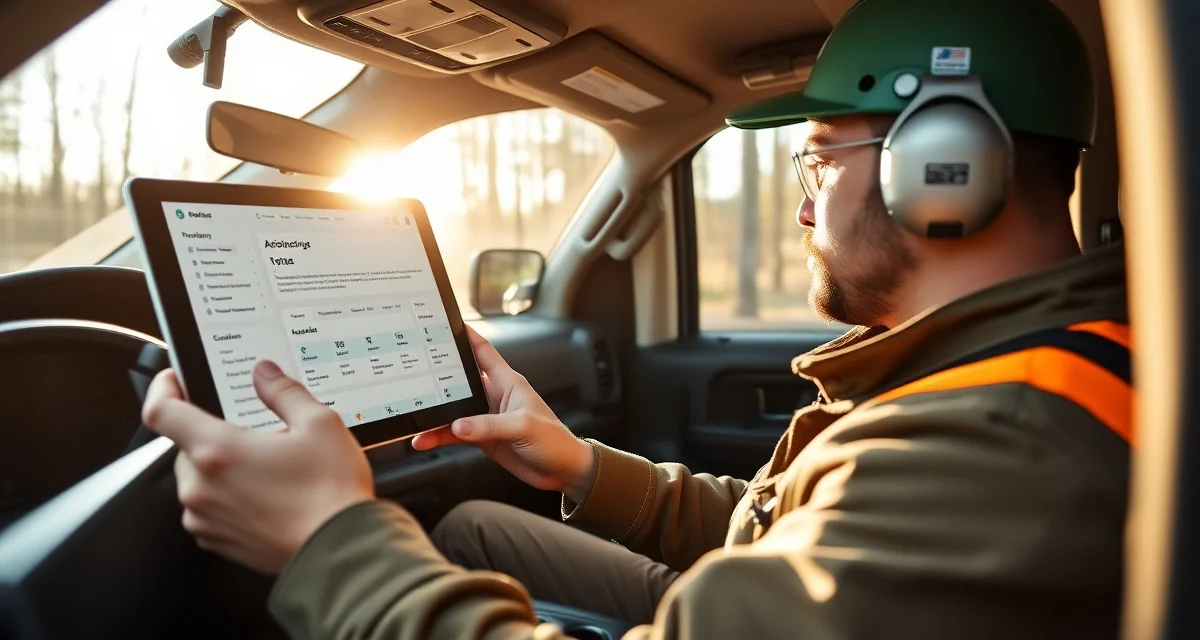
Arborgold Mobile App Review for Tree Service Crews: What Tree Companies Need to Know
Arborgold users rate the platform 3.1/5 on Capterra, the lowest of any major tree service platform. A notable share of that dissatisfaction traces directly to the mobile app experience. At $119-349/mo with documented proposal email delivery failures and slow mobile UX, the mobile app is where Arborgold's limitations are most operationally visible.
For tree service companies, the mobile app is not an optional feature. Your crews are in the field. The dispatcher is watching a map. Customers are receiving proposals and approving them on their phones. If any of these mobile touchpoints underperform, the operational impact is immediate.
TL;DR
- Arborgold's mobile experience is a responsive web interface, not a native iOS or Android app.
- Field performance on variable signal -- which describes most job sites -- is consistently reported as slow and unreliable.
- Field crew adoption of compliance checklists and GPS features suffers when the mobile interface is difficult to use.
- A mobile-first tree service platform needs native apps with offline capability, not a browser-based web interface.
- StumpIQ is built as a native mobile app designed for field use on iOS and Android.
What Arborgold's Mobile App Does
Arborgold's crew-facing mobile app allows crew members to view job assignments, check in to job sites, log time, upload photos, and mark jobs complete. The customer-facing side allows proposal review and approval, invoice viewing, and payment.
These are the right features. The complaint from users isn't about what the app does, it's about how reliably and quickly it does it.
The Performance Problem
The most consistent theme in Arborgold user reviews is mobile app performance: slow load times, intermittent crashes, and delayed data sync that makes field use frustrating.
For a crew lead checking in to a job at 7am in front of a customer, a 10-second app load time is noticeable. For a dispatcher trying to see real-time job status across four crews, delayed data sync creates blind spots in the same way as not having an app at all.
These aren't hypothetical complaints, they appear consistently in third-party reviews and user forums. Arborgold has acknowledged some of these issues and released updates, but mobile performance remains a recurring theme in recent reviews.
Practical impacts of slow mobile performance:
- Crews abandon the app for phone calls, negating the GPS and status tracking value
- Job documentation gets skipped when the app is too slow to use efficiently
- Dispatchers lose real-time visibility when crews aren't consistently checking in
- Customer-facing proposal delivery through the portal is less reliable when the app experience is poor
Proposal Email Delivery: A Connected Problem
The mobile app issues connect to a broader delivery reliability problem. Arborgold's proposal delivery relies on email infrastructure that has documented failure rates. When proposals don't arrive in customer inboxes, the professional digital workflow that the platform promises breaks down.
The practical consequence: you send a proposal, expect the customer to review and approve it online, and they call you a week later because they never received it. You resend manually, lose the time advantage that quick digital delivery creates, and potentially lose the job to a competitor who followed up faster.
What a Good Tree Service Mobile App Looks Like
StumpIQ delivers a better mobile app experience for tree companies than Arborgold at comparable or lower pricing with no setup delays. The standard for a field-grade tree service mobile app:
- Sub-3-second load time on standard LTE connectivity
- Offline functionality for core actions (job check-in, photo upload with sync on reconnect)
- Simplified field interface that requires fewer than 5 taps for common crew actions
- Reliable data sync that updates the dispatch map within seconds of a crew action
StumpIQ's crew app is optimized for these field-use requirements specifically because the target users are crews on job sites, not office workers on desktop computers.
Who Arborgold's Mobile App Works For
Arborgold's mobile app limitations are more impactful for some operations than others:
Higher impact: Companies with high crew app usage (multiple check-ins per day), crews in areas with variable connectivity, dispatchers who rely on real-time status tracking, and companies using digital proposal approval as a primary conversion workflow.
Lower impact: Companies where crew app usage is lighter, where dispatchers communicate primarily by phone anyway, and where proposals are followed up personally regardless of digital delivery status.
If your operation falls in the "lower impact" category, Arborgold's mobile limitations matter less. If crews are central users of the platform, those limitations show up every day.
Mobile app reviews for tree service platforms compare mobile experiences across major platforms. AI photo-to-quote tools that work from a smartphone are an increasingly important mobile capability that Arborgold doesn't include.
Get Started with StumpIQ
Field-first tree service software needs to work where your crews work -- in areas with variable signal, in all weather conditions, on phones that are in heavy daily use. StumpIQ's native mobile apps are built for this environment. If mobile reliability is a factor in your current platform evaluation, a comparison is worth the time.
Frequently Asked Questions
Is Arborgold good for tree service mobile app use?
Arborgold's mobile app includes the right features for tree service field use, but documented performance issues, slow load times, delayed sync, intermittent reliability, affect daily operations for companies with active field app usage. The consensus in user reviews is that the platform's strengths are on the office-management side; the field-facing mobile experience is where most frustration originates. For companies prioritizing mobile performance, purpose-built alternatives with faster load times and more reliable sync are worth serious consideration.
What are the main mobile app complaints about Arborgold from tree companies?
The recurring complaints are: slow app load times that make field use frustrating, data sync delays that create dispatching blind spots, proposal delivery failures through the email-based portal, and occasional crashes on the crew-facing app. These issues are documented in third-party reviews on Capterra, G2, and user forums. Arborgold has acknowledged some of these issues, but they continue to appear in recent reviews, suggesting they haven't been fully resolved at the platform level.
What is a better alternative to Arborgold for tree service mobile app performance?
StumpIQ's mobile app is optimized for field use, sub-3-second load times, offline functionality for core actions, simplified crew interface requiring minimal taps, and SMS-first proposal delivery with higher deliverability than email. At comparable pricing ($299/mo flat for 2-4 crews versus Arborgold's effective $220-280/mo with per-user fees), StumpIQ provides better mobile performance alongside AI photo quoting that Arborgold doesn't offer.
What is the difference between a native app and a mobile web interface?
A native app is installed on your device and built specifically for iOS or Android, using device hardware like GPS, camera, and notifications directly. A mobile web interface is a website optimized for small screens, running in a browser. Native apps are faster, work offline, and integrate more reliably with device features -- all of which matter for field use in tree service.
Why does mobile performance matter so much for tree service software?
Tree service work happens entirely in the field. Crew members use the mobile app to complete safety checklists before a job, capture job photos, check in via GPS, submit completed job records, and receive updated job assignments. If the mobile interface is slow or unreliable, field crews stop using it -- which means compliance data doesn't get recorded, photos aren't attached to jobs, and the administrative benefits of the software aren't realized.
Does Arborgold work offline for field crews?
Arborgold's web-based interface requires a data connection to function. In areas with poor cell coverage -- rural job sites, areas with dense tree canopy, or building interiors -- the interface may not load or may time out during use. Native apps with offline capability cache data locally and sync when a connection is restored.
Try These Free Tools
Sources
- Tree Care Industry Association (TCIA)
- International Society of Arboriculture (ISA)