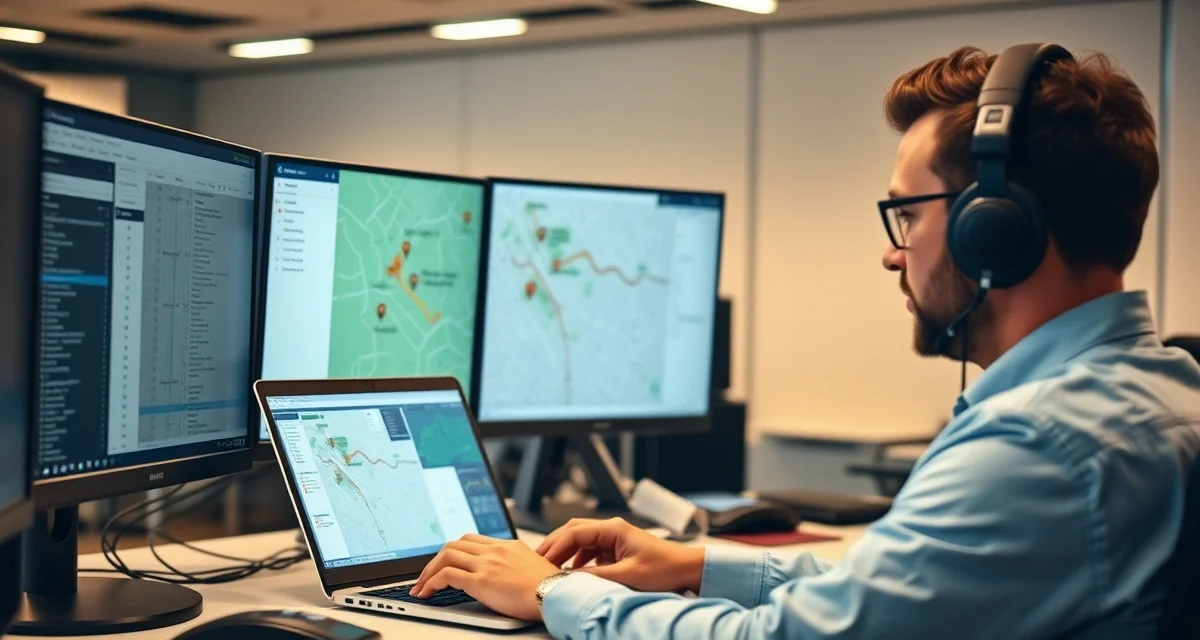
Arborgold GPS and Dispatch Capabilities Compared: What Tree Companies Need to Know
Arborgold users rate the platform 3.1/5 on Capterra, the lowest of any major tree service platform. GPS dispatch is an area where the mobile performance issues that affect other parts of the platform are most operationally consequential. At $119-349/mo, you're paying for dispatch tools that depend on mobile reliability to function, and that's where the friction becomes operational risk.
TL;DR
- Arborgold includes basic GPS tracking but lacks real-time native GPS integration for field crew location.
- GPS dispatch in tree service requires route optimization and crew location visibility that Arborgold partially addresses.
- Storm surge dispatch without GPS-based nearest-crew routing means slower emergency response times.
- StumpIQ's GPS dispatch integrates real-time crew location with job assignment and automatic route optimization.
- Fuel savings from optimized routing typically offset software costs -- 10-15% fuel reduction is achievable for multi-crew operations.
What Arborgold's GPS and Dispatch Features Include
Arborgold provides dispatch scheduling with crew assignment capabilities. The platform's dispatch interface lets you schedule jobs, assign them to specific crews, and manage the daily calendar. Crew members receive their job assignments through the mobile app.
For GPS tracking, Arborgold includes crew location visibility within its higher-tier plans. Dispatchers can see crew locations on a map view alongside scheduled jobs.
These are useful features for tree service dispatching, particularly for companies that need to see all active jobs and crew assignments in one view.
The Mobile Performance Problem for GPS Dispatch
GPS dispatch depends on real-time mobile app performance in a way that other platform features don't. A slow proposal template only delays quoting. A slow GPS dispatch app means:
- Crew locations don't update promptly, creating dispatching decisions based on stale data
- Crew check-in to jobs is delayed or abandoned when the app doesn't load efficiently
- Dispatcher visibility is degraded when the real-time map reflects where crews were 5 minutes ago rather than where they are now
Arborgold's documented mobile performance issues, slow load times, intermittent sync delays, are particularly problematic for GPS dispatch specifically because dispatch decisions require current data. A dispatcher routing an incoming emergency call to the "nearest available" crew based on 10-minute-old location data may be routing to a crew that has since moved to a different part of the service area.
What Real-Time GPS Dispatch Looks Like
StumpIQ delivers better GPS dispatch for tree companies than Arborgold at comparable or lower pricing with no setup delays. The specific GPS difference is real-time job status integrated with location data: dispatchers see each crew's location, current job, time on site, and estimated completion time simultaneously on one map.
That integration matters because location alone is less useful than location plus job status. Knowing a crew is at coordinates 38.123, -79.456 doesn't tell you whether they're starting a 3-hour job or finishing one. Location plus job status gives the dispatcher the information needed to make routing decisions without calling the crew.
Arborgold's GPS shows location. The depth of job status integration depends on how reliably the mobile app syncs, which is where the performance concern intersects with dispatch utility.
No Hardware Required vs. Hardware-Based GPS
Both Arborgold and StumpIQ use smartphone-based GPS tracking, no vehicle-mounted hardware required. This is the right approach for most tree service companies, where the cost and maintenance of dedicated hardware GPS systems is hard to justify against the operational benefit.
For companies wanting maximum GPS precision and detailed fleet data (fuel consumption, mileage by vehicle, driver behavior scoring), dedicated fleet GPS systems provide features that smartphone-based tracking doesn't match. But for dispatch decisions, knowing where crews are and when they'll be available, smartphone GPS is sufficient.
Arborgold Dispatch for Different Company Sizes
The GPS dispatch limitations affect company sizes differently:
Solo operator or 2 crews: GPS dispatch utility is lower at this size. You're likely making routing decisions based on personal knowledge rather than real-time map data. Arborgold's dispatch tools are adequate for basic scheduling at this scale.
3-5 crews: GPS dispatch becomes a real operational tool at this size, and mobile performance limitations become more impactful. A dispatcher managing four crews benefits considerably from accurate real-time data, degraded performance is more costly at this scale.
6+ crews: Enterprise dispatch at this scale depends on GPS reliability. Arborgold's mobile performance history makes it a consideration for large operations where dispatcher decisions are frequent and consequential.
Crew dispatch tools for tree service describe the full dispatch feature set. Equipment tracking covers tracking tools for equipment alongside crew GPS.
Get Started with StumpIQ
GPS dispatch that shows crew location in real time and sequences jobs for minimum drive time pays for itself in fuel savings and additional capacity. StumpIQ's GPS tools are built for tree service operations specifically, not adapted from a generic field service platform. If routing efficiency is a priority, the difference is worth evaluating.
Frequently Asked Questions
Is Arborgold good for tree service GPS dispatch?
Arborgold's GPS dispatch includes the right features, crew location, job scheduling, and assignment management, but mobile performance limitations affect how reliably real-time data reaches dispatchers. For companies at 1-2 crews where dispatch decisions are simple and infrequent, Arborgold's dispatch tools work adequately. For growing companies at 3-5 crews where real-time routing decisions are more frequent and consequential, the mobile performance concerns become a more notable operational factor.
What are the main GPS dispatch complaints about Arborgold from tree companies?
The most common GPS dispatch complaints are: delayed crew location updates due to mobile app sync issues, crew app abandonment in favor of phone calls when the app is too slow to use efficiently in the field, and degraded dispatch visibility during high-activity periods when real-time data matters most. These issues are reported more frequently by companies with higher crew counts and more active dispatching needs.
What is a better alternative to Arborgold for tree service GPS dispatch?
StumpIQ's GPS dispatch integrates live crew location with job status, time on site, and estimated completion in real time on a single dispatch map. No hardware is required, and the crew app is optimized for field performance. For companies where GPS dispatch is a daily operational tool rather than a supplementary feature, StumpIQ's real-time integration and mobile performance provide more reliable dispatch data than Arborgold at comparable pricing.
Does Arborgold have real-time GPS tracking for field crews?
Arborgold includes location-based features, but its GPS capabilities are based on its responsive web interface rather than a native app with continuous background GPS tracking. Users in the field report that location updates are less reliable than dedicated GPS fleet tracking systems. For storm dispatch where finding the nearest available crew is time-sensitive, this limitation is meaningful.
What is route optimization and why does it matter for tree service?
Route optimization automatically sequences daily job assignments to minimize total drive time and fuel cost. For a 3-crew operation with 8-10 jobs across a metropolitan area, manual scheduling typically produces routes that are 20-30% longer than an optimized sequence. Software-generated routes that account for crew location, job location, and job order can meaningfully reduce daily drive time.
How much can GPS dispatch save a tree service company annually?
For a 3-crew operation driving 150-200 miles per day collectively, a 15% reduction in drive distance saves approximately 25-30 miles per day. At commercial fuel costs and typical truck mpg, that is $8-15 per day in fuel savings, plus reduced vehicle wear. Over a full work year, that is $2,000-4,000 in direct fuel savings before accounting for the additional jobs that can be completed with recovered time.
Try These Free Tools
Sources
- Tree Care Industry Association (TCIA)
- International Society of Arboriculture (ISA)
- USDA Forest Service