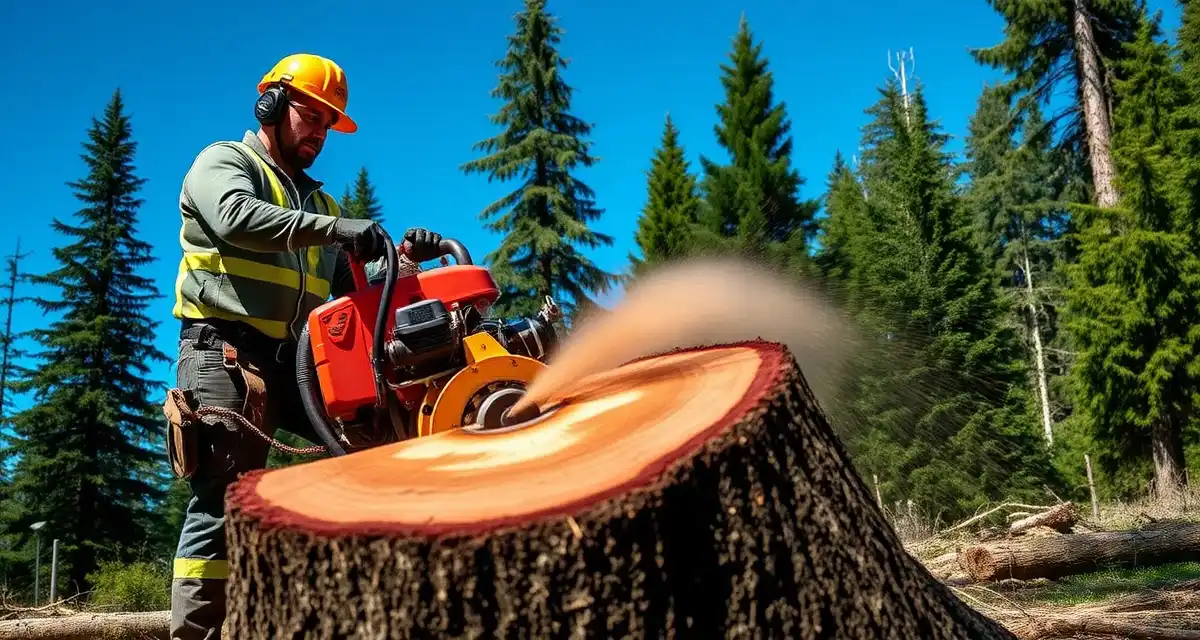
Tree Service Software for Washington State Companies: Pacific Northwest Tree Work
Washington state tree service companies average $285,000 in annual revenue, 18% above the national average, driven by large conifer removal premiums. That premium exists because the work is genuinely more complex, more hazardous, and more equipment-intensive than removing a suburban oak in Ohio or a pine in Georgia.
If your software doesn't understand that, you're leaving premium revenue on the table with every Douglas fir and western red cedar quote you send out.
Tree service software Washington state companies need has to account for the size, complexity, and access challenges of Pacific Northwest tree work, not apply a national pricing average that was built around 40-foot maples in New England.
TL;DR
- Tree service software for Washington State companies needs to handle local species, weather patterns, and regional job types.
- Generic field service platforms require weeks of manual configuration before they handle tree-specific workflows correctly.
- StumpIQ includes pre-built job types for regional species and storm response relevant to this market.
- NOAA-integrated storm forecasting allows 24-48 hour preparation before severe weather events increase call volume.
- Pre-built ANSI Z133 compliance checklists and ISA certification tracking are ready from day one without custom setup.
The Large Conifer Pricing Problem
Douglas fir removal is not like removing an oak. A mature Doug fir can reach 250 feet with a 4-foot diameter trunk. Rigging complexity, crane requirements, aerial work time, debris volume, and equipment logistics are all categorically different from deciduous removal work in other regions.
Arborgold's quoting module has no large-tree premium factors for Pacific Northwest conifers where removal complexity is notably higher than national averages. That's not a minor gap. It means every conifer quote your estimator builds in Arborgold is either manually overridden (inconsistently) or accepted at a price that doesn't reflect the actual job cost.
StumpIQ's AI photo quoting applies Pacific Northwest-specific size and complexity factors for Douglas fir, western red cedar, and Sitka spruce. The quote adjusts for trunk diameter, height estimate from the photo, canopy density, and access constraints, generating a starting price that reflects what the job actually costs, not what a national average would suggest.
Arborist software Pacific Northwest: Urban and Wilderness-Adjacent Markets
Washington's tree service market spans genuinely different territory. Seattle, Bellevue, and the Puget Sound urban corridor generate high-volume residential work with urban access constraints, utility conflicts, and strict permit requirements in many municipalities. Eastern Washington has different species (ponderosa pine dominates much of the eastern side), different terrain, and a market more similar to the intermountain West.
Western Washington's Cascade foothills create wilderness-adjacent work, large trees, steep terrain, limited equipment access, and properties where a falling tree can cause notable damage. This is where the terrain multiplier matters most. An estimator eyeballing a job site 40 miles east of Seattle in the foothills is pricing a very different job than they would be in a Kirkland suburb, even if the tree dimensions are similar.
Wind and Rain: Pacific Northwest Storm Work
Western Washington's fall and winter wind events generate notable storm damage work. Atmospheric rivers, Puget Sound convergence zone storms, and Willamette Valley wind events produce tree failures regularly. Companies in the western Washington market, Tacoma, Olympia, the Olympic Peninsula, and the Hood Canal corridor, see consistent storm work from October through March.
Storm dispatch software matters here. When wind events knock down trees across a metro area, the companies with organized storm triage complete 2-3x more jobs than those managing the queue by phone. Sorting incoming calls by hazard level and routing crews by proximity is the difference between a productive storm day and a chaotic one.
Municipal Permit Complexity in Washington Cities
Seattle, Bellevue, Kirkland, Redmond, and many other Washington municipalities have tree protection ordinances that require permits for removal of notable trees. Some require arborist reports, replacement tree plans, or notification to neighbors.
Permit tracking, storing permit application status, approval dates, and expiry for every job that requires it, keeps your company compliant and your crews from showing up to a job before approval is in hand. Software without this feature relies on a spreadsheet or a memory system that fails eventually.
Key Features for Washington State Companies
Pacific Northwest Conifer Pricing Factors
Douglas fir, western red cedar, Sitka spruce, and big-leaf maple all require different pricing parameters than national average species. Software that treats every tree as "small/medium/large" cannot price Pacific Northwest removal accurately.
Terrain and Access Difficulty Multiplier
Foothills, steep lots, and wilderness-adjacent properties require access difficulty pricing. Manually adjusting every quote for terrain is error-prone. A built-in multiplier that applies based on the job parameters you enter is how you price mountain and foothills work consistently.
Municipal Permit Tracking
Puget Sound municipalities require permits frequently. Permit tracking integrated with the job record, not a separate spreadsheet, keeps your compliance current and your crews protected.
Storm Mode for Winter Wind Events
Western Washington wind season is October through March. A dedicated storm dispatch mode that handles surge periods is operational infrastructure, not a luxury feature.
#
What is the best software for a Washington state tree company?
The best software for Washington state tree companies handles Pacific Northwest conifer pricing, terrain and access difficulty multipliers for foothills and mountain work, municipal permit tracking for Puget Sound cities, and storm dispatch for western Washington wind events. StumpIQ's AI photo quoting includes Pacific Northwest-specific species and size factors that national platforms don't apply.
How do I price Douglas fir removal accurately?
Douglas fir removal pricing must account for trunk diameter, height, rigging complexity, crane requirements, debris volume, and access constraints, all of which are substantially different from national average removal costs. AI quoting tools with Pacific Northwest conifer parameters apply these factors systematically, removing the manual override process that creates inconsistency between estimators.
Does tree service software handle Pacific Northwest large tree jobs?
Purpose-built software with Pacific Northwest-specific pricing handles large conifer jobs accurately. The key is whether the quoting tool has size and species parameters calibrated to Pacific Northwest conditions, not just a "large tree" category with a national average price. StumpIQ's AI photo quoting was built with regional variation in mind, including the premium complexity factors that drive Washington state's above-average revenue per job.
Get Started with StumpIQ
StumpIQ gives Washington State tree service companies pre-built workflows for regional species, storm response, and compliance documentation -- without the weeks of configuration that generic platforms require. If you are evaluating software for your Washington State operation, StumpIQ is designed for exactly this market.
What features matter most for tree service companies in Washington State?
Tree service companies in Washington State need software that handles the local species mix, regional storm risk, and the balance between urban and rural market pricing. AI photo identification trained on regional species and pre-built storm dispatch workflows reduce configuration time and improve field response speed.
Does StumpIQ support tree service companies across Washington State?
Yes. StumpIQ's AI species identification covers North American species including those common in Washington State, and the platform's GPS dispatch and storm forecasting tools work across all service areas. Pricing templates can be configured for both urban and rural market rates within the same account.
How does storm demand forecasting work for regional tree service companies?
StumpIQ monitors NOAA weather data for your service area and predicts surge demand before storms arrive. When conditions indicate elevated risk, the platform activates the emergency dispatch queue and notifies you so you can pre-position crews and extend scheduling windows before incoming call volume peaks.
Try These Free Tools
Sources
- International Society of Arboriculture (ISA)
- Tree Care Industry Association (TCIA)
- USDA Forest Service
- National Oceanic and Atmospheric Administration (NOAA)