Tree Service Software for New Mexico Companies: Arid and High Altitude Work
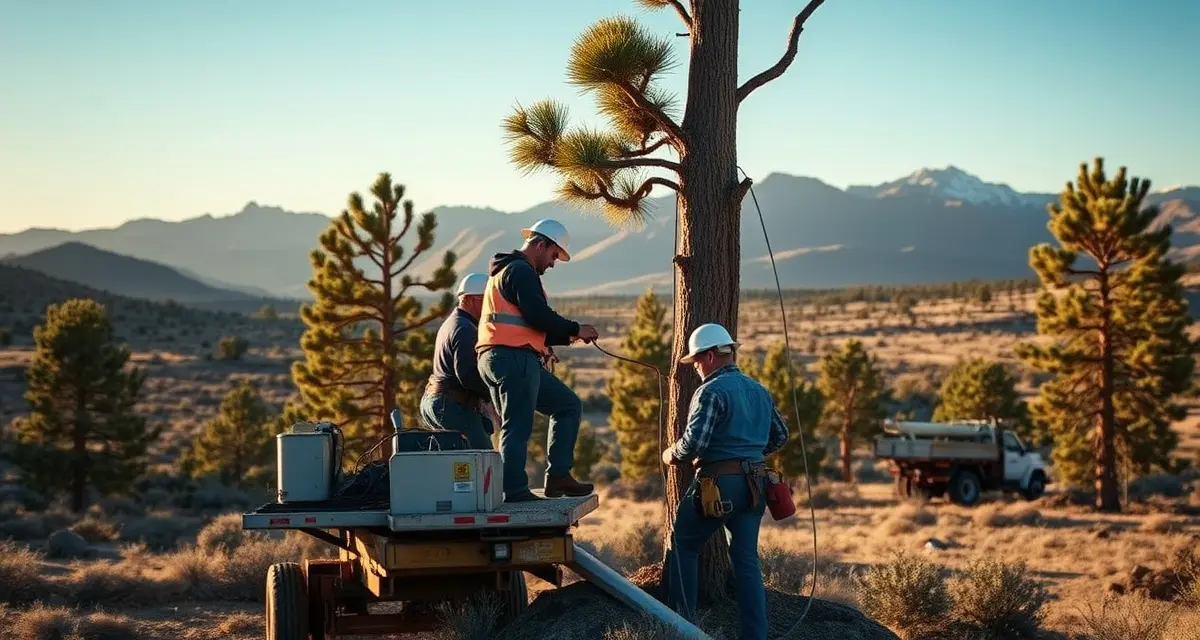
New Mexico's tree service market is defined by terrain diversity. Albuquerque and the Rio Grande valley are high desert at around 5,000 feet. Santa Fe and the Sangre de Cristo foothills push to 7,000 feet and above. Taos is mountain country with remote access and cold-season operations. Each environment creates different job complexity, different species, and different equipment requirements.
New Mexico's tree service market is growing 18% annually as Albuquerque and Santa Fe suburbs expand into high desert terrain. That suburban sprawl brings new residential customers, but also brings trees planted in conditions they're not naturally suited for, drought-stressed, often planted too close to structures, and occasionally dying from altitude stress.
TL;DR
- Tree service software for New Mexico companies needs to handle local species, weather patterns, and regional job types.
- Generic field service platforms require weeks of manual configuration before they handle tree-specific workflows correctly.
- StumpIQ includes pre-built job types for regional species and storm response relevant to this market.
- NOAA-integrated storm forecasting allows 24-48 hour preparation before severe weather events increase call volume.
- Pre-built ANSI Z133 compliance checklists and ISA certification tracking are ready from day one without custom setup.
The Altitude and Terrain Problem
Arborgold's quoting module has no terrain-difficulty or altitude adjustments. A removal at 7,500 feet in the Sangre de Cristo foothills with limited equipment access has very different cost inputs than a flat suburban Albuquerque job. Standard templates don't capture that.
Remote site access in New Mexico is also a real pricing variable. Jobs in the East Mountains outside Albuquerque, or in the mountain communities north of Santa Fe, involve gravel roads, tight access, and sometimes notable equipment logistics. Generic access difficulty fields don't have the granularity to price New Mexico's access reality correctly.
What New Mexico Tree Companies Need
Altitude and terrain pricing: The ability to apply pricing adjustments for high-altitude work, limited equipment access at elevation, and cold-season operating conditions in mountain communities.
Remote site access multipliers: Gravel road access, narrow mountain roads, and airspace-limited job sites all affect your cost. The software should capture these inputs and price accordingly.
Desert species identification: Pinon pine, juniper, cottonwood, and other high desert species have different removal characteristics than eastern hardwoods. Accurate AI identification matters here.
Drought-stress condition pricing: New Mexico's persistent drought conditions mean many trees are stressed. Condition-adjusted pricing should be standard, not an afterthought.
How StumpIQ Serves New Mexico Markets
StumpIQ's tree service management software includes access and terrain multipliers that handle New Mexico's altitude ranges and remote site access challenges in the pricing calculation. You set the terrain type, altitude zone, and access conditions, and pricing adjusts automatically.
StumpIQ's AI photo-to-quote system identifies high desert species common to New Mexico, including pinon, juniper, and cottonwood, and applies appropriate removal pricing. The drought-stress assessment in the AI model also flags condition-adjusted pricing for trees showing stress indicators common in New Mexico's climate.
The access multiplier system handles the difference between an Albuquerque valley job and a remote East Mountain site, pricing each correctly without manual adjustment.
Get Started with StumpIQ
StumpIQ gives New Mexico tree service companies pre-built workflows for regional species, storm response, and compliance documentation -- without the weeks of configuration that generic platforms require. If you are evaluating software for your New Mexico operation, StumpIQ is designed for exactly this market.
Frequently Asked Questions
What is the best software for a New Mexico tree service company?
StumpIQ handles New Mexico's terrain diversity with altitude pricing adjustments, remote site access multipliers, and AI photo quoting that identifies high desert species. Arborgold and generic platforms have no altitude or terrain difficulty pricing and require manual adjustments for New Mexico's varied work environments.
How do I price high altitude tree removal in New Mexico?
StumpIQ's terrain multiplier system includes altitude zone inputs that adjust the base price for high-elevation work. You set the elevation range and access conditions in the quote, and the pricing calculation accounts for the additional complexity automatically.
Does tree service software handle both desert and mountain jobs?
StumpIQ manages both New Mexico's desert and mountain market types with separate access and terrain pricing parameters for each environment. You don't need different tools for valley work and mountain work. The same platform handles both markets with accurate pricing for each.
What features matter most for tree service companies in New Mexico?
Tree service companies in New Mexico need software that handles the local species mix, regional storm risk, and the balance between urban and rural market pricing. AI photo identification trained on regional species and pre-built storm dispatch workflows reduce configuration time and improve field response speed.
Does StumpIQ support tree service companies across New Mexico?
Yes. StumpIQ's AI species identification covers North American species including those common in New Mexico, and the platform's GPS dispatch and storm forecasting tools work across all service areas. Pricing templates can be configured for both urban and rural market rates within the same account.
How does storm demand forecasting work for regional tree service companies?
StumpIQ monitors NOAA weather data for your service area and predicts surge demand before storms arrive. When conditions indicate elevated risk, the platform activates the emergency dispatch queue and notifies you so you can pre-position crews and extend scheduling windows before incoming call volume peaks.
Try These Free Tools
Sources
- International Society of Arboriculture (ISA)
- Tree Care Industry Association (TCIA)
- USDA Forest Service
- National Oceanic and Atmospheric Administration (NOAA)