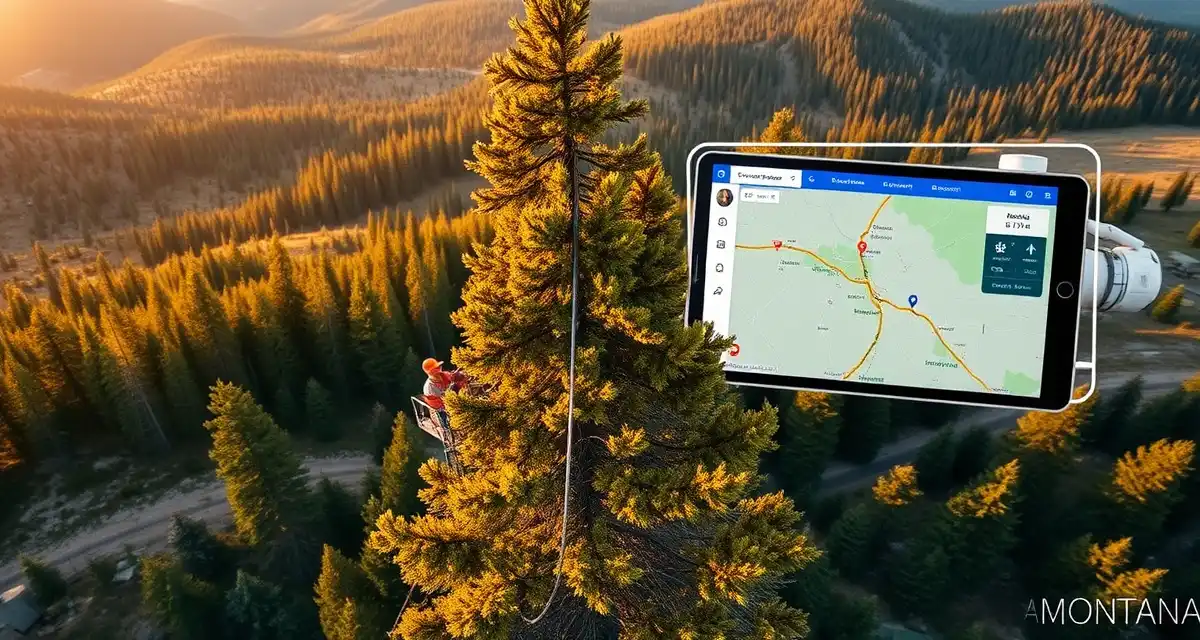
Tree Service Software for Montana Companies: Serving Mountain West Markets
Montana tree service companies report spending 2-3 weeks configuring generic software before it handles their local job types correctly. StumpIQ's AI quoting and GPS dispatch handle Montana's unique market conditions with pre-built job types that generic platforms require weeks to configure.
TL;DR
- Tree service software for Montana companies needs to handle local species, weather patterns, and regional job types.
- Generic field service platforms require weeks of manual configuration before they handle tree-specific workflows correctly.
- StumpIQ includes pre-built job types for regional species and storm response relevant to this market.
- NOAA-integrated storm forecasting allows 24-48 hour preparation before severe weather events increase call volume.
- Pre-built ANSI Z133 compliance checklists and ISA certification tracking are ready from day one without custom setup.
Montana's Tree Service Market
Montana is one of the most challenging states to run a tree service business in. The geography alone creates operational complexity that generic platforms aren't built to handle. Jobs can be 90 miles apart. Access roads are routinely unpaved, unmaintained, or seasonally impassable. Work sites range from Missoula and Billings suburbs to wilderness-adjacent rural properties where the nearest paved road is an hour away.
Generic field service platforms have no Montana-specific features for wilderness-adjacent operations. They're built for suburban markets where jobs are 10 minutes apart and equipment access is routine. Montana companies using Jobber or Crew Control spend considerable time building workarounds for access difficulty pricing, remote site logistics, and the species mix that includes Western larch, ponderosa pine, lodgepole pine, and other Rocky Mountain species that urban platforms have never heard of.
Montana's wildfire risk also creates specific service categories. Defensible space clearing, fire-resistant pruning, and fuel load reduction around structures near the wildland-urban interface are growing service lines with different job types, pricing structures, and customer profiles than standard residential removal.
What Montana Companies Need
Wilderness-adjacent and remote access pricing: Montana jobs routinely involve gravel roads, steep terrain, limited equipment access, and long crew transit times. Access difficulty multipliers that account for these factors automatically are the difference between accurate quoting and losing money on rural jobs.
Defensible space and fuel reduction job types: Montana's wildland-urban interface communities have specific defensible space clearing requirements. These jobs need their own job types with appropriate species and acreage-based pricing that standard residential removal templates don't cover.
Mountain species identification: Western larch, lodgepole pine, ponderosa pine, Douglas-fir, and Engelmann spruce are Montana's primary species. AI identification that covers Rocky Mountain conifers accurately gives field crews faster quoting capability without returning to the office.
Large lot and rural clearing tools: Montana properties are frequently measured in acres, not square feet. Volume-based lot clearing tools give more accurate estimates for larger rural properties than per-tree methods.
How StumpIQ Serves Montana Markets
StumpIQ's lot clearing software handles Montana's large rural property work with acreage and volume-based estimating for defensible space clearing, fuel load reduction, and rural lot development clearing.
StumpIQ's tree service management platform covers Montana's extreme geographic spread with GPS routing that accounts for rural access conditions, access difficulty pricing for remote sites, and a species library that includes Rocky Mountain conifers alongside standard species.
Get Started with StumpIQ
StumpIQ gives Montana tree service companies pre-built workflows for regional species, storm response, and compliance documentation -- without the weeks of configuration that generic platforms require. If you are evaluating software for your Montana operation, StumpIQ is designed for exactly this market.
Frequently Asked Questions
What is the best tree service software for Montana companies?
StumpIQ handles Montana's wilderness-adjacent access challenges, mountain species mix, defensible space clearing work, and extreme rural geography from one platform. Generic tools require weeks of manual setup before handling any of Montana's specific market conditions.
How do I manage MT wilderness-adjacent with tree service software?
StumpIQ's access difficulty pricing tools let you set terrain and access multipliers for remote Montana sites, accounting for gravel road transit time, steep terrain, and limited equipment staging areas. You apply these to specific jobs or entire service zones without building separate templates for every scenario.
Does tree service software work for Montana's market conditions?
StumpIQ handles Montana's remote access challenges, wildland-urban interface clearing work, Rocky Mountain species mix, and dispersed rural service area from one account. Pre-built access difficulty tools and lot clearing features cover Montana's specific conditions without the weeks of configuration generic platforms require.
What features matter most for tree service companies in Montana?
Tree service companies in Montana need software that handles the local species mix, regional storm risk, and the balance between urban and rural market pricing. AI photo identification trained on regional species and pre-built storm dispatch workflows reduce configuration time and improve field response speed.
Does StumpIQ support tree service companies across Montana?
Yes. StumpIQ's AI species identification covers North American species including those common in Montana, and the platform's GPS dispatch and storm forecasting tools work across all service areas. Pricing templates can be configured for both urban and rural market rates within the same account.
How does storm demand forecasting work for regional tree service companies?
StumpIQ monitors NOAA weather data for your service area and predicts surge demand before storms arrive. When conditions indicate elevated risk, the platform activates the emergency dispatch queue and notifies you so you can pre-position crews and extend scheduling windows before incoming call volume peaks.
Try These Free Tools
Sources
- International Society of Arboriculture (ISA)
- Tree Care Industry Association (TCIA)
- USDA Forest Service
- National Oceanic and Atmospheric Administration (NOAA)