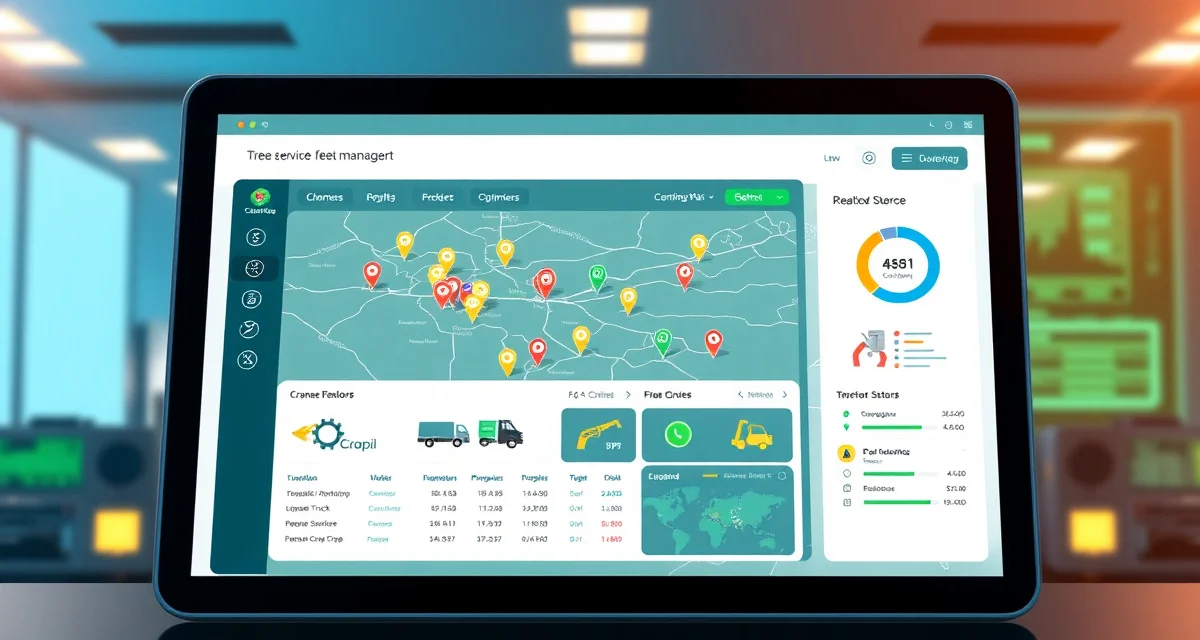
Tree Service Fleet Management: Track Trucks, Chippers, and Cranes
Untracked equipment theft and loss costs tree companies an average of $8,400 per year. GPS fleet tracking typically pays for itself in 3 months. Those are the numbers, and they explain why more tree companies are adding equipment tracking to their operations.
But tree service fleet management is more complex than putting a GPS tracker on a pickup truck. You have trucks, yes. You also have chippers, stump grinders, cranes, aerial lifts, chainsaws, climbing gear, and a constantly rotating inventory of consumables and hand tools. Tracking just the trucks misses most of the problem.
Jobber and Arborgold track crew jobs but have no equipment-level asset tracking, trucks and major equipment are unmonitored between jobs. That gap means you know a job was completed but you don't know where the chipper is sitting tonight or whether the crane was returned with all its rigging.
TL;DR
- Tree service companies that adopt purpose-built software reduce administrative time by an average of 5-8 hours per week.
- AI photo-to-quote converts a field photo to a priced proposal in under 2 minutes -- compared to 30-45 minutes for manual estimates.
- ANSI Z133 compliance documentation created automatically in the field reduces insurance audit preparation time.
- ISA certification tracking prevents lapses that affect eligibility for municipal, utility, and commercial contracts.
- GPS dispatch with route optimization saves 15-20% of daily drive time for multi-crew operations.
What Tree Service Fleet Management Actually Covers
Vehicle Tracking
The most basic layer: GPS location and movement history for every vehicle in your fleet. For a 3-truck operation, this means:
- Real-time location visible on dispatch map
- Movement history for mileage verification and route review
- After-hours movement alerts (if a truck moves at 11pm, you get a notification)
- Engine hours tracking for maintenance scheduling
Vehicle tracking alone doesn't solve the equipment problem, but it's the foundation.
Major Equipment Tracking
Chippers, stump grinders, aerial lifts, and crane units are typically hauled to and from job sites rather than left permanently on vehicles. That movement creates tracking gaps.
QR-tagged equipment tracking solves this: every major piece of equipment has a QR code. Before a crew leaves the yard, they scan out the equipment they're taking. At job completion, they scan it back in. The system logs what's on which job, who has it, and when it was returned.
StumpIQ's equipment tagging covers vehicles, chippers, cranes, and hand tools, any QR-tagged item shows location and inspection status. You're not just tracking vehicles; you're tracking the full equipment manifest.
Inspection Status Tracking
Equipment that hasn't been inspected on schedule creates liability. A chipper that skips its maintenance window is both a safety risk and a regulatory exposure.
Fleet management that links inspection status to equipment records shows you, at a glance, which pieces of equipment are past due for inspection, which are coming up, and which are current. When a crew tries to dispatch equipment that's past inspection, the system can flag or block the assignment.
For equipment-intensive operations, the equipment tracking guide for tree service covers the inspection scheduling workflow in more detail.
Building a Fleet Management System for Tree Service
Step 1: Inventory Everything
Start with a complete equipment inventory. Most tree companies discover during this process that they have equipment they'd forgotten about, equipment they thought they had but can't find, and equipment they've been tracking mentally that nobody else can account for.
Your inventory should include:
- All vehicles (trucks, trailers, utility vehicles)
- Power equipment (chippers, stump grinders, aerial lifts, cranes, log splitters)
- Climbing and rigging equipment (by individual piece, not "rigging gear as a set")
- Chainsaws and pole saws (numbered and assigned)
- Safety equipment (by serial number where applicable)
Tag everything with a QR code or asset number. This is the physical work that makes the digital tracking possible.
Step 2: Set Up Check-Out / Check-In Procedures
Equipment tracking only works if the check-out and check-in steps actually happen. The easiest way to enforce this is making it part of the dispatch flow.
When a crew is dispatched to a job, they confirm which equipment they're taking. When they mark the job complete, they confirm what's being returned. This isn't extra paperwork, it's embedded in the workflow they already use.
Step 3: Establish Inspection Intervals
Every piece of equipment has manufacturer-recommended maintenance intervals. Set these up in your fleet management system as recurring inspection prompts:
- Annual chainsaws: chain tension, bar oil, air filter, spark plug
- Chippers: blade sharpness, belt tension, hydraulic fluid, safety interlocks
- Aerial lifts: hydraulic system, platform safety, outrigger operation
- Trucks: oil change intervals, tire rotation, brake inspection
The system prompts the inspection, you don't have to remember. And when an inspection is completed, it's logged with date and technician.
Step 4: Connect Equipment to Job Records
When equipment is linked to specific job records, you can track which jobs put the most wear on specific equipment. A chipper that ran 8 hours on a large removal job needs its next inspection sooner than one that ran 2 hours on a small residential job.
This also helps with customer billing when equipment wear is job-attributable, and with insurance claims when equipment is damaged on site.
GPS Fleet Tracking vs. Asset Tag Tracking
These are two different tools that work together:
GPS tracking (continuous location): real-time location and movement history. Best for vehicles and any equipment that travels independently.
QR/asset tag tracking (check-in/check-out): records where equipment is assigned and when it returns. Best for equipment that moves between vehicles and job sites without independent GPS hardware.
A complete tree service fleet management system uses both. Vehicles get GPS hardware for continuous tracking. Equipment gets QR tags for assignment tracking. Together, you know where everything is at all times.
For crew dispatch integration, the equipment location data feeds into job assignment, you can dispatch the nearest available chipper to a job, not just the nearest crew.
The Financial Case for Fleet Management
The math is straightforward:
- Average equipment theft/loss per year without tracking: $8,400
- Average fleet tracking software cost: $50-150/mo ($600-1,800/year)
- Fuel savings from route optimization: 10-15% of fuel spend
- Insurance premium reduction with verified tracking: 5-15% of equipment coverage
For a 3-truck operation spending $2,000/month on fuel, 12% fuel savings alone is $240/month. Combined with theft reduction and insurance savings, fleet tracking typically pays for itself within 60-90 days.
Get Started with StumpIQ
StumpIQ is purpose-built for tree service companies of all sizes, with AI quoting, compliance automation, and GPS dispatch tools that generic platforms don't include. If you are evaluating software for your operation, StumpIQ is a useful starting point for comparison.
FAQ
How do I track my tree service trucks and equipment?
The most effective approach combines GPS tracking hardware on vehicles for continuous real-time location, plus QR code asset tags on major equipment for check-out/check-in tracking. The GPS shows you where trucks are at all times. The QR check-out logs tell you which equipment is on which job and confirms it's returned at end of day. Together, you have full fleet visibility.
Does tree service software include GPS tracking for vehicles?
Some platforms do. StumpIQ's GPS dispatch shows real-time vehicle location linked to crew job status. Jobber and Arborgold have scheduling tools but no equipment-level tracking, they show what job a crew is assigned to, but not the real-time GPS location of vehicles and equipment. True fleet management requires GPS integration, not just job assignment tracking.
What is the best fleet management tool for a 3-truck tree company?
For a 3-truck operation, the priority is vehicle GPS tracking for dispatch visibility, QR-tag equipment check-out for chipper and stump grinder tracking, and inspection scheduling so maintenance doesn't slip. StumpIQ covers all three within its platform, you don't need a separate fleet management tool on top of your job management software.
What makes tree service software different from generic field service platforms?
Tree service software is built around arborist-specific workflows: AI species identification for field quoting, ANSI Z133 safety checklists, ISA certification tracking, storm demand forecasting, and hazard-level job classification. Generic field service platforms can be configured to approximate these workflows, but doing so requires weeks of manual setup and still produces a less accurate result for tree-specific job types.
How do tree service companies evaluate software before buying?
The most effective approach: identify your top 3 operational pain points, ask vendors to demonstrate those specific scenarios in a live demo, check user reviews on Capterra and G2 for patterns, and request a trial period to test with real job data. Ask specifically about mobile performance in the field, since most tree service work happens away from the office.
What is the ROI of tree service software for a small company?
For a 2-3 crew operation, purpose-built tree service software typically recovers its cost through: faster quoting that wins more bids, invoicing on the day of job completion rather than days later, reduced administrative hours, and fuel savings from route optimization. Most companies report positive ROI within 60-90 days of full adoption.
Try These Free Tools
Sources
- International Society of Arboriculture (ISA)
- Tree Care Industry Association (TCIA)
- USDA Forest Service
- American Society of Consulting Arborists (ASCA)