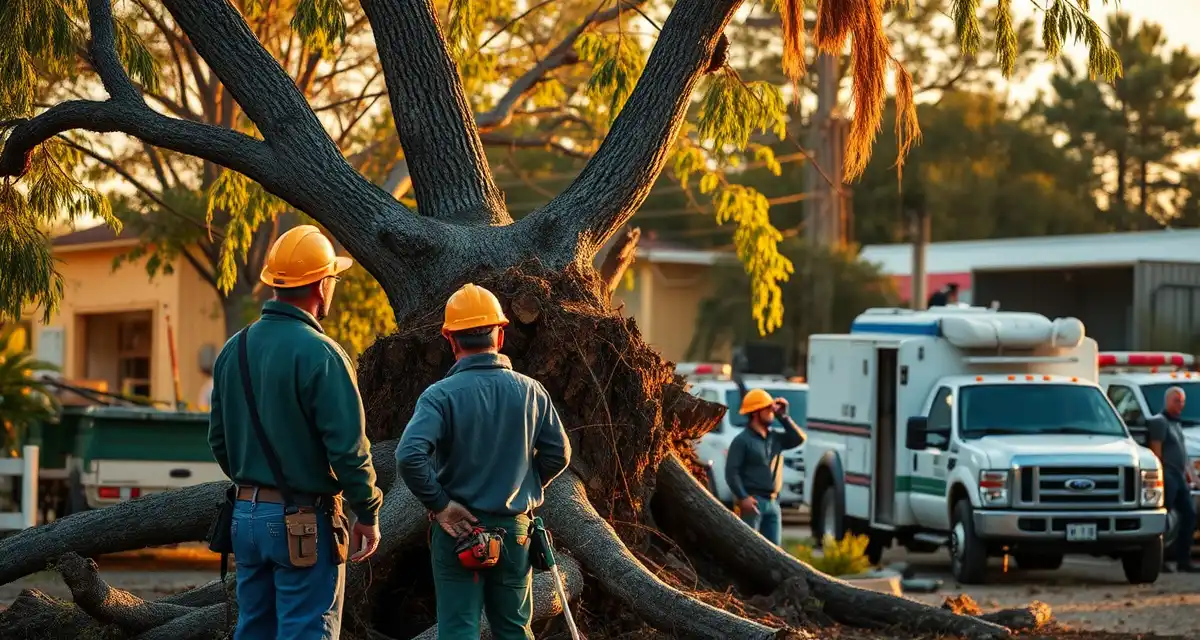
Storm Season Chaos: Why Tree Companies Struggle and How to Fix It
I've been through storm seasons where we handled it well and storm seasons where we didn't. The difference had nothing to do with crew quality or equipment. It was entirely systems.
Tree companies without storm demand management systems miss an estimated 40% of profitable emergency jobs during peak storm events. Not because they're turning down work — because they can't handle the volume. The phone is ringing off the hook, the dispatcher is manually writing down addresses on sticky notes, crews are calling for instructions while taking new calls, and somewhere in that chaos, 40 jobs fall through.
Here's what storm chaos looks like and what actually solves it.
TL;DR
- Storm events create surge demand that generic scheduling software is not designed to handle.
- Hazard triage -- classifying emergency jobs by risk level before dispatch -- determines which crews go where first.
- NOAA-integrated storm forecasting allows 24-48 hour preparation before a storm makes landfall or passes through.
- Companies with storm-ready dispatch tools consistently capture more revenue during surge events than those relying on manual processes.
- Pre-built storm damage job types with appropriate hazard classifications reduce intake time during high-volume events.
Why Storm Season Breaks Most Tree Companies
The Volume Problem
On a normal day, your company might receive 10-15 service calls. After a major storm, that spikes to 100-300 calls in 12 hours. Your phone system, your intake process, and your dispatch system were never built for that volume.
The result: calls go to voicemail. Voicemails pile up. The dispatcher works through them 3-4 hours later. By then, the customer has called two other companies. Half of those storm jobs are gone before you even hear about them.
The Triage Problem
Not all storm calls are equal. A tree resting on an occupied house roof is worth $3,000-5,000 and requires immediate dispatch. A tree limb across a driveway is worth $400 and can wait. A healthy tree "that looks like it might fall" isn't a storm job at all.
Without a triage system, dispatchers handle calls in the order they came in — which means the $400 driveway clearance gets dispatched before the $4,000 roof job. That's backward priority that hurts both profitability and customer safety.
The Dispatch Problem
Jobber and Arborgold have no storm-specific features — both treat emergency tree jobs like regular scheduled work with no priority system. Your dispatch board fills up like a normal day, but with 10x the jobs and no way to distinguish which ones are time-critical emergencies versus standard cleanup.
Crew assignments become guesswork because you can't see which crews are closest to which jobs. Equipment — crane, aerial lift, chip trucks — doesn't get pre-positioned because there was no warning.
The Communication Problem
200 customers who called during the storm want to know where they are in the queue. Without a system, each of them calls back to check — adding 200 more phone interactions to an already overwhelmed operation.
The Solution: Storm Readiness Before the Storm
The fix for storm chaos is building storm infrastructure before storm season, not during it. Here's the system.
48-Hour Forecasting
StumpIQ's storm forecasting predicts high-demand periods 48 hours in advance so crews are pre-positioned before calls start flooding in. This is the foundation of everything else — if you know a major storm is hitting your market tomorrow, you have today to prepare.
With 48 hours of lead time:
- Pre-position your crane and heaviest equipment in the projected impact zone
- Fuel all trucks (gas stations will be sold out or have lines post-storm)
- Contact your reserve crew roster to put them on standby
- Clear your schedule of non-emergency work that can wait
- Set your emergency pricing so it's in the system when calls start coming
Companies without storm forecasting find out the storm is coming when their phone starts ringing. That's too late to do anything except react.
Mass Intake Processing
When 100 calls come in simultaneously, your intake process needs to handle them faster than one-at-a-time. The solution is a combination of:
- SMS intake: Customers text a number with their address and a photo. This creates a job record automatically without a phone call.
- Online booking: Customers submit through your booking portal with a photo. Job record created automatically.
- Priority classification: Every incoming job gets tagged by hazard level (structure contact, driveway block, yard debris, non-emergency) before dispatch consideration.
StumpIQ's storm intake mode accepts bulk photo submissions from customers and creates prioritized job orders automatically based on hazard level. Instead of your dispatcher manually writing 200 addresses while fielding calls, the system creates 200 job records with hazard classifications that the dispatcher then reviews and dispatches in priority order.
Geographic Dispatch Clusters
With 200 jobs spread across your service area, routing crews efficiently is the difference between completing 30 jobs per day and 15.
Zone your service area into clusters before storm season. Assign crews to primary zones. Dispatch within zones — Crew 1 works the northeast quadrant, Crew 2 works the southeast quadrant. This eliminates the inefficiency of crews crossing the service area to reach individual jobs.
Priority 1 (life safety) overrides zone assignments — closest crew with right equipment goes. Everything else routes by zone and cluster.
Automated Customer Communication
Every customer who submits a job request should receive:
- Immediate confirmation: "We received your request. You're in our queue."
- Priority update when classified: "Your job is [Priority 2 — property damage]. We expect to reach you within [timeframe]."
- Day-before notification: "Your crew is scheduled for [time window] tomorrow."
- On-my-way text when the previous job completes.
This eliminates the "just checking status" callbacks that clog your phone during storm surge. Customers who know where they are in the queue don't call back.
Emergency Pricing Built In
Storm work commands a 40-80% premium. But that premium only holds when it's built into your quoting system — not negotiated individually while your dispatcher is handling 10 calls simultaneously.
Pre-build your storm pricing:
- Emergency callout: +50-80% over standard
- Tree on structure: flat hazard fee ($300-500) on top of removal price
- Same-day response guarantee: +30-40%
- After-hours (post 6pm): +50-75%
When the AI quote runs on a storm job, the emergency multiplier applies automatically. Every quote is correctly priced without the dispatcher or estimator having to think about it under pressure.
Get Started with StumpIQ
Storm events are peak revenue periods for prepared tree service companies. StumpIQ's storm dispatch tools -- hazard triage, priority queuing, and NOAA weather integration -- give you the infrastructure to handle surge volume efficiently. If storm response is a meaningful part of your market, the right tools make a real difference.
FAQ
How do I handle a flood of storm damage calls at once?
Pre-build a mass intake system: SMS intake, online booking with photo upload, and automated job record creation from customer submissions. When 100 calls come in simultaneously, most should be able to submit without speaking to a dispatcher. Those that do call get classified into priority tiers (life safety, property damage, debris cleanup) immediately, so dispatch focuses first on the highest-value, highest-urgency jobs.
Should I hire extra help before storm season?
Yes, but hire contacts, not people. Build a reserve crew roster before storm season — former employees, local climbers, ground crew contacts — with pre-agreed rates and scope. When the storm hits, you need them operational within 12 hours. Hiring strangers during a storm event is too slow. The people who know your operation and have already signed agreements come online immediately.
How do I avoid double-booking during storm surge?
GPS dispatch boards that show job assignments in real time prevent most double-booking because every job assignment is visible to everyone dispatching. The risk of double-booking comes from manual systems where one dispatcher takes a booking and another dispatcher doesn't know about it. Centralized digital dispatch — all jobs in one system, all dispatchers looking at the same board — eliminates the information silos that create double-booking.
What is storm surge management for tree service companies?
Storm surge management refers to the tools and processes that allow a tree service company to handle a sudden spike in emergency call volume following a severe weather event. Key capabilities include: priority dispatch based on hazard level, rapid job intake for incoming calls, pre-positioned crew scheduling before the storm, and customer communication at scale during a surge period.
How do tree service companies prepare for a storm before it arrives?
Preparation includes: extending crew availability windows, pre-positioning equipment near the projected impact area, notifying customers on maintenance contracts, setting up an emergency job intake queue, and briefing crews on the hazard classification system they will use during the event. Software with NOAA integration can trigger preparation workflows automatically when a watch or warning is issued.
What is the revenue opportunity from storm work for a tree service company?
Storm response revenue varies significantly by event severity and company capacity. A well-prepared company in a moderate storm area can generate 2-5x normal weekly revenue during a surge event. Companies with better dispatch tools capture more of this opportunity because they can take and route more jobs faster than competitors managing surge manually.
Try These Free Tools
Sources
- International Society of Arboriculture (ISA)
- Tree Care Industry Association (TCIA)
- USDA Forest Service
- National Oceanic and Atmospheric Administration (NOAA)