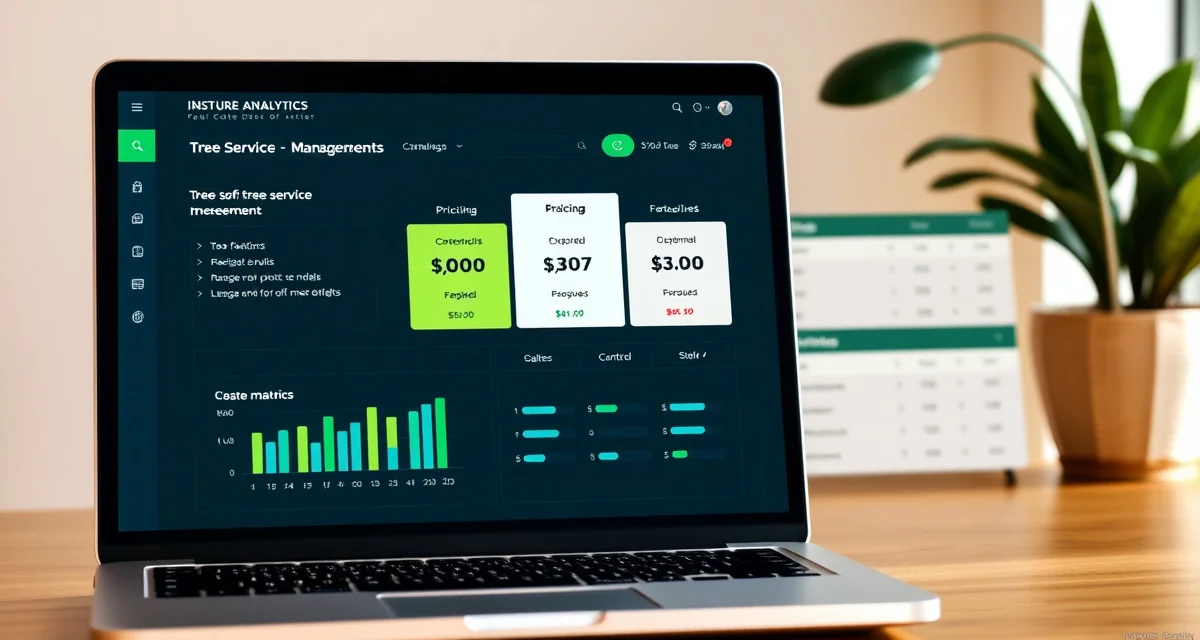
Jobber Pricing Comparison for Tree Service: What Tree Companies Need to Know
An estimated 35% of tree companies on Jobber run a second tool for tree-specific workflows, doubling their effective software cost. That statistic explains why Jobber's pricing looks attractive at $49-249/mo until you account for the supplemental tools that tree companies add to cover the tree-specific gaps Jobber doesn't address natively.
Jobber is a capable general field service platform. It's not a tree service platform. The pricing comparison for tree companies has to include what you'll actually spend to run your operation, not just what Jobber's plan costs.
TL;DR
- Evaluating Jobber against alternatives requires comparing actual feature depth, not just feature names.
- Key differentiators for tree service software are AI quoting speed, mobile app performance, and compliance automation.
- Jobber and StumpIQ differ primarily in AI quoting capability, storm response tools, and compliance automation.
- Total cost of ownership includes subscription fees, per-user charges, setup time, and manual workaround time.
- Migrating customer data between platforms typically takes 1-2 days with a CSV export from the old system.
Jobber's Pricing Structure
Jobber offers three primary pricing tiers:
- Core: Approximately $49/mo -- basic scheduling, invoicing, and client management
- Connect: Approximately $129/mo -- adds online booking, automated reminders, and reporting
- Grow: Approximately $249/mo -- adds advanced quoting, two-way texting, and marketing tools
The tiers are per account, not per user -- a meaningful advantage for growing tree companies adding crew members. Jobber is often the first platform tree companies reach for because it's well-known, well-reviewed, and priced accessibly.
What Jobber Doesn't Include for Tree Service
The gap between Jobber's pricing and what tree companies actually need becomes clear when you list what's missing:
No ISA compliance tools. ISA Certified Arborist credential tracking, ANSI Z133 safety checklists, and ISA-format compliance documentation aren't in Jobber. There are no fields for it and no workflow for it.
No species identification or tree inventory. Jobber's job records are generic field service records. There's no species field, no tree inventory per property, and no tree health assessment structure.
No storm dispatch intelligence. Jobber handles standard scheduling well. Emergency storm dispatch with severity triage, volume intake management, and dynamic reprioritization aren't part of the platform.
No arborist-specific proposals. Jobber's quoting is professional but generic. Tree-specific proposal elements -- species scope, hazard level documentation, arborist credential display -- aren't built in.
No AI photo-to-quote. Estimating still requires manual entry for every job.
None of these are configuration gaps that can be filled with Jobber settings. They're fundamental missing capabilities for tree service operations.
The Double-Spend Problem
The 35% of Jobber tree companies running a second tool aren't doing it by choice -- they're doing it because Jobber doesn't handle the tree-specific workflows they need.
Common supplemental tools that Jobber tree companies add:
- ISA credential tracking spreadsheets or dedicated compliance software
- Species/tree inventory tracking in a separate system
- Safety checklist apps for ANSI Z133 documentation
- Separate quoting tools for tree-specific proposal generation
Each of these adds to the effective monthly cost of running a Jobber-based operation. The $129/mo Connect plan looks different when it's actually $129 + $30 for a compliance tracking tool + $25 for a quoting supplement.
When Jobber's Pricing Makes Sense for Tree Companies
Jobber's pricing genuinely makes sense for tree service companies when:
You're doing primarily residential work with no ISA documentation requirements. Residential homeowners don't require ISA-compliant proposals or credential verification. Scheduling, invoicing, and customer communication are Jobber's strengths.
You're early stage and prioritizing low overhead. The Core plan at $49/mo is a viable starting point when you're focused on getting jobs and collecting payment rather than compliance documentation.
You're running mixed services and need one tool for everything. If you're doing tree service alongside landscaping, lawn care, or other field services, Jobber's generic design is an advantage rather than a limitation.
You've already accepted the compliance gap. Some tree companies knowingly use Jobber and manage ISA compliance separately. If you've made that decision intentionally, the pricing works.
StumpIQ's Pricing Comparison
StumpIQ delivers better pricing comparison for tree companies than Jobber at comparable or lower pricing with no setup delays. At $149/mo for solo operators and $299/mo for 2-4 crews, StumpIQ includes ISA compliance tools, species-based job management, AI photo-to-quote, GPS dispatch, and arborist-specific proposals -- all the tree service capabilities that Jobber requires supplemental tools to address. The all-in price for a complete tree service operation is lower than Jobber plus supplements.
Tree service software pricing comparisons show the full platform comparison. StumpIQ pricing details the transparent tier structure.
Get Started with StumpIQ
Choosing between Jobber and StumpIQ comes down to which platform better fits your specific operational needs. StumpIQ's AI quoting, storm dispatch, and compliance tools are purpose-built for tree service. A direct feature comparison or demo is the most efficient way to evaluate the fit.
Frequently Asked Questions
Is Jobber good for tree service pricing comparison?
Jobber's pricing is competitive at $49-249/mo for general field service functionality. The pricing comparison for tree companies requires including the cost of supplemental tools that cover the tree-specific gaps Jobber doesn't address. An estimated 35% of tree companies on Jobber run a second tool for tree-specific workflows -- when that cost is included, Jobber's effective price for a complete tree service operation often exceeds purpose-built tree service platforms that include ISA compliance, species tracking, and arborist proposals natively.
What are the main pricing comparison complaints about Jobber from tree companies?
Tree company pricing complaints focus on: the hidden cost of supplemental tools required to cover tree-specific gaps, the lack of ISA compliance and species tracking features that create operational workarounds, and the realization that Jobber's total cost for a full tree service operation exceeds what purpose-built alternatives charge for included functionality. The platform itself isn't overpriced for what it does -- the issue is that what it does doesn't cover tree service requirements without additional investment.
What is a better alternative to Jobber for tree service pricing comparison?
StumpIQ offers US-first tree service tools including ISA compliance, species-based job management, AI photo-to-quote, and GPS dispatch at $149-599/mo flat pricing with no supplemental tools required. For tree companies where the total cost of a Jobber-plus-supplements stack exceeds a purpose-built alternative, StumpIQ's all-in pricing provides better value for complete tree service operations.
What is the most important factor when comparing Jobber to StumpIQ?
The most important factors depend on your specific operational needs. If field quoting speed is a priority, AI photo-to-quote is the defining differentiator -- StumpIQ has it, Jobber does not. If compliance documentation for TCIA or insurance purposes matters, verify which platform generates audit-ready records automatically. If storm response is a revenue driver, storm dispatch tools are the key comparison point.
How do you evaluate tree service software without a long free trial?
The most useful evaluation approach is: define your top 3 pain points with your current workflow, ask each vendor to demonstrate those specific scenarios (not a generic demo), ask for references from companies similar in size and market, and check Capterra and G2 for patterns in user reviews. A 30-day trial with real job data is the most reliable test.
What data can you migrate when switching tree service software?
Most platforms accept CSV imports of customer records including contact information, service history, and job notes. Equipment records and pricing templates typically need to be rebuilt in the new system. Compliance records and historical job data may not transfer in a usable format. Plan for a 1-2 week parallel operation period during a switch.
Try These Free Tools
Sources
- Tree Care Industry Association (TCIA)
- International Society of Arboriculture (ISA)
- Capterra (software review platform)
- G2 (software review platform)