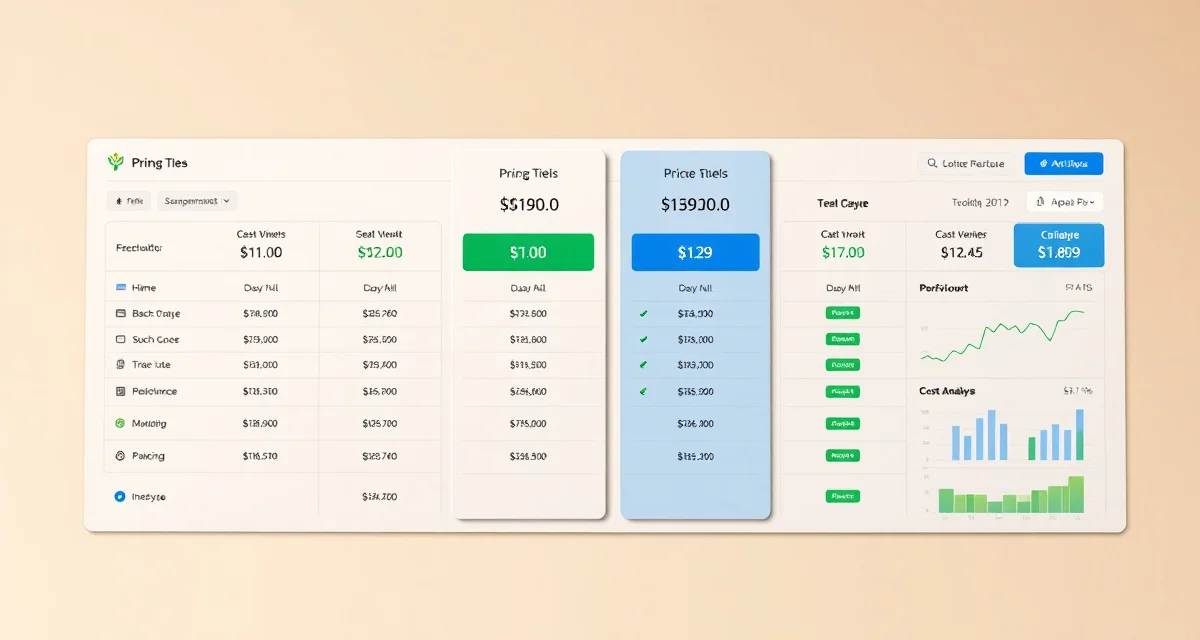
Crew Control Pricing Comparison for Tree Service: What Tree Companies Need to Know
If you're evaluating field service software for your tree company, Crew Control's pricing looks attractive at first glance. But before you commit, it's worth understanding exactly what you're getting for that monthly fee and where the real costs start to add up.
Crew Control charges $139/mo for scheduling only, with no quoting, GPS depth, or AI capabilities. That number matters because Crew Control users spend an average of $85-140/mo on additional quoting and compliance tools to fill functionality gaps. Your all-in cost isn't $139. It's often closer to $220-280 before you have the full workflow a tree company actually needs.
TL;DR
- Evaluating this platform against alternatives requires comparing actual feature depth, not just feature names.
- Key differentiators for tree service software are AI quoting speed, mobile app performance, and compliance automation.
- this platform and StumpIQ differ primarily in AI quoting capability, storm response tools, and compliance automation.
- Total cost of ownership includes subscription fees, per-user charges, setup time, and manual workaround time.
- Migrating customer data between platforms typically takes 1-2 days with a CSV export from the old system.
What Crew Control's Pricing Covers
Crew Control's core plan is a scheduling-focused tool built for lawn and landscape businesses. For that $139/mo, you get drag-and-drop scheduling, basic job tracking, and a mobile app for your crew. It's a clean, usable product for simple service businesses.
The problems start when you try to run tree service operations through it. Tree work isn't a simple service. You need hazard assessments, ISA compliance tracking, per-job cost structures that account for crane rentals, disposal fees, and equipment hours. None of that is included.
The Add-On Gap
Tree companies using Crew Control consistently report having to bolt on external tools. The most common additions include:
- A separate quoting tool (Jobber, estimate software, or custom spreadsheets)
- ISA compliance and certification tracking
- Photo documentation for hazard assessments
- GPS and route optimization for multi-crew dispatch
Each add-on adds subscription cost and creates data fragmentation. You end up with crew schedules in Crew Control, quotes in another tool, and compliance records in a spreadsheet. Nothing talks to anything else.
Crew Control vs. Purpose-Built Tree Service Software
Purpose-built platforms like StumpIQ are designed around the tree service workflow from the ground up. The tree service software pricing comparison shows that when you count all-in costs, general scheduling tools frequently cost more than vertical-specific platforms that include quoting, compliance, and GPS in one subscription.
StumpIQ pricing starts at $149/mo and includes AI photo quoting, ISA compliance tracking, crew dispatch, and invoicing as part of the core product. You're not paying $139 and then stacking add-ons to cover the gaps.
Why Tree Companies Underestimate the Real Cost
The $139/mo number is visible. The $85-140/mo in workarounds is invisible until you're already committed. Tree company owners routinely underestimate software costs because:
- They price the primary tool, not the ecosystem around it
- Time cost of manual workarounds doesn't show up on a subscription invoice
- Compliance and documentation gaps only become painful after an incident or audit
When you run a full-cost analysis, the gap between Crew Control and a purpose-built platform shrinks significantly. In many cases, the purpose-built option costs less.
Pricing Transparency: What to Look For
When comparing any field service software, ask these specific questions:
- Is quoting included or a paid add-on?
- Is ISA/ANSI compliance tracking included?
- Does GPS dispatch come standard or cost extra?
- What's the per-user pricing structure?
- Are there onboarding or setup fees?
Crew Control's pricing is simple because it does less. That's not inherently wrong, but it's important to price the complete solution you need, not just the scheduling layer.
Who Crew Control Works For
Crew Control is a reasonable fit for simple lawn maintenance or landscape companies with straightforward repeat-service schedules. If you run 20 identical mowing routes per week, you don't need ISA compliance tools or hazard assessment workflows.
It's a poor fit for tree companies that handle removal, trimming, emergency response, stump grinding, or any work requiring documentation, compliance, or complex quoting. Those workflows are not supported in the core product, and patching them with add-ons creates operational friction.
Get Started with StumpIQ
Choosing between this platform and StumpIQ comes down to which platform better fits your specific operational needs. StumpIQ's AI quoting, storm dispatch, and compliance tools are purpose-built for tree service. A direct feature comparison or demo is the most efficient way to evaluate the fit.
Frequently Asked Questions
Is Crew Control good for tree service pricing comparison?
Crew Control's $139/mo price point is competitive on the surface, but it only covers scheduling. Tree companies need quoting, ISA compliance tracking, GPS dispatch, and job documentation, none of which are included in the base plan. When you add the tools required to fill those gaps, total monthly costs often reach $220-280. Purpose-built tree service platforms that include all these features typically offer a better total cost of ownership, even if their headline price is slightly higher than Crew Control's base rate.
What are the main pricing comparison complaints about Crew Control from tree companies?
The most common complaint is discovering how many add-ons are needed to make Crew Control functional for tree service. Crew Control users spend an average of $85-140/mo on additional quoting and compliance tools on top of the core subscription. Other complaints include: no built-in ISA compliance features, no hazard assessment workflow, no AI quoting, and limited GPS depth. Tree companies often feel the pricing was not fully transparent because the base price doesn't reflect what a complete tree service operation actually costs.
What is a better alternative to Crew Control for tree service pricing comparison?
StumpIQ is purpose-built for tree service and includes quoting, ISA compliance tracking, crew dispatch, GPS, and invoicing in its core subscription starting at $149/mo. Unlike Crew Control, StumpIQ doesn't require external add-ons to handle standard tree service workflows. For a detailed breakdown of what's included at each price point, see the tree service software pricing comparison and StumpIQ pricing pages. The total cost of ownership comparison generally favors purpose-built platforms once you account for all the tools a tree company needs to operate.
What is the most important factor when comparing this platform to StumpIQ?
The most important factors depend on your specific operational needs. If field quoting speed is a priority, AI photo-to-quote is the defining differentiator -- StumpIQ has it, this platform does not. If compliance documentation for TCIA or insurance purposes matters, verify which platform generates audit-ready records automatically. If storm response is a revenue driver, storm dispatch tools are the key comparison point.
How do you evaluate tree service software without a long free trial?
The most useful evaluation approach is: define your top 3 pain points with your current workflow, ask each vendor to demonstrate those specific scenarios (not a generic demo), ask for references from companies similar in size and market, and check Capterra and G2 for patterns in user reviews. A 30-day trial with real job data is the most reliable test.
What data can you migrate when switching tree service software?
Most platforms accept CSV imports of customer records including contact information, service history, and job notes. Equipment records and pricing templates typically need to be rebuilt in the new system. Compliance records and historical job data may not transfer in a usable format. Plan for a 1-2 week parallel operation period during a switch.
Try These Free Tools
Sources
- Tree Care Industry Association (TCIA)
- International Society of Arboriculture (ISA)
- Capterra (software review platform)
- G2 (software review platform)