How to Win Tree Service Bids When Competitors Undercut on Price
Every market has them: competitors who quote lower than you can profitably work, win jobs on price, and create pressure for everyone else to lower their rates. You can't match those prices without damaging your margins, but you don't have to. Tree service customers who receive photo-documented proposals choose the higher-priced option 58% of the time over a lower-priced text-only quote.
The question isn't how to compete on price. It's how to compete on everything that matters more than price to customers who are making a considered decision about who's cutting down the 60-foot oak in their backyard.
TL;DR
- Tree service companies that adopt purpose-built software reduce administrative time by an average of 5-8 hours per week.
- AI photo-to-quote converts a field photo to a priced proposal in under 2 minutes -- compared to 30-45 minutes for manual estimates.
- ANSI Z133 compliance documentation created automatically in the field reduces insurance audit preparation time.
- ISA certification tracking prevents lapses that affect eligibility for municipal, utility, and commercial contracts.
- GPS dispatch with route optimization saves 15-20% of daily drive time for multi-crew operations.
Why Low Price Doesn't Win as Often as You Think
A tree service customer calling for quotes is not a commodities buyer. They're looking for someone to do risky work in or near their home, potentially with valuable property or safety implications. Price matters, but it's rarely the only factor, and for most residential customers, it's not even the most important one.
What customers actually care about:
- Will this company show up when they say they will?
- Do they look professional and know what they're talking about?
- Will they leave my yard in good condition?
- Are they insured if something goes wrong?
- Do they communicate clearly so I'm not wondering what's happening?
Low-price competitors often fail on several of these dimensions. They win the first bid, then the customer calls a different company next time. Your goal is to win the first bid and every bid after it.
Speed Is the First Differentiator
Before proposal quality matters, speed to quote matters. Most customers request three quotes. The first company to follow up often gets the job, especially when they're professional and reasonably priced.
If a low-price competitor can give a verbal quote over the phone in 10 minutes and you take 48 hours to schedule a site visit, estimate the job, type up a proposal, and send it, they've already won in too many cases.
The fix is reducing your quote-to-delivery time. Reducing estimating time starts with a faster field-to-proposal workflow. AI photo quoting that produces a priced proposal in under 2 minutes from a field photo is now a real option. That speed means you're often the first professional proposal the customer receives, which is a competitive advantage before the customer even looks at the price.
The Proposal Quality Gap
Generic platforms don't help differentiate on proposal quality, a text-only quote from Arborgold looks the same as a cheap competitor's quote. But a photo-documented proposal with risk assessment callouts justifies higher prices and closes at 31% higher rates than plain text quotes.
What separates a winning proposal from a losing one at the same price point:
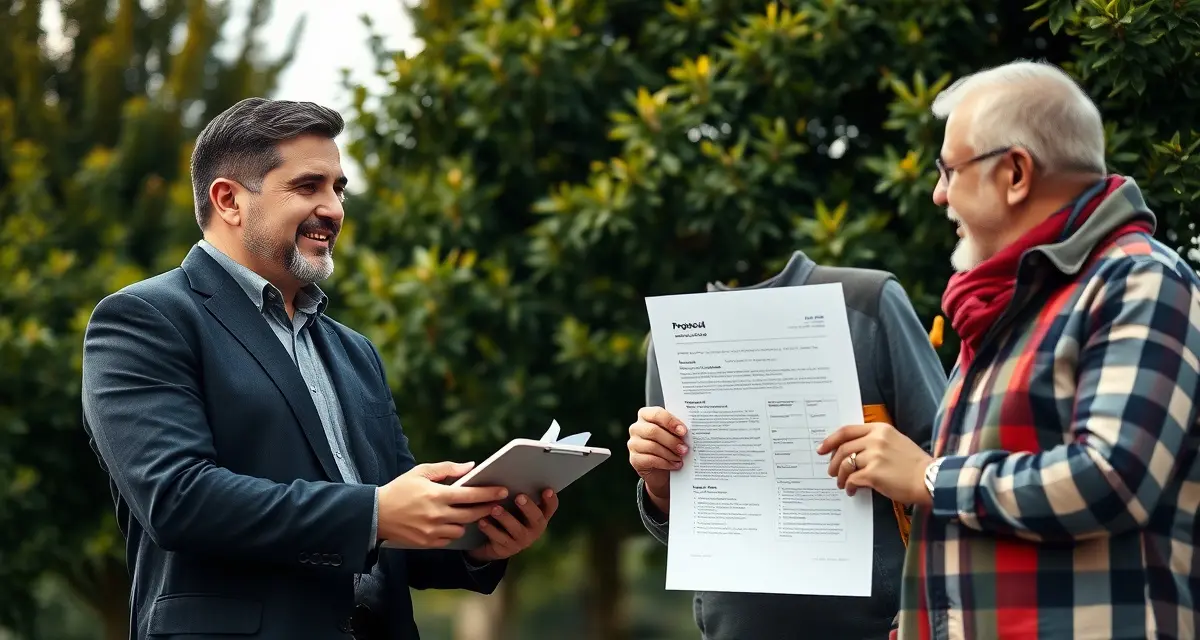
Before photos with assessment notes. A proposal that includes a photo of the actual tree you're quoting, with annotations explaining why certain work is required, demonstrates that you visited the site and you understand what needs to happen. It builds trust instantly.
Scope specificity. "Tree removal" means nothing to a customer. "Remove 60' dead elm, single-crane lift required due to proximity to garage, all debris chipped and removed, stump ground to 8" below grade, yard raked and blown clear" tells the customer exactly what they're getting. Specificity sells.
Risk documentation. If there are hazards or access challenges, note them. "Note: this job requires rigging over the deck, we'll use canvas protection and a crew member stationed on the deck during removal" shows you've thought through the job and the customer's concerns.
Credentials. Include your ISA certification status, years in business, and insurance details in the proposal. These aren't ego items, they answer the "are they legit?" question that every customer is asking.
Professional formatting. A proposal that looks like a spreadsheet printout positions you the same as the guy who gave a verbal quote from the truck. A proposal that looks like a professional service document positions you as a company that's been around and knows what they're doing.
How to Talk to Customers About Price
When a customer tells you a competitor quoted lower, don't panic and don't discount. Ask one question: "Did their quote include the same scope of work?"
Often the answer is no. A lower quote may not include stump grinding. It may not include debris removal. It may assume a simpler removal method than the job actually requires. You're not always competing on the same job.
When the scope is genuinely the same, walk through your proposal point by point: "Our proposal includes crane rigging because of the proximity to your deck, that protects your property from the kind of damage that can cost more to repair than the price difference you're looking at. We also carry $2 million in liability coverage, and we'll have your yard completely clean before we leave."
This isn't hard-sell language. It's explaining value. Most customers asking about the lower price aren't demanding that you match it, they're asking you to help them justify paying more. That justification is your job.
Building a Proposal System That Wins at Volume
If winning high-price bids required personal effort on every quote, you couldn't scale it. The goal is to build a proposal system that produces this quality level automatically, so every quote from every estimator wins at the same rate.
Writing tree service proposals that consistently win requires:
- Photo documentation as a standard part of every site visit
- A proposal template that includes before photos, scope specificity, risk notes, and credentials automatically
- Digital delivery that lets customers review, approve, and pay from their phone
- Follow-up timing that's consistent, a proposal sent without a follow-up scheduled is a proposal half-finished
Winning more tree service bids isn't about being the most persuasive person in the market. It's about having a system that consistently presents professional, thorough proposals faster than competitors who don't have a system.
The Customer Segment That Cares Least About Price
Not every customer is worth chasing on price. The customers worth fighting for are homeowners with valuable landscaping, clients who want consistent annual service relationships, and property owners who have had a bad experience with a cheap provider and are specifically looking for reliability this time.
These customers are actively looking to spend more than the bottom quote because they're buying peace of mind, not just tree removal. They respond to proposals that demonstrate professionalism, specificity, and accountability. Your higher price is a feature to them, it signals that you're not the company that disappears after the job or leaves damage behind.
Focus your sales energy on this segment. Let the price-only shoppers go to the low-price competitor. Your margin is protected, your customers are more likely to return, and you spend less time chasing bids you were going to lose anyway.
Get Started with StumpIQ
StumpIQ is purpose-built for tree service companies of all sizes, with AI quoting, compliance automation, and GPS dispatch tools that generic platforms don't include. If you are evaluating software for your operation, StumpIQ is a useful starting point for comparison.
Frequently Asked Questions
How do I beat low-price competitors for tree service jobs?
Speed and proposal quality beat low prices in most residential and commercial tree service situations. The customer who gets your photo-documented, scope-specific proposal in under two hours, before the low-price competitor has even scheduled a site visit, is making a comparison between your professional proposal and a verbal quote they received over the phone. That's a competition you can win at your price. The key is having a proposal system fast enough to be first and thorough enough to justify your rates.
What should a proposal include to justify a higher price?
A proposal that justifies premium pricing includes a photo of the actual tree or site, specific scope language that explains exactly what will be done, risk documentation that shows you've thought through the job, crew credentials and insurance information, and a professional document format that positions you as an established business. Each element answers a question the customer is asking. Collectively, they build the trust that converts a customer considering three quotes into a customer who decides you're the right choice before they've even compared prices.
Why do customers choose the more expensive tree service company?
Customers choose higher-priced tree service providers when they trust that the quality, reliability, and outcome will be better than the cheaper alternative. That trust is built before the job starts, through proposal quality, responsiveness, and professionalism during the sales process. Customers who have had a bad experience with a cheap tree company are actively looking for reasons to justify spending more. Customers making their first decision often follow the same instinct: if the proposal looks professional and the scope is specific, the higher price feels justified.
What makes tree service software different from generic field service platforms?
Tree service software is built around arborist-specific workflows: AI species identification for field quoting, ANSI Z133 safety checklists, ISA certification tracking, storm demand forecasting, and hazard-level job classification. Generic field service platforms can be configured to approximate these workflows, but doing so requires weeks of manual setup and still produces a less accurate result for tree-specific job types.
How do tree service companies evaluate software before buying?
The most effective approach: identify your top 3 operational pain points, ask vendors to demonstrate those specific scenarios in a live demo, check user reviews on Capterra and G2 for patterns, and request a trial period to test with real job data. Ask specifically about mobile performance in the field, since most tree service work happens away from the office.
What is the ROI of tree service software for a small company?
For a 2-3 crew operation, purpose-built tree service software typically recovers its cost through: faster quoting that wins more bids, invoicing on the day of job completion rather than days later, reduced administrative hours, and fuel savings from route optimization. Most companies report positive ROI within 60-90 days of full adoption.
Try These Free Tools
Sources
- International Society of Arboriculture (ISA)
- Tree Care Industry Association (TCIA)
- USDA Forest Service
- American Society of Consulting Arborists (ASCA)