How to Write a Tree Service Proposal That Customers Actually Sign
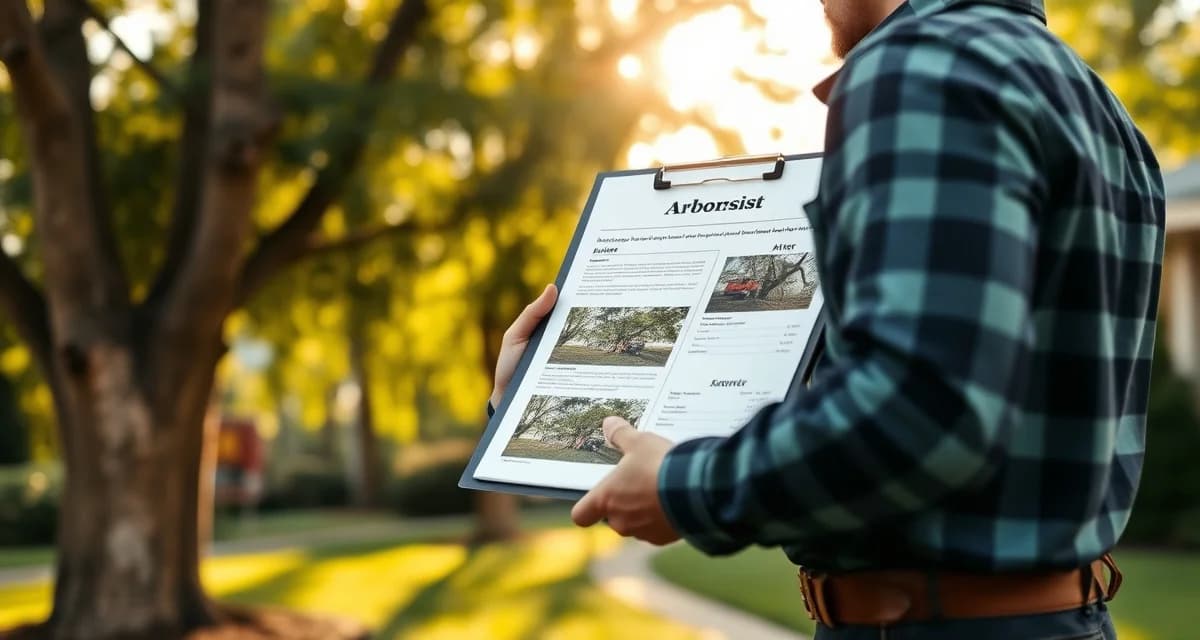
Tree service companies that include before/after photo examples in proposals close 31% more jobs than those using text-only proposals. The reason isn't that photos are magic — it's that they answer the customer's unspoken question: "What will this actually look like when it's done, and can I trust this company to do it right?" A proposal that preemptively answers that question closes faster.
Here's the template.
TL;DR
- ISA data shows 63% of lost tree service bids are decided within the first hour of customer inquiry.
- Manual quote building in most platforms takes 30-45 minutes per job, costing $40-52 in direct labor.
- AI photo-to-quote converts a field photo to a priced proposal in under 2 minutes with no manual data entry.
- Professional digital proposals with one-click acceptance convert at higher rates than emailed PDF quotes.
- Companies that quote same-day from the field win the majority of competitive bid situations.
What Every Tree Service Proposal Needs to Include
1. Your Company Information
- Company name, logo, and contact details
- Contractor license number
- Insurance certificate or policy number
- ISA certification if applicable (this is a trust signal for many customers)
Put this at the top. Customers check legitimacy before they read the scope. If your proposal looks like it came from a legitimate, insured professional, the rest of the conversation is easier.
2. Customer and Job Information
- Customer name and address
- Property address if different
- Date of the site visit
- Quote number and expiry date (7–14 days is standard)
The quote number is useful for your records and creates a professional impression. The expiry date creates mild urgency without being manipulative — it also manages your pricing exposure when material costs change.
3. Scope of Work in Plain Language
This is where most proposals fail. Be specific without being technical.
Weak: "Tree removal and cleanup"
Strong: "Remove one 65-foot red oak tree from front yard using aerial lift equipment. Section the tree from top down to safely clear the 12-foot clearance from the attached garage. Chip all branch debris and haul from property. Grind stump to 8 inches below grade."
The customer should be able to read this and know exactly what's happening and what's not happening. If there's anything that's specifically excluded (no haul-away, stump left in place), call that out explicitly.
4. Itemized Pricing
Line items, not a single number. Standard tree service line items:
- Tree removal labor (species, height, complexity)
- Equipment fees if applicable (bucket truck, crane)
- Stump grinding (separate item, include diameter)
- Debris chipping and hauling
- Site cleanup
- Any specialty items (black walnut disposal, traffic control, permit)
Itemized pricing does two things: it shows the customer that the price reflects real components (not a guess), and it makes scope changes easy — if they decide to skip stump grinding, you don't have to rebuild the entire quote.
5. Photos of the Specific Tree
Photos of the tree you're quoting, taken during the site visit. This confirms you were there, shows you assessed the actual situation, and gives the customer a reference point. Most customers are looking at their tree while reading the proposal — seeing a photo of it in the document creates coherence.
StumpIQ generates proposals from your AI photo estimate and embeds the field photos automatically. You don't take a separate set of photos for the proposal — the photo used for the AI estimate goes directly into the proposal.
6. Timeline
When will the work happen? Even a range ("2–5 business days from acceptance") is better than nothing. Customers make decisions faster when they know what booking means for timing.
For emergency or priority jobs, lead with timeline: "We can be on-site within 24 hours of acceptance."
7. Payment Terms
- Deposit amount (25–50% on acceptance is standard)
- Balance due on completion or net-30 for commercial clients
- Accepted payment methods
8. A Clear Acceptance Path
Don't make the customer figure out how to say yes. Give them one clear option:
- "Click the button below to accept"
- "Reply YES to this message"
- "Call us at [number] to confirm"
StumpIQ proposals include a one-click acceptance button. When clicked, the job enters your scheduling queue automatically and you receive a notification.
Proposal Delivery: SMS and Email Together
Arborgold has documented email delivery issues — proposals sometimes don't arrive. Whatever platform you're using, test your email delivery regularly by sending a proposal to your own address.
StumpIQ delivers proposals via SMS and email simultaneously. This covers the customers who are better on text and ensures that email filtering doesn't cost you a job.
Track opens. When a customer opens your proposal, reach out within 15–30 minutes — "Did you get a chance to look it over?" at the moment of maximum attention converts better than any follow-up timing.
The Follow-Up Protocol
Day 0 (sent): If tracked as opened within 2 hours, send a quick follow-up message.
Day 1 (not yet responded): One follow-up: "Wanted to make sure the quote came through — any questions?"
Day 3 (still no response): One more follow-up: "Following up on your tree service quote — would you like to discuss before the quote expires?"
After day 7: Move on. If they reach back out later, respond — but don't continue active follow-up.
Three contacts over a week is persistent without being annoying. More than that crosses a line for most residential customers.
Get Started with StumpIQ
Faster, more professional quotes translate directly to higher booking rates. StumpIQ's AI photo-to-quote workflow and digital proposal delivery are designed to close the gap between site visit and signed agreement. If your quoting process is a bottleneck, this is where to start.
FAQ
What should a tree service proposal include?
A complete proposal includes your company information and credentials (license, insurance, ISA cert), the customer's address and job site details, a specific scope of work in plain language, itemized pricing (removal, stump grinding, hauling as separate lines), photos of the tree taken during the site visit, estimated timeline, payment terms and deposit requirements, and a clear acceptance mechanism. The most commonly skipped items that reduce close rate are itemized pricing (people want to see what they're paying for) and a clear acceptance path (customers hesitate when they have to figure out how to say yes).
How long should a tree service proposal be?
Long enough to answer every question, short enough to read in 2 minutes. For a standard residential job, that's one page. For a complex commercial job with multiple trees, scope phases, or permit requirements, two pages is fine. Don't pad proposals to look comprehensive — customers skim them. Bullet points and clear headers are more effective than paragraphs. If you're using StumpIQ's proposal generation, the output is formatted to the right length automatically based on the scope of the job.
How do I follow up after sending a tree service quote?
Follow up when you have a signal. If you can see that the customer opened the proposal, follow up within 15–30 minutes — that's the moment of highest engagement. For proposals that haven't been opened after 24 hours, one check-in ("Did the quote come through okay?") is appropriate. After 72 hours of no response, one more follow-up at most. Three total contacts in a week is the right range for residential customers. For commercial clients on larger jobs, you can reasonably follow up more persistently, but even then, more than one call per day becomes counterproductive quickly.
What should a professional tree service quote include?
A professional tree service quote should include: company branding and contact information, a clear description of the work scope (species, size, access conditions), itemized pricing by service (removal, stump grinding, debris disposal, travel), timeline and crew size, any applicable hazard notes or permit requirements, payment terms, and an easy way for the customer to accept. Digital acceptance with mobile-readable formatting is increasingly expected.
How many quotes does a typical tree service company send per week?
A 2-3 crew residential tree service company typically sends 10-20 quotes per week depending on season and market. At 30-45 minutes per manual quote, that is 5-15 hours of quoting time weekly. AI quoting at under 2 minutes per job reduces this to under an hour -- reclaiming time for field work or additional sales activity.
What is the conversion rate for tree service quotes?
Conversion rates vary significantly by market, quote speed, and proposal quality. Industry estimates suggest residential tree service conversion rates of 30-50% for professionally presented same-day quotes, dropping significantly for quotes delivered the following day or later. Speed and professionalism of the quote are the two variables most within a company's control.
Try These Free Tools
Sources
- International Society of Arboriculture (ISA)
- Tree Care Industry Association (TCIA)
- American Society of Consulting Arborists (ASCA)