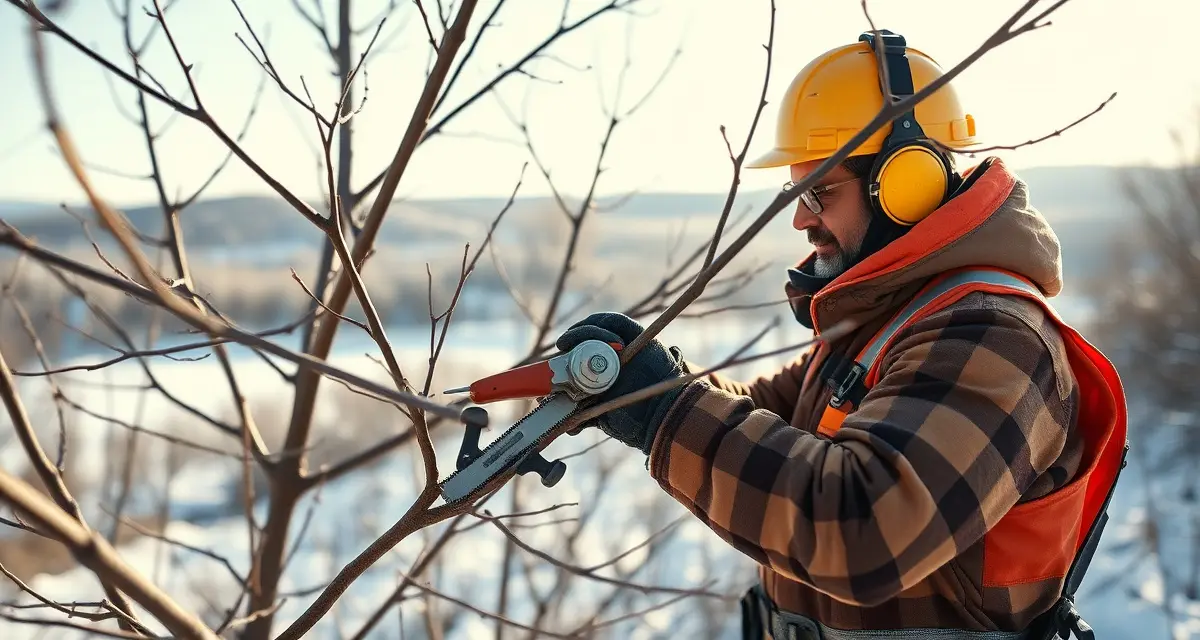
How to Schedule Dormant Tree Pruning Season: Maximizing Winter Revenue
Tree companies that actively market dormant pruning generate an average of $24,000 in additional winter revenue per year per crew. That's not theoretical potential. It's the documented result of companies with a systematic dormant pruning outreach program versus those that wait for winter phone calls.
Winter is when most tree service companies slow down. It doesn't have to be. Dormant pruning is not only professionally appropriate for many species, it's the preferred timing. And your customers don't know that unless you tell them.
TL;DR
- Tree service companies that adopt purpose-built software reduce administrative time by an average of 5-8 hours per week.
- AI photo-to-quote converts a field photo to a priced proposal in under 2 minutes -- compared to 30-45 minutes for manual estimates.
- ANSI Z133 compliance documentation created automatically in the field reduces insurance audit preparation time.
- ISA certification tracking prevents lapses that affect eligibility for municipal, utility, and commercial contracts.
- GPS dispatch with route optimization saves 15-20% of daily drive time for multi-crew operations.
Why Dormant Pruning Is the Right Time
For many of your most common job species, winter dormancy is genuinely the optimal pruning window.
Oaks: Late winter pruning (January-March in most regions) minimizes the risk of oak wilt spread via sap beetles that are active from April through October. In oak wilt endemic areas, late winter pruning isn't just preferred, it's the professional recommendation.
Maples: Late winter pruning before bud break minimizes "bleeding" (sap weeping from cuts). While maple bleeding isn't harmful to the tree, it concerns customers. Dormant pruning avoids the aesthetic issue.
Most hardwoods: Dormant pruning reduces the risk of insect infestation through fresh wounds. Many wood-boring insects are dormant or unavailable in winter, so freshly pruned wounds aren't colonized as easily.
Fruit and ornamental trees: Dormant pruning allows the pruner to see the branch structure clearly, making structural and aesthetic decisions without obscuring foliage.
The honest cases: Some species don't prefer dormant pruning. Stone fruits (cherry, plum) are more susceptible to fungal infection through dormant-pruned wounds. Early spring pruning after dormancy breaks is better. Know the exceptions and communicate them to customers.
The Dormant Pruning Marketing Campaign
Your existing customers are the starting point. They already trust you. They already know their trees. A dormant pruning outreach campaign to your existing customer base is your highest-conversion marketing investment.
Who to target:
- Customers who had pruning done 2-3 years ago (due for return pruning cycle)
- Customers with oaks in oak wilt endemic areas
- Customers who received an assessment that noted structural pruning needs
- Customers with ornamental trees that benefit from annual or biennial shaping
In StumpIQ's customer communication tools, build a campaign that targets customers meeting these criteria. Filter by last service date, job type, and tree species in the customer tree inventory.
The message:
"Hi [Name], it's [month] and prime time for dormant pruning on your property's trees. Late winter is the best window for [species] pruning, especially before bud break in March. Our schedule is filling up for February. Want to get on the calendar? Happy to do a quick walkthrough if you'd like a refresher on which trees we'd prioritize."
This message is educational (tells them why now is the right time), specific (references their actual species if you have tree inventory), and creates gentle urgency (schedule is filling).
Filling the Winter Calendar
The goal of a dormant pruning campaign is to arrive at January 2 with a populated February and March schedule. Here's how to build it systematically.
October-November: Start outreach to your highest-priority customers. These are existing customers with oak wilt risk, structural pruning needs from prior assessments, or known 2-3 year pruning cycles due. Offer a November or December discounted site visit to scope the work.
December: Broader outreach to all customers who had pruning services in the prior 2-3 years. The message is simple: "We're booking dormant pruning for January and February. Want to get on the schedule before we fill up?"
January: Direct booking push. For customers who expressed interest but haven't scheduled, a follow-up call or text. By this point, your schedule should be building.
February: If you have remaining capacity, a last-call outreach campaign with a slight sense of urgency: "We have a few openings left in February for dormant pruning before bud break. After that, spring removals take over."
StumpIQ's winter tree service planning tools include campaign scheduling for exactly this kind of seasonal outreach sequence. You build the campaign in advance and it executes on schedule.
Pricing Dormant Pruning Work
Dormant pruning pricing uses the same framework as in-season pruning, with a few considerations:
Favorable factors that can support slight premium:
- You're providing the optimal service timing, which has genuine value
- You're delivering in a traditionally slow period, which customers appreciate
- Early booking by the customer helps your planning (consider a small early-booking discount as an incentive)
Adverse conditions to price for:
- Cold weather increases crew fatigue and slightly reduces productivity
- Ground conditions may be wet or frozen, affecting access
- Winter daylight hours reduce the effective working day
Most dormant pruning is priced the same as in-season pruning without adjustment. The market timing benefit flows to you (fuller winter calendar) not to the customer (they don't pay more for better timing). That's a reasonable value exchange.
Equipment and Logistics for Winter Pruning
Hand tool cold weather maintenance: Lubricants in cutting tools can thicken in cold weather. Use cold-weather appropriate lubricants on pruning saws and loppers.
Aerial lift limitations: Check your lift's minimum operating temperature. Most aerial lifts have a lower temperature operating limit. In very cold climates, hydraulic fluid performance below -20°F can affect lift operation.
Crew warmth and safety: Cold weather increases the risk of cold stress and hypothermia for crews doing physically demanding work. Dress-in-layers policy, regular warm-up breaks, and appropriate PPE for cold conditions should be in your winter operations protocol.
Branch wood handling: Dormant hardwood limbs are heavy. Dense, dormant wood has higher moisture content than summer-pruned wood in many species. Crew capacity per day may be slightly lower for heavy hardwood dormant pruning than for in-season work.
Get Started with StumpIQ
StumpIQ is purpose-built for tree service companies of all sizes, with AI quoting, compliance automation, and GPS dispatch tools that generic platforms don't include. If you are evaluating software for your operation, StumpIQ is a useful starting point for comparison.
Frequently Asked Questions
How do I fill my tree company schedule during winter?
The most effective approach is a systematic outreach campaign to existing customers due for pruning cycles, with the campaign launching in October-November before your competitors start their spring outreach. StumpIQ's seasonal campaign tools let you target customers by last service date, job type, and tree species to identify the dormant pruning outreach list automatically.
What trees should I prune in winter dormancy?
Most hardwood species including oaks, maples, elms, ash, and decorative trees benefit from dormant pruning. Oak wilt-susceptible oaks should be pruned only during dormancy in endemic areas. Species to avoid for dormant pruning include stone fruits (cherry, plum, peach) and early spring bloomers where dormant pruning removes the season's flower buds.
How do I market dormant pruning to my existing customers?
Lead with the arboricultural rationale, not just the timing. Tell customers that winter is genuinely the right time for their specific tree species, and why. This educational approach is more compelling than "we have availability in winter." Use StumpIQ's customer communication tools to send targeted outreach to customers with the relevant species in their tree inventory records.
What makes tree service software different from generic field service platforms?
Tree service software is built around arborist-specific workflows: AI species identification for field quoting, ANSI Z133 safety checklists, ISA certification tracking, storm demand forecasting, and hazard-level job classification. Generic field service platforms can be configured to approximate these workflows, but doing so requires weeks of manual setup and still produces a less accurate result for tree-specific job types.
How do tree service companies evaluate software before buying?
The most effective approach: identify your top 3 operational pain points, ask vendors to demonstrate those specific scenarios in a live demo, check user reviews on Capterra and G2 for patterns, and request a trial period to test with real job data. Ask specifically about mobile performance in the field, since most tree service work happens away from the office.
What is the ROI of tree service software for a small company?
For a 2-3 crew operation, purpose-built tree service software typically recovers its cost through: faster quoting that wins more bids, invoicing on the day of job completion rather than days later, reduced administrative hours, and fuel savings from route optimization. Most companies report positive ROI within 60-90 days of full adoption.
Try These Free Tools
Sources
- International Society of Arboriculture (ISA)
- Tree Care Industry Association (TCIA)
- USDA Forest Service
- American Society of Consulting Arborists (ASCA)