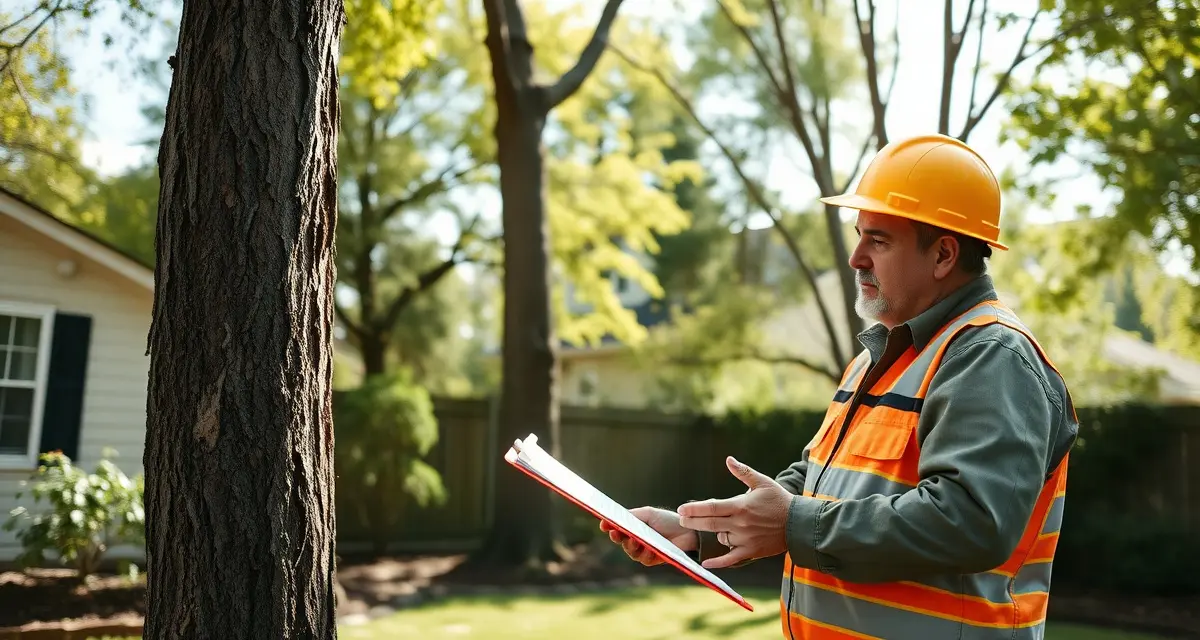
How to Quote a Dead Tree Removal Job: Risk Factors and Pricing
Dead tree removal is not the same job as live tree removal at the same size and location. The risk profile is different, the crew technique changes, and the price should reflect both. Dead tree removal jobs command a 25-40% premium over comparable live tree removal, companies without condition-based pricing give away this margin on every dead tree they touch.
Getting this right starts at the quoting stage. If your software doesn't distinguish between a live red oak and a dead one at the same address, you're manually overriding prices on every dead tree estimate. That inconsistency compounds across dozens of jobs per month.
TL;DR
- ISA data shows 63% of lost tree service bids are decided within the first hour of customer inquiry.
- Manual quote building in most platforms takes 30-45 minutes per job, costing $40-52 in direct labor.
- AI photo-to-quote converts a field photo to a priced proposal in under 2 minutes with no manual data entry.
- Professional digital proposals with one-click acceptance convert at higher rates than emailed PDF quotes.
- Companies that quote same-day from the field win the majority of competitive bid situations.
Why Dead Trees Cost More to Remove
A standing dead tree presents challenges that a live tree doesn't:
Structural unpredictability. Dead wood doesn't flex the way live wood does. A limb that looks structurally sound from below may be ready to separate under its own weight when the saw engages. Rigging attachments that would hold on live wood may pull through compromised dead wood without warning.
Accelerated decay. The longer a tree has been dead, the more variable its internal condition. Surface condition alone doesn't tell you how far decay has progressed into the structural wood. A tree that looks "just dead" could have notable internal rot that changes how it behaves during felling.
Bark slippage. On dead trees, bark separates from the cambium layer. This affects how rigging behaves, how climbers set their position, and what surfaces can be trusted for weight-bearing contact.
Compromised root system. Root decay often progresses from the outside in. A dead tree that's been standing for a year or more may have reduce root-plate integrity, which affects fall zone calculation and whether the tree is safe for conventional felling or requires piece-by-piece removal.
Each of these factors increases crew time and requires more careful planning. That additional labor and risk needs to be in the estimate.
How to Identify Dead Tree Risk Factors During the Estimate
Before you price the job, assess the specific risk factors present. Not all dead trees are equal, a tree that died two months ago is a different job than one that's been standing dead for three years.
Assess the time since death. Recent death (still has leaves from last season, bark intact, crown structure visible) is a lower-risk removal than a long-standing dead tree with no bark and notable structural deterioration. If the client can tell you when the tree died or you can determine it from service history, factor this into your condition assessment.
Check crown integrity. How much of the crown is still attached? Heavy dead limbs that could separate during felling need to be identified before you price the rigging strategy. Each dead limb that needs to be pre-cut or rigged individually adds time to the estimate.
Probe for internal decay. A mallet test on trunk and major limbs gives you a rough assessment of internal void development. Hollow sound indicates cavity formation that affects felling direction and safety. This finding adds to the complexity of the removal.
Assess root zone. Look for fungal conks at the root flare, mushrooms in the root zone, and soil heaving on the windward side. These indicate root decay that changes the felling risk profile.
Note site constraints. A dead tree next to a fence, structure, or utility line in a tight space requires more rigging and more time than one in an open yard. Document constraints at the site visit and factor them into the estimate.
Building the Dead Tree Removal Estimate
Start with your base removal price for the equivalent live tree at that size and species. Then apply condition-based adjustments:
Condition modifier (applies to base price):
- Recently dead, minimal deterioration: +15-20%
- Moderate deterioration, some crown loss: +25-30%
- notable deterioration, bark loss, structural concerns: +35-45%
- Advanced decay, standing dead several years: +45-60%
Rigging complexity modifier:
- Open yard, no obstacles: no additional adjustment
- One structure or fence within fall zone: +$75-150
- Tight site requiring full rigging: +$150-400 depending on size
Root zone risk modifier:
- Fungal evidence or soil heaving present: +$100-200 (increased cleanup time, altered felling approach)
These modifiers work multiplicatively in most cases, not additively. A 15-foot dead tree with advanced decay on a tight urban lot isn't just the base dead-tree price, it's the advanced decay modifier applied to the base, then site complexity layered on top.
Using Software to Quote Dead Tree Removal Consistently
The problem with condition-based pricing is that it requires every estimator to apply the same logic consistently. Without a structured tool, one estimator quotes the "advanced decay" modifier and another doesn't notice the decay at all.
Tree service quoting software with condition fields lets you build a dead tree job type that prompts the estimator to assess each risk factor at the site. The pricing adjustments apply based on the inputs, not the estimator's memory. You get the same result whether the owner is writing the quote or a crew lead is.
Arborgold's quoting module has no condition-based pricing, dead and hazardous trees are priced identically to live trees unless manually adjusted. That manual override system is exactly the inconsistency that creates margin loss on dead tree jobs. StumpIQ's AI detects dead tree indicators from field photos and automatically applies a risk-adjusted pricing factor, so the condition assessment happens as part of the photo-to-quote workflow, not as a separate step that estimators can skip.
Common Quoting Mistakes on Dead Tree Jobs
Pricing off the surface. A dead tree that looks manageable from the street can have advanced internal decay that makes it a completely different job. Never price dead tree removal without a close inspection, ground level at minimum, climbing assessment for large or complex specimens.
Forgetting root system risk. Root decay on a dead tree affects how and where you can safely fell. If the root plate has failed and you don't know it until the saw starts, you have a problem. A brief visual check of the root zone during the site visit adds two minutes and can prevent a dangerous situation.
Underpricing debris. Dead wood often chips differently than live wood, and very dry dead wood creates more dust and debris volume. Factor disposal into your estimate.
Missing the premium on obvious cases. When a dead tree is visually obvious and the customer knows it, some estimators unconsciously discount the risk because the situation seems "simple." Dead trees are not simple removals, they require different techniques, more planning, and the price should reflect that regardless of how straightforward the situation appears.
Communicating the Premium to Customers
Customers sometimes push back on dead tree removal pricing, especially when they assume a dead tree is "easier" because it doesn't have as much weight. Your job is to explain the risk factors without being condescending.
A brief explanation works: "Dead trees are actually more difficult to remove than live ones because the wood is more brittle and less predictable. We have to take extra precautions with rigging and our approach to the work, which is why the cost is higher."
Most customers accept this explanation. It's accurate, it respects their intelligence, and it positions you as a professional who takes safety seriously rather than someone inflating prices arbitrarily.
How to quote tree removal jobs using the full range of tree condition factors, species, size, hazard category, and site constraints, is the foundation of consistent, profitable estimating. Dead tree removal pricing is one application of that broader discipline.
Get Started with StumpIQ
Faster, more professional quotes translate directly to higher booking rates. StumpIQ's AI photo-to-quote workflow and digital proposal delivery are designed to close the gap between site visit and signed agreement. If your quoting process is a bottleneck, this is where to start.
Frequently Asked Questions
What makes a dead tree more expensive to remove?
Dead trees present structural risks that live trees don't. Dead wood is brittle and unpredictable under saw stress, bark slippage affects rigging attachment points, root decay may have compromised the tree's stability, and internal decay varies in ways that surface inspection can't fully detect. These factors require more careful planning, different rigging approaches, and more time on the job, all of which should appear in the price. Most dead tree removals warrant a 25-40% premium over a comparable live tree removal.
How do I identify dead tree removal risk factors for quoting?
During the site visit, check crown integrity for loose heavy limbs, probe major limbs and the trunk base for hollow sound indicating internal void, inspect the root zone for fungal conks or soil heaving, and assess how long the tree has been dead based on bark condition and crown structure. Each risk factor adds to the condition modifier you apply to the base price. Time since death is one of the most important variables, a recently dead tree is a meaningfully different job than one standing dead for two or more years.
Should I charge more for hazardous dead tree removal?
Yes. Dead trees with specific hazard conditions, fungal evidence at the root flare, visible cavity formation, proximity to structures in a tight site, or crown sections that must be pre-rigged, should carry additional charges beyond the standard dead tree condition modifier. These specific hazards add time, rigging cost, and crew risk that the general condition modifier doesn't fully capture. Document the hazard factors in your estimate so the customer understands exactly what they're paying for.
What should a professional tree service quote include?
A professional tree service quote should include: company branding and contact information, a clear description of the work scope (species, size, access conditions), itemized pricing by service (removal, stump grinding, debris disposal, travel), timeline and crew size, any applicable hazard notes or permit requirements, payment terms, and an easy way for the customer to accept. Digital acceptance with mobile-readable formatting is increasingly expected.
How many quotes does a typical tree service company send per week?
A 2-3 crew residential tree service company typically sends 10-20 quotes per week depending on season and market. At 30-45 minutes per manual quote, that is 5-15 hours of quoting time weekly. AI quoting at under 2 minutes per job reduces this to under an hour -- reclaiming time for field work or additional sales activity.
What is the conversion rate for tree service quotes?
Conversion rates vary significantly by market, quote speed, and proposal quality. Industry estimates suggest residential tree service conversion rates of 30-50% for professionally presented same-day quotes, dropping significantly for quotes delivered the following day or later. Speed and professionalism of the quote are the two variables most within a company's control.
Try These Free Tools
Sources
- International Society of Arboriculture (ISA)
- Tree Care Industry Association (TCIA)
- American Society of Consulting Arborists (ASCA)