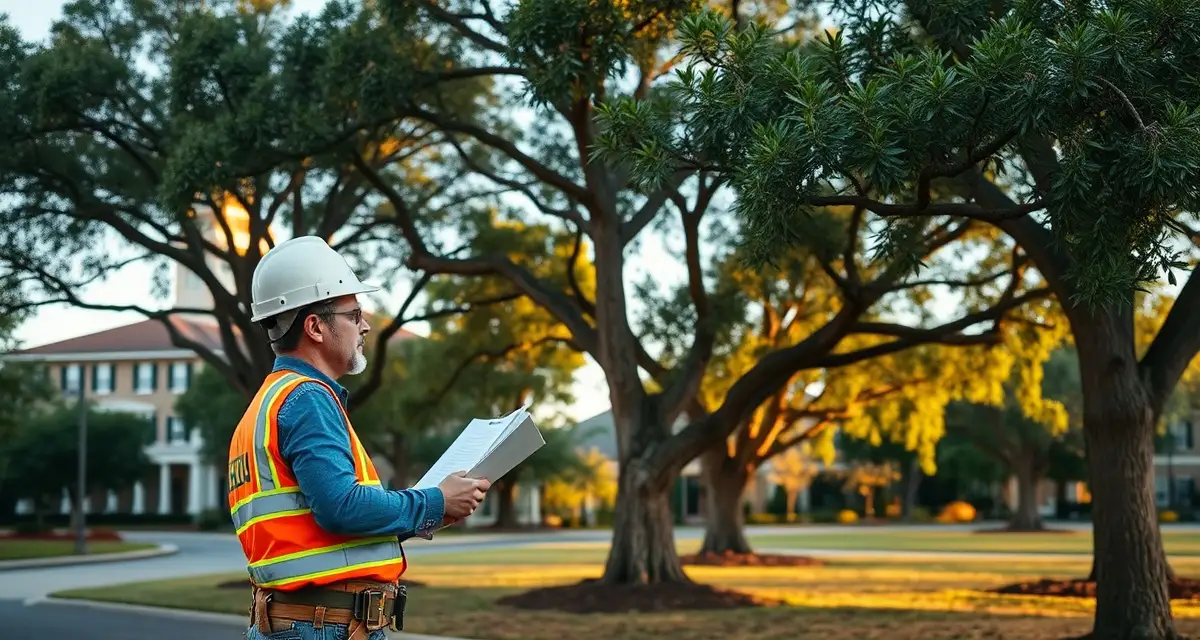
How to Build a Commercial Tree Maintenance Program for HOA and Property Management
Commercial tree maintenance contracts average $8,500 annually per property, one HOA contract equals 40+ residential jobs in revenue value. For tree companies that have historically focused on residential one-time work, this comparison makes the shift toward commercial maintenance contracts obvious. The challenge is that commercial programs require a different structure, a different sales process, and different operational infrastructure than one-time residential jobs.
This guide covers how to build, price, and sell annual commercial tree maintenance programs that create predictable revenue and long-term client relationships.
TL;DR
- Tree service companies that adopt purpose-built software reduce administrative time by an average of 5-8 hours per week.
- AI photo-to-quote converts a field photo to a priced proposal in under 2 minutes -- compared to 30-45 minutes for manual estimates.
- ANSI Z133 compliance documentation created automatically in the field reduces insurance audit preparation time.
- ISA certification tracking prevents lapses that affect eligibility for municipal, utility, and commercial contracts.
- GPS dispatch with route optimization saves 15-20% of daily drive time for multi-crew operations.
What a Commercial Tree Maintenance Program Actually Is
A commercial maintenance program is a multi-service annual contract with a property owner, HOA, or property management company. It typically includes:
- Annual inspection: A complete walk of all trees on the property, documented by an ISA-certified arborist, with a written report of findings and recommendations
- Scheduled pruning: Timing varies by species and property goals, but most programs include at least one pruning cycle per year, often two for ornamentals
- Hazard monitoring: Identified hazard trees get follow-up visits to assess progression between scheduled service cycles
- Emergency response priority: Commercial contract clients typically receive priority dispatch during storm events
- Optional services: Fertilization, pest and disease treatment, cabling, deep root feeding, these are often included in premium program tiers or offered as add-ons
The contract is structured as an annual agreement with monthly billing (dividing the annual cost into 12 payments) or a lump-sum payment with a discount. Monthly billing is preferred by most commercial clients because it keeps the cost off any single budget cycle.
How to Structure Your Program Tiers
Commercial maintenance programs work best in two or three service tiers that clients can choose based on their needs and budget:
Essential tier: Annual inspection with written report, one scheduled pruning cycle for standard ornamentals, 24-hour emergency response priority. Price point: $4,000-6,500/year depending on property size and tree count.
Standard tier: Annual inspection with written report, two pruning cycles per year for ornamentals, spring and fall fertilization for key specimen trees, storm damage priority, and quarterly monitoring visits. Price point: $7,000-12,000/year.
Premium tier: Everything in Standard plus proactive pest and disease monitoring with treatment, cabling and bracing for identified hazard trees, dedicated arborist point of contact, and monthly property checks during growing season. Price point: $12,000-25,000+/year for larger properties.
Price tiers based on:
- Number of trees on the property (a precise count from your initial inspection)
- Total canopy coverage and estimated annual pruning volume
- Property size and drive time
- Level of specimen trees that require certified arborist attention vs. routine pruning
The Initial Property Inspection: Where the Contract Is Won
The initial inspection is the most important step in the commercial program sales process. This is where you demonstrate your expertise, build the client's confidence in your assessment, and generate the documentation that forms the basis of your contract proposal.
During the initial inspection:
Document every tree. Species, DBH, canopy condition, pest or disease indicators, structural concerns. A tree inventory that the client can see, often delivered digitally, demonstrates professional thoroughness that vendors who give verbal assessments can't match.
Identify priority trees. Every property has specimen trees that warrant more attention than standard ornamentals. Identifying these specifically shows that you understand what matters to the property's value and appearance.
Document hazards. Any tree with structural concerns should be called out with photos and a recommendation. This isn't a scare tactic, it's the arborist assessment the property owner is paying for, and it positions your program as the mechanism for managing those concerns over time.
Deliver a written report. The initial inspection report is a marketing document as much as a professional assessment. A well-formatted ISA-standard report delivered to an HOA board or property manager demonstrates that you're a different kind of vendor than the company that gave them a verbal walkthrough and a one-page quote.
No major tree service platform has commercial maintenance program management with multi-property scheduling and annual renewal tracking built in. StumpIQ's commercial account module manages multi-property programs with automatic renewal scheduling and service interval tracking per property, which is the operational infrastructure that makes running 10-20 commercial maintenance accounts manageable without dedicated admin staff.
Pricing the Annual Contract
Start with your estimated annual service cost for the property:
- Annual inspection time (hours x your arborist hourly rate)
- Pruning labor across both cycles (estimated hours by tree type and size)
- Any fertilization or treatment materials
- Monitoring visit time
- Equipment allocation (chipper, aerial lift if needed for large specimen trees)
- Emergency response capacity allowance (a portion of annual contract cost that covers priority dispatch availability)
Add your margin on top of cost. Commercial contracts typically run 25-35% margin for established service companies, the predictability and volume justify somewhat lower per-hour rates than emergency or hazard removal work.
Then structure the annual total as a monthly payment. A $9,600 annual contract becomes $800/month. Most commercial clients find monthly billing much easier to approve than an annual lump sum.
Selling to HOAs and Property Management
The decision-maker for an HOA maintenance contract is usually a board president, a property manager, or a facilities director. These are not your typical residential customers.
What they need from you:
- A proposal format they can present to a board (clear, professional, not a sales document)
- Documentation that demonstrates your credentials (ISA certification, insurance, years in business)
- Evidence that you understand their property specifically (tree inventory, hazard documentation)
- A clear description of what they get for the price, with monthly billing that fits their budget cycle
Common objections and how to handle them:
"We have a landscaping vendor who handles trees." Ask what tree services they actually provide. Most landscaping vendors prune ornamentals and handle basic cleanup but don't have ISA-certified arborists on staff. Position your program as the tree-specific professional service that complements the landscaping relationship.
"We can't justify this cost right now." Present the hazard documentation from your initial inspection. The cost of deferred tree maintenance, liability exposure from a failed hazard tree, emergency removal costs, property damage, dwarfs the annual maintenance investment. You're not selling them on spending money; you're helping them understand the cost of not spending it.
"Your price is higher than another quote we got." Ask what the other quote included and who would be doing the work. ISA-certified arborists on staff, detailed inspection reports, and multi-year tree health tracking are not in every competitor's quote. Know what you're being compared to before you respond.
Managing Multiple Commercial Accounts
The operational challenge with 10-20 commercial maintenance accounts is tracking service intervals, renewal dates, and per-property documentation without manual oversight of each account.
Tree service management software with commercial account features lets you manage multi-property programs with automatic service reminders, renewal alerts, and per-property service history. The guide to winning commercial tree service contracts covers the competitive differentiation that gets you into these conversations in the first place, but operational infrastructure is what keeps the accounts profitable and renewable year after year.
Get Started with StumpIQ
StumpIQ is purpose-built for tree service companies of all sizes, with AI quoting, compliance automation, and GPS dispatch tools that generic platforms don't include. If you are evaluating software for your operation, StumpIQ is a useful starting point for comparison.
Frequently Asked Questions
How do I sell a tree maintenance program to HOA clients?
Approach HOA clients with a free initial property inspection that produces a written tree inventory and hazard assessment. Present the report to the board president or property manager, and follow with a tiered maintenance proposal that includes monthly billing options. Frame the program as risk management and property value protection, not just tree service. HOA boards respond well to documented liability exposure (hazard trees) and the professional credibility of ISA-certified arborists. The initial inspection report is your most effective sales document.
What should a commercial tree maintenance contract include?
A commercial tree maintenance contract should specify the property address and tree count covered, the service cycle frequency for each service type (inspection, pruning, monitoring, fertilization), the response time commitment for emergency calls, the billing structure (monthly vs. annual), renewal terms, and what triggers additional charges beyond the base contract. Clear scope prevents disputes and defines expectations for both parties over the life of the agreement.
How do I schedule maintenance across multiple commercial properties?
Multi-property commercial maintenance requires a scheduling system that tracks service intervals per property, triggers work order creation when a service is due, and manages renewal dates automatically. Without dedicated commercial account management tools, companies use spreadsheets that require constant manual attention and frequently miss service intervals. Purpose-built commercial account software links service history, interval schedules, and renewal tracking so that the administrative overhead of managing 15 properties is manageable for one office person rather than requiring dedicated account management staff.
What makes tree service software different from generic field service platforms?
Tree service software is built around arborist-specific workflows: AI species identification for field quoting, ANSI Z133 safety checklists, ISA certification tracking, storm demand forecasting, and hazard-level job classification. Generic field service platforms can be configured to approximate these workflows, but doing so requires weeks of manual setup and still produces a less accurate result for tree-specific job types.
How do tree service companies evaluate software before buying?
The most effective approach: identify your top 3 operational pain points, ask vendors to demonstrate those specific scenarios in a live demo, check user reviews on Capterra and G2 for patterns, and request a trial period to test with real job data. Ask specifically about mobile performance in the field, since most tree service work happens away from the office.
What is the ROI of tree service software for a small company?
For a 2-3 crew operation, purpose-built tree service software typically recovers its cost through: faster quoting that wins more bids, invoicing on the day of job completion rather than days later, reduced administrative hours, and fuel savings from route optimization. Most companies report positive ROI within 60-90 days of full adoption.
Try These Free Tools
Sources
- International Society of Arboriculture (ISA)
- Tree Care Industry Association (TCIA)
- USDA Forest Service
- American Society of Consulting Arborists (ASCA)