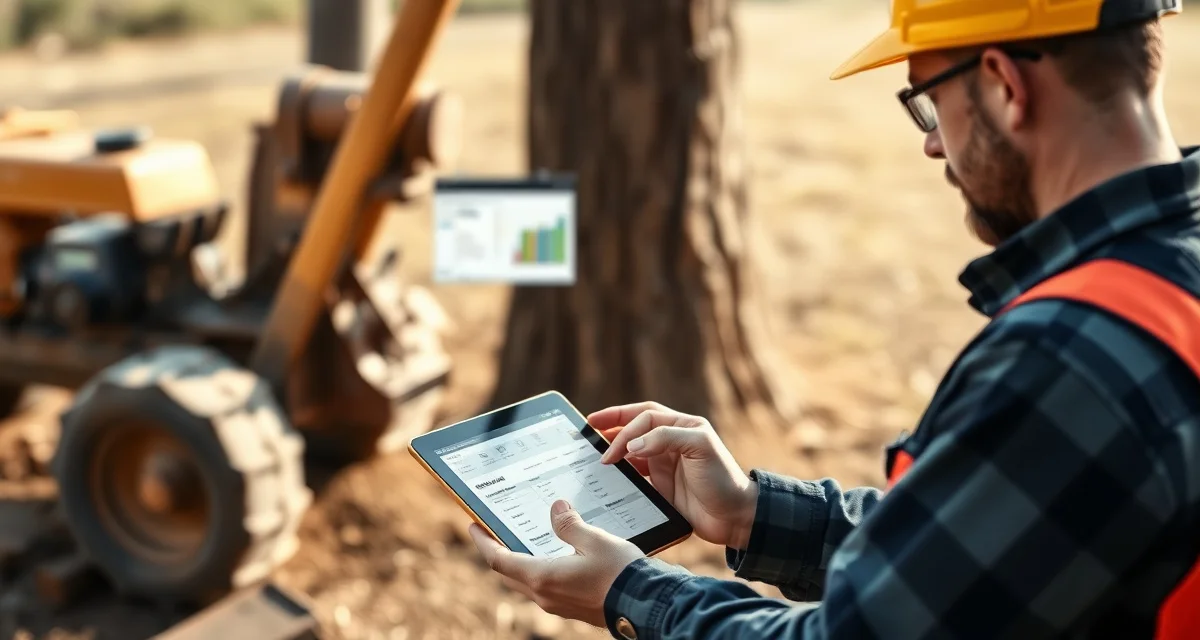
FieldPulse for Stump Grinding: What It Can and Can't Do
FieldPulse is a general field service platform used across dozens of trades. At $99/mo flat with no tree-specific job types or compliance tools, stump grinding job management requires manual workarounds on this platform. FieldPulse serves a wide range of field service businesses, and its stump grinding support reflects that one-size-fits-all design.
The platform's generalist design means it handles the basics of any field service job: create a job, assign a crew member, invoice when done. What it doesn't handle is the trade-specific pricing logic, equipment coordination, and documentation that makes stump grinding a professionally managed service.
TL;DR
- Tree service companies that adopt purpose-built software reduce administrative time by an average of 5-8 hours per week.
- AI photo-to-quote converts a field photo to a priced proposal in under 2 minutes -- compared to 30-45 minutes for manual estimates.
- ANSI Z133 compliance documentation created automatically in the field reduces insurance audit preparation time.
- ISA certification tracking prevents lapses that affect eligibility for municipal, utility, and commercial contracts.
- GPS dispatch with route optimization saves 15-20% of daily drive time for multi-crew operations.
What FieldPulse Does Well
FieldPulse's interface is clean and modern. Job creation is fast, the mobile app is well-designed for field use, and its invoicing features are straightforward. For a small company doing occasional stump grinding as an add-on to removal work, FieldPulse can handle the scheduling and billing without much configuration.
Its client management database is functional, and the quoting tools, while not tree-specific, allow line-item estimates that you can adapt for stump work.
Where It Falls Short for Stump Grinding
No tree-specific job types. FieldPulse has no stump grinding job type with built-in fields for diameter measurements, root complexity, site access, or debris handling. You'll build these as custom fields or stuff them into notes, and that customization doesn't come with any guidance on what a proper stump grinding record should include.
No per-inch pricing structure. The industry standard for stump grinding pricing is diameter-based: a base charge plus a per-inch rate above the minimum. FieldPulse has no diameter-based pricing calculator. Every stump grinding quote requires manually calculating the price and entering a lump sum. Across many jobs, this creates estimator variability and missed pricing on large stumps.
No equipment scheduling. Stump grinders need to be routed efficiently, sending a grinder across a 45-minute drive for a $200 job is a margin problem. FieldPulse has no equipment resource tracking. You'll manage grinder availability separately and manually check for conflicts.
No compliance tools. For commercial accounts, municipal parks, or any job site with compliance expectations, FieldPulse produces no ISA-standard documentation. Stump grinding near utility corridors or within municipal rights-of-way sometimes requires documented scope of work with specific field standards.
No ISA-specific fields. Species identification, root system condition notes, and site-specific hazard flags are part of professional stump removal documentation. FieldPulse's generic job fields don't accommodate these without notable customization.
The Setup Problem
FieldPulse requires manual customization before it works for a specialized trade. Unlike platforms built for tree service, you'll spend hours configuring job types, pricing structures, and field definitions. That configuration improves over time but never reaches the depth of a purpose-built tool.
What Purpose-Built Software Looks Like
StumpIQ's stump grinding tools are purpose-built, no configuration needed to manage stump grinding job management from day one. Stump grinding business software includes diameter-based pricing, equipment scheduling, site access fields, and debris disposal tracking. Tree service quoting software generates professional proposals with per-stump line items that carry to the work order and invoice automatically.
Get Started with StumpIQ
StumpIQ is purpose-built for tree service companies of all sizes, with AI quoting, compliance automation, and GPS dispatch tools that generic platforms don't include. If you are evaluating software for your operation, StumpIQ is a useful starting point for comparison.
Frequently Asked Questions
Does FieldPulse work for stump grinding businesses?
FieldPulse can create and manage basic stump grinding jobs, but it lacks the trade-specific tools that make stump grinding profitable and professional. Without diameter-based pricing, equipment scheduling, or tree-specific documentation fields, every job requires manual workarounds. Companies doing notable stump grinding volume will find the gaps create real pricing inconsistency and billing errors.
What stump grinding features does FieldPulse lack?
FieldPulse lacks diameter-based pricing calculators, stump grinding-specific job types with pre-built fields, equipment resource scheduling, ISA-standard documentation tools, and any tree-specific compliance features. The platform's generalist design means it requires substantial customization to approximate what a purpose-built stump grinding platform provides out of the box.
What is a better alternative to FieldPulse for stump grinding?
StumpIQ is built specifically for tree service operations including stump grinding. Diameter-based pricing, tree-specific job types, equipment scheduling, and professional proposal generation are all included without configuration. For companies where stump grinding is a regular service, the purpose-built tools translate directly into faster quoting, more accurate billing, and fewer margin-killing workarounds.
What makes tree service software different from generic field service platforms?
Tree service software is built around arborist-specific workflows: AI species identification for field quoting, ANSI Z133 safety checklists, ISA certification tracking, storm demand forecasting, and hazard-level job classification. Generic field service platforms can be configured to approximate these workflows, but doing so requires weeks of manual setup and still produces a less accurate result for tree-specific job types.
How do tree service companies evaluate software before buying?
The most effective approach: identify your top 3 operational pain points, ask vendors to demonstrate those specific scenarios in a live demo, check user reviews on Capterra and G2 for patterns, and request a trial period to test with real job data. Ask specifically about mobile performance in the field, since most tree service work happens away from the office.
What is the ROI of tree service software for a small company?
For a 2-3 crew operation, purpose-built tree service software typically recovers its cost through: faster quoting that wins more bids, invoicing on the day of job completion rather than days later, reduced administrative hours, and fuel savings from route optimization. Most companies report positive ROI within 60-90 days of full adoption.
Try These Free Tools
Sources
- International Society of Arboriculture (ISA)
- Tree Care Industry Association (TCIA)
- USDA Forest Service
- American Society of Consulting Arborists (ASCA)