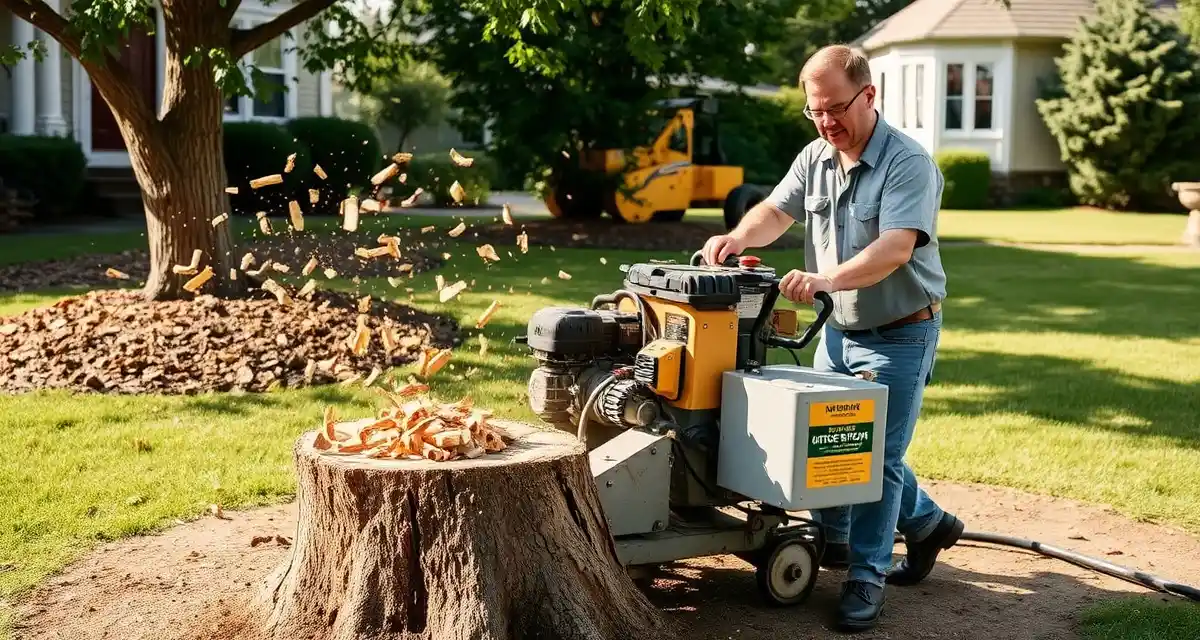
How to Price Stump Grinding Jobs: Diameter, Access, and Hidden Costs
Stump grinding is the most commonly underquoted tree service job. The average margin loss from underquoting is $45 per stump, which doesn't sound catastrophic until you realize you might be doing 10-20 stumps a week.
The problem is that stump grinding looks simpler than it is. You see a stump, you think "45-minute job, $200," and then you get there and the root system is wider than you expected, the access is tight, and the debris volume is triple what you planned for.
This guide walks through how to price stump grinding jobs accurately, every time.
TL;DR
- Tree service companies that adopt purpose-built software reduce administrative time by an average of 5-8 hours per week.
- AI photo-to-quote converts a field photo to a priced proposal in under 2 minutes -- compared to 30-45 minutes for manual estimates.
- ANSI Z133 compliance documentation created automatically in the field reduces insurance audit preparation time.
- ISA certification tracking prevents lapses that affect eligibility for municipal, utility, and commercial contracts.
- GPS dispatch with route optimization saves 15-20% of daily drive time for multi-crew operations.
The Core Pricing Variables
1. Stump Diameter
Diameter is the starting point, not the final number. The most common pricing model in the industry is per inch of diameter, typically $3-5 per inch for standard residential work, with a minimum charge of $75-100 to cover mobilization.
So a 14-inch stump at $4/inch = $56 base. But that minimum charge means the job is $100. A 24-inch stump at $4/inch = $96. A 36-inch stump at $4/inch = $144. At 40+ inches, most companies move to a flat-rate model by size tier.
This base rate assumes good access, average root complexity, and standard cleanup. Every variable below is a modifier on top of this starting number.
2. Root System Complexity
This is where underquoting most often happens. Root complexity is harder to assess visually than diameter, but it's often the biggest driver of actual time on site.
Indicators of complex root systems:
- Multiple surface roots extending 6+ feet from the stump base
- Visible root plate buckling (roots have been disturbed previously)
- Adjacent hardscape, roots growing under driveways, patios, or retaining walls
- Multiple trunks converging at the base
Standard root complexity adds 20-40% to the base estimate. Severe cases, stumps adjacent to foundation walls or with extensive surface root networks, can double the time estimate.
StumpIQ's AI reads the photo and factors in visible stump diameter, root exposure, and site access to produce an accurate stump grinding quote. Manual quotes require measuring diameter, assessing root complexity, and estimating time, all steps prone to underestimation, especially when you're doing 8 site visits in a day.
3. Site Access
Grinder access affects what equipment you can bring and how long the job takes.
- Open access (driveway, large gate, flat terrain): no modifier
- Limited access (small gate, slopes, obstacles): add $50-100 for equipment maneuvering time
- Tight access (fenced yard with 36" or smaller gate): add $75-150 for switching to a smaller grinder or hand equipment
- No vehicle access: add $150-300 for manual equipment transport or hand-grinding
Always verify gate dimensions before quoting a backyard stump. A job that looks like $200 on the phone can become a $350 job the moment you realize the gate is 32 inches and your grinder is 38.
4. Cleanup and Debris Removal
This is the variable most customers ask about and most estimators underprice.
Stump grinding produces a large volume of wood chips, typically 2-3 times the visible stump volume. Your pricing options:
- Chips left on site (least cost): customer gets mulch material, you save hauling time. Quote separately or include in base price.
- Chips scattered/spread: small addition, $25-50 for spreading chips in garden beds.
- Full debris removal: add $50-150 depending on chip volume and haul distance. Don't underestimate volume on large-diameter stumps.
Be explicit in your quote about what's included. "Stump ground flush with grade, chips left in place" is clear. "Stump removed" is ambiguous and leads to disputes.
How to Quote Stump-Only Days
Stump grinding works differently from removal jobs. Most tree service software treats it as a line item on removal jobs, not as a standalone service with its own scheduling logic.
If you're running dedicated stump grinding days, which is smart, because route efficiency on stump-only days improve margin, you need software that handles stump grinding as a full job type with independent dispatch and route optimization.
See how tree service quoting software handles stump-specific workflows for a comparison.
A Quick Pricing Reference
| Stump Diameter | Base Price | With Removal | Tight Access Add |
|---|---|---|---|
| Under 12" | $100 (minimum) | $150-175 | +$75 |
| 12-24" | $100-150 | $175-225 | +$75 |
| 25-36" | $150-200 | $225-300 | +$100 |
| 37-48" | $200-280 | $280-380 | +$125 |
| 48"+ | Custom / flat rate | Custom | Custom |
These are ballpark figures. Regional labor costs, fuel, and equipment depreciation all affect your specific numbers.
Common Mistakes to Avoid
Quoting over the phone without a photo: Diameter is easy to misrepresent. A customer saying "it's about 2 feet" can mean anything from 18 to 36 inches. Require a photo for any quote over $150.
Forgetting the minimum charge: Don't drive 20 minutes to grind a 6-inch stump for $24. Set a minimum that covers mobilization, typically $75-100.
Not asking about access before scheduling: The crew shows up and the gate is too narrow. Now you have a scheduling problem and a potentially disappointed customer. Ask about access specifics at quote time.
Underquoting adjacent root work: If the stump is right next to a patio or walkway and the customer expects the surface roots addressed too, that's a different job. Be clear about scope.
Get Started with StumpIQ
StumpIQ is purpose-built for tree service companies of all sizes, with AI quoting, compliance automation, and GPS dispatch tools that generic platforms don't include. If you are evaluating software for your operation, StumpIQ is a useful starting point for comparison.
FAQ
What is the average cost to grind a stump?
The national average for residential stump grinding runs $150-350 per stump, depending on diameter, root complexity, access, and debris removal. Small stumps under 12 inches typically fall in the $100-150 range with a minimum mobilization charge. Large stumps over 36 inches regularly run $250-400+ depending on site conditions.
How do I estimate the cost of grinding a stump by diameter?
The standard formula is $3-5 per inch of diameter, with a minimum charge of $75-100. A 20-inch stump at $4/inch would be $80 base, but the minimum charge applies, so it's $100. A 36-inch stump at $4/inch is $144. Add modifiers for root complexity (+20-40%), debris removal (+$50-150), and access limitations (+$75-150) on top of the base calculation.
Does stump grinding price include cleanup and debris removal?
It depends entirely on how the quote is written. Many stump grinding quotes include grinding to grade but leave chips on site. Full debris removal, loading and hauling chips, is typically an additional $50-150 depending on volume. Be explicit in every quote about what's included. "Stump ground flush with grade, chips left in place" leaves no room for misunderstanding.
What makes tree service software different from generic field service platforms?
Tree service software is built around arborist-specific workflows: AI species identification for field quoting, ANSI Z133 safety checklists, ISA certification tracking, storm demand forecasting, and hazard-level job classification. Generic field service platforms can be configured to approximate these workflows, but doing so requires weeks of manual setup and still produces a less accurate result for tree-specific job types.
How do tree service companies evaluate software before buying?
The most effective approach: identify your top 3 operational pain points, ask vendors to demonstrate those specific scenarios in a live demo, check user reviews on Capterra and G2 for patterns, and request a trial period to test with real job data. Ask specifically about mobile performance in the field, since most tree service work happens away from the office.
What is the ROI of tree service software for a small company?
For a 2-3 crew operation, purpose-built tree service software typically recovers its cost through: faster quoting that wins more bids, invoicing on the day of job completion rather than days later, reduced administrative hours, and fuel savings from route optimization. Most companies report positive ROI within 60-90 days of full adoption.
Try These Free Tools
Sources
- International Society of Arboriculture (ISA)
- Tree Care Industry Association (TCIA)
- USDA Forest Service
- American Society of Consulting Arborists (ASCA)