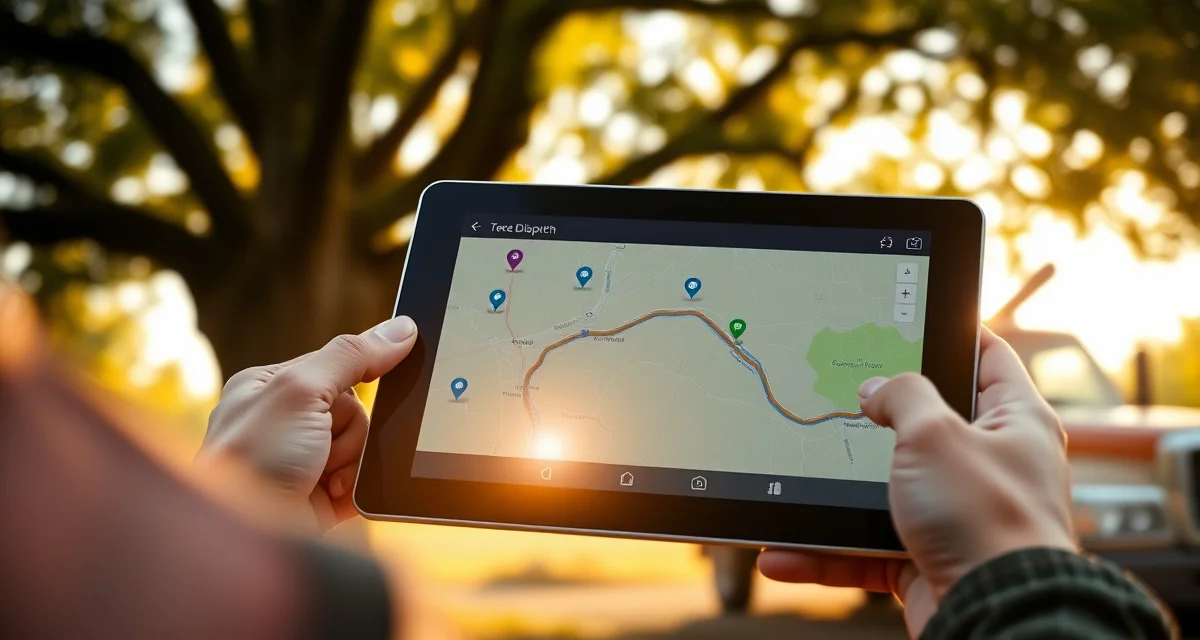
Service Autopilot GPS and Dispatch Capabilities Compared: What Tree Companies Need to Know
GPS tracking and dispatch efficiency are operational essentials for tree service companies. Knowing where your crews are, routing them efficiently between jobs, and being able to re-dispatch quickly when a storm hits or a job runs long, these aren't nice-to-haves. They're how you protect margin on a day when the schedule never goes as planned.
Service Autopilot has spawned a cottage industry of paid setup consultants who charge $500-2,000 to configure it for tree companies. Part of that setup work involves the dispatch and GPS layer, where tree-specific routing logic, equipment weight limits, and multi-crew job coordination aren't built in natively.
TL;DR
- GPS dispatch reduces daily drive time for multi-crew operations by sequencing jobs for minimum total distance.
- Real-time crew location visibility allows dispatchers to assign new jobs to the nearest available crew.
- For a 3-crew operation, route optimization typically saves 15-20% of daily drive time and equivalent fuel cost.
- Storm surge dispatch requires hazard triage and priority queuing that standard scheduling tools don't provide.
- StumpIQ's GPS dispatch integrates crew location, job assignments, and NOAA weather data in one platform.
Service Autopilot's GPS and Dispatch: What It Actually Offers
Service Autopilot includes GPS tracking functionality, and for general field service purposes it works reasonably well. You can see where vehicles are on a map, assign jobs from the dispatch board, and route crews through a basic schedule view.
The limitations show up in tree-specific scenarios. Multi-crew jobs (which are common in tree removal) require coordination that the dispatch board wasn't designed for. Equipment-specific routing, where a truck with a chipper needs different routing than a crane rig, isn't native. And storm surge dispatching, where you need to prioritize 80 inbound jobs by hazard level and route crews through a fluid assignment system, isn't something the platform handles without significant configuration.
At $47-239/mo with a 6-8 week average setup time that delays revenue from the start, you're getting GPS capability that works for simpler dispatch scenarios but requires workarounds for the more complex situations that tree companies regularly face.
What Tree Service Dispatch Actually Needs
Crew dispatch for tree service is categorically different from dispatch for lawn care or HVAC. A single tree removal job might require a bucket truck, a chipper crew, a groundwork team, and a crane, all coordinated at the same address over 4-6 hours. The dispatch system needs to understand that relationship and maintain it when schedule changes happen.
Good tree service dispatch also needs to understand hazard levels. After a storm, not all jobs are equal. A tree through a roof is dispatched before a downed limb on a fence. The platform needs to support hazard triage, not just chronological scheduling.
Service Autopilot can be configured to support some of this, but the configuration work is substantial and the tree-specific logic isn't intuitive in a platform designed for simpler field service scenarios.
GPS Depth: What It Means in Practice
GPS depth refers to how much operational intelligence you can derive from your vehicle tracking data. Basic GPS shows you where trucks are. More capable systems show you idle time, route efficiency, time-on-site, and deviations from the planned route.
For tree service companies, GPS data is also useful for billing verification on long jobs, equipment utilization analysis, and crew productivity comparisons. These analytics require a platform that understands what "time on site" means for a tree removal vs. a quick trim visit.
Service Autopilot offers GPS data, but the analytics layer isn't built around tree service job types. You're interpreting general field service data for a specialized context.
Tree Service Management Software: What Better Dispatch Looks Like
Purpose-built platforms for tree companies include dispatch boards designed for multi-crew jobs, hazard priority queuing for storm events, and GPS analytics that understand tree service job duration benchmarks. Setup takes days rather than weeks, and you're not paying a consultant to build the dispatch logic from scratch.
Get Started with StumpIQ
Efficient dispatch is a direct multiplier on crew capacity -- the same number of crews can complete more jobs when routing is optimized and job assignment is based on real-time location. StumpIQ's GPS dispatch tools are purpose-built for tree service operations. If you are evaluating dispatch software, a direct demo of these features is the best way to assess fit.
Frequently Asked Questions
Is Service Autopilot good for tree service GPS dispatch?
Service Autopilot offers GPS tracking and a dispatch board that works for general field service use cases. For tree companies that regularly handle multi-crew jobs, crane coordination, and storm surge dispatching, the platform requires significant configuration to support these scenarios. Out of the box, it doesn't include hazard priority triage, equipment-specific routing, or the multi-job coordination logic that complex tree removal operations require.
What are the main GPS dispatch complaints about Service Autopilot from tree companies?
Tree operators most often report that Service Autopilot's dispatch board wasn't designed for the complexity of tree work. Multi-crew job coordination is awkward, storm surge dispatching requires manual workarounds, and the GPS analytics layer doesn't understand tree service job duration benchmarks. Operators also note that the 6-8 week setup timeline delays the point at which dispatch features become useful, and many pay additional consultant fees to configure tree-specific dispatch logic.
What is a better alternative to Service Autopilot for tree service GPS dispatch?
Purpose-built tree service platforms include dispatch boards designed for multi-crew coordination, hazard priority queuing, and storm surge management. StumpIQ's dispatch tools include GPS tracking with tree service-specific analytics and a dispatch board that handles the complexity of removal jobs, crane coordination, and emergency response without requiring third-party configuration. The setup is measured in days rather than weeks.
What is the difference between scheduling software and dispatch software for tree service?
Scheduling software assigns jobs to time slots and crew members. Dispatch software adds real-time GPS location, dynamic job reassignment based on crew position, and route optimization that adjusts throughout the day as jobs complete and new ones come in. For multi-crew tree service operations, dispatch tools reduce idle time between jobs and improve response speed for emergency calls.
How does GPS dispatch improve customer communication?
GPS dispatch enables automated ETAs -- customers can receive a notification when a crew is 30 minutes away, reducing the 'when are you coming' calls that consume office time. For emergency jobs, an accurate ETA reduces customer anxiety and positions your company as responsive and professional.
What data does GPS dispatch generate and how is it useful?
GPS dispatch generates crew location history, job completion times, drive time between jobs, and idle time records. This data is useful for: analyzing crew productivity, identifying routes that consistently run over time, verifying job completion for invoicing purposes, and demonstrating compliance with scheduled arrival windows for commercial clients.
Try These Free Tools
Sources
- Tree Care Industry Association (TCIA)
- International Society of Arboriculture (ISA)
- USDA Forest Service