Crew Control for Lot Clearing: What It Can and Can't Do
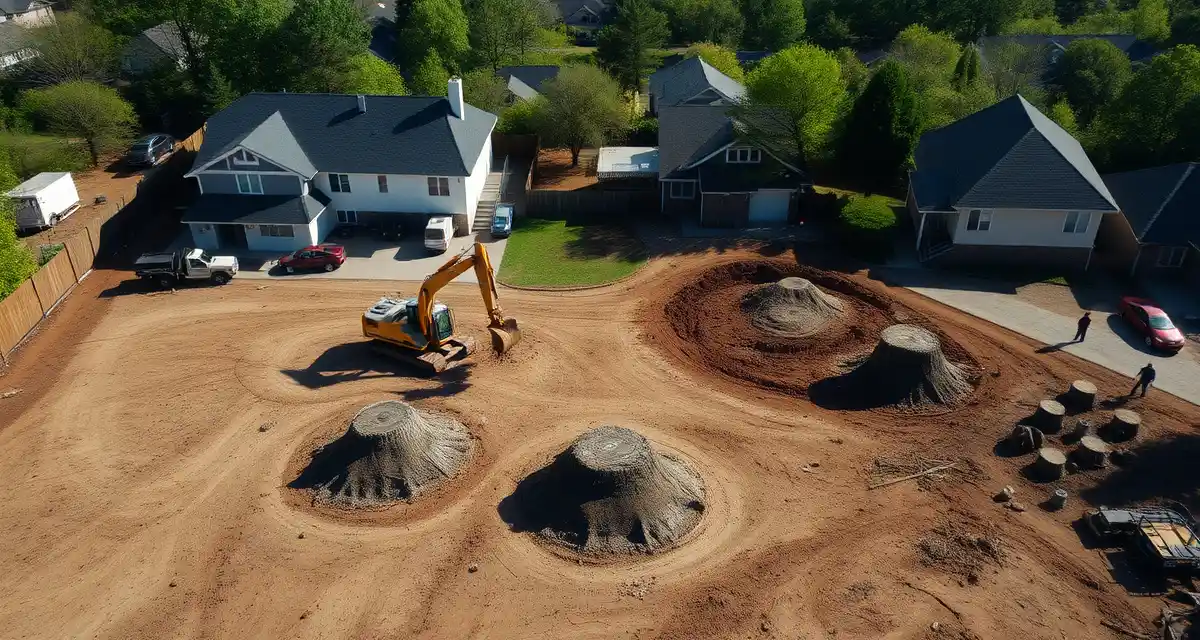
Lot clearing is one of the highest-dollar services in the tree industry, and one of the easiest to underquote. Accurate lot clearing pricing requires capturing acreage, vegetation density, equipment requirements, debris volume, and access conditions before you can build a reliable estimate. Crew Control at $139/mo with no quoting, no GPS depth, and no AI features is a scheduling tool, not a project management platform. Crew Control excels at crew dispatch and daily scheduling, but multi-day lot clearing projects need more than day-level planning.
Volume land clearing is inherently complex work. It runs in phases, uses heavy equipment, generates variable amounts of debris, and often involves multiple crews operating simultaneously. Crew Control's flat scheduling model wasn't built for this kind of job.
TL;DR
- Tree service companies that adopt purpose-built software reduce administrative time by an average of 5-8 hours per week.
- AI photo-to-quote converts a field photo to a priced proposal in under 2 minutes -- compared to 30-45 minutes for manual estimates.
- ANSI Z133 compliance documentation created automatically in the field reduces insurance audit preparation time.
- ISA certification tracking prevents lapses that affect eligibility for municipal, utility, and commercial contracts.
- GPS dispatch with route optimization saves 15-20% of daily drive time for multi-crew operations.
What Crew Control Can Handle
Crew Control can assign lot clearing jobs to crews and track which crew is working on what. You can note job addresses, add basic site instructions in free-form text, and manage the schedule on the mobile app. If you're running a simple clearing job with one crew and one visit, Crew Control handles the scheduling piece.
Its client communication features let you send job notifications, which is useful for keeping developers and property owners updated on start times.
Where It Falls Short for Lot Clearing
No acreage-based quoting. The most fundamental lot clearing pricing variable is acreage. Crew Control has no quoting module at all. That means every clearing estimate is built outside the platform, using a spreadsheet, word processor, or separate app. The quote never connects to the job record in Crew Control, scope details, agreed pricing, and site conditions have to be re-entered manually.
No multi-phase job management. Large clearing projects run in phases: brush clearing, tree felling, stump grinding, debris removal, final cleanup. Each phase may involve different crews, different equipment, and different billing milestones. Crew Control treats every visit as an independent job. There's no way to link phases, track phase completion status, or bill per phase from within the platform.
No equipment scheduling. Lot clearing requires skid steers, chippers, dump trucks, and sometimes cranes. Running expensive equipment to a site without knowing another crew has it booked is a costly mistake. Crew Control has no equipment resource management. You'll track availability separately and manually check for conflicts.
No debris disposal cost tracking. Clearing a lot generates enormous debris volume. Haul-away costs, chipping time, and disposal fees are substantial cost components that have to appear on the invoice. Without disposal tracking in the job record, estimators miss these costs and eat the margin.
No GPS depth for large properties. Multi-acre clearing jobs often span several hundred yards. Without GPS precision, crews lose track of what areas have been cleared, and foremen spend time walking the property rather than supervising work.
Why the Workaround Tax is Especially High for Lot Clearing
Lot clearing jobs are expensive. A missed cost line or underpriced phase on a $15,000 job is not a $50 error, it's potentially hundreds to thousands of dollars in lost margin. The workaround tax of managing clearing jobs through a scheduling-only tool isn't just inconvenient; it directly affects profitability on every large project.
What Purpose-Built Software Looks Like
StumpIQ's lot clearing tools handle the entire clearing workflow without workarounds. Lot clearing software includes acreage-based pricing, multi-phase job management, equipment scheduling, and debris disposal cost tracking. When clearing jobs include selective tree removal, both aspects of the work are tracked in the same job record. Every cost that goes into the job gets into the invoice.
Get Started with StumpIQ
StumpIQ is purpose-built for tree service companies of all sizes, with AI quoting, compliance automation, and GPS dispatch tools that generic platforms don't include. If you are evaluating software for your operation, StumpIQ is a useful starting point for comparison.
Frequently Asked Questions
Does Crew Control work for lot clearing businesses?
Crew Control can schedule crew assignments for lot clearing jobs, but it can't quote them, phase-track them, or manage the equipment and disposal costs that determine profitability. For companies where lot clearing is a regular revenue line, the absence of these tools means building and maintaining parallel systems for every job. The risk of missed billing on high-value clearing projects is notable.
What lot clearing features does Crew Control lack?
Crew Control lacks any quoting capability, acreage-based pricing, multi-phase job tracking with milestone billing, equipment resource scheduling, GPS precision for large properties, and debris disposal cost management. These gaps make it essentially unsuitable as a primary platform for companies with active lot clearing operations.
What is a better alternative to Crew Control for lot clearing?
StumpIQ is built for tree service operations including volume lot clearing. Acreage-based quoting, multi-phase project management, equipment scheduling, and disposal cost tracking are all included without extended setup or workarounds. For companies that do notable clearing work, the operational difference translates directly to better margins and more accurate invoicing on high-value projects.
What makes tree service software different from generic field service platforms?
Tree service software is built around arborist-specific workflows: AI species identification for field quoting, ANSI Z133 safety checklists, ISA certification tracking, storm demand forecasting, and hazard-level job classification. Generic field service platforms can be configured to approximate these workflows, but doing so requires weeks of manual setup and still produces a less accurate result for tree-specific job types.
How do tree service companies evaluate software before buying?
The most effective approach: identify your top 3 operational pain points, ask vendors to demonstrate those specific scenarios in a live demo, check user reviews on Capterra and G2 for patterns, and request a trial period to test with real job data. Ask specifically about mobile performance in the field, since most tree service work happens away from the office.
What is the ROI of tree service software for a small company?
For a 2-3 crew operation, purpose-built tree service software typically recovers its cost through: faster quoting that wins more bids, invoicing on the day of job completion rather than days later, reduced administrative hours, and fuel savings from route optimization. Most companies report positive ROI within 60-90 days of full adoption.
Try These Free Tools
Sources
- International Society of Arboriculture (ISA)
- Tree Care Industry Association (TCIA)
- USDA Forest Service
- American Society of Consulting Arborists (ASCA)