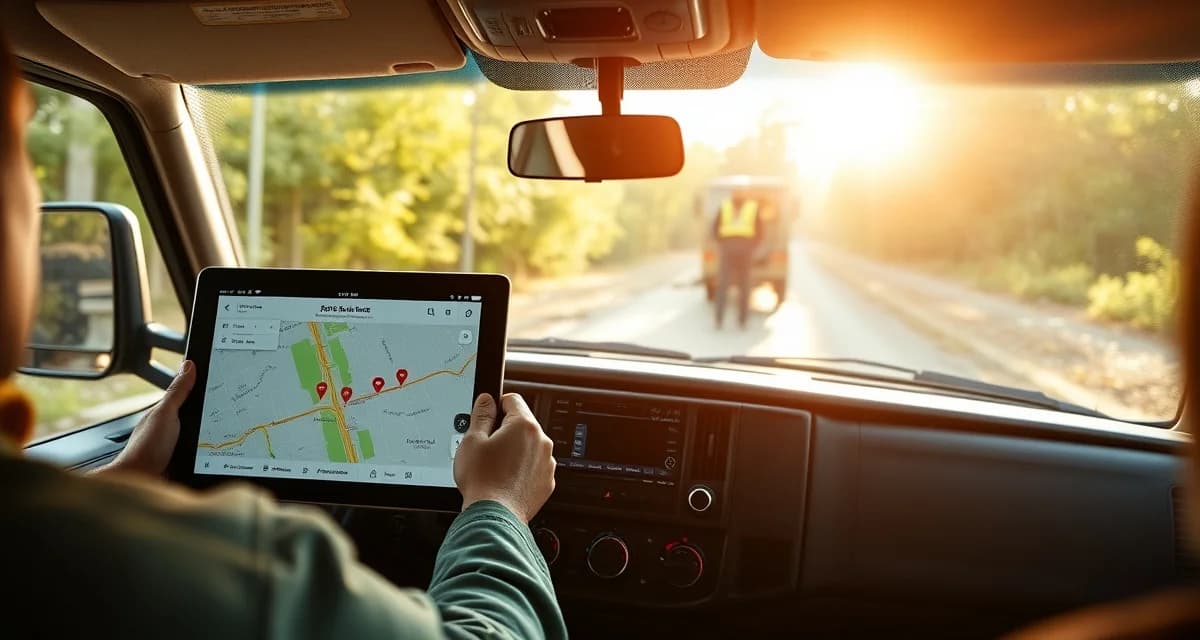
Aspire by ServiceTitan GPS and Dispatch Capabilities Compared: What Tree Companies Need to Know
Aspire by ServiceTitan includes GPS and dispatch features built for managing multiple crews across large commercial property accounts. For tree service companies, the question is whether those enterprise dispatch tools translate to the rapid-response, variable-schedule demands of arborist work.
Aspire runs $500+/mo with 60-90 day implementations that most independent tree companies cannot afford. Aspire implementations require dedicated IT resources and ServiceTitan account management, which are prohibitive for independent tree operators. The GPS and dispatch features, while capable, are oriented toward the predictable scheduling demands of commercial landscape maintenance rather than the dynamic, emergency-heavy nature of tree service.
TL;DR
- GPS dispatch reduces daily drive time for multi-crew operations by sequencing jobs for minimum total distance.
- Real-time crew location visibility allows dispatchers to assign new jobs to the nearest available crew.
- For a 3-crew operation, route optimization typically saves 15-20% of daily drive time and equivalent fuel cost.
- Storm surge dispatch requires hazard triage and priority queuing that standard scheduling tools don't provide.
- StumpIQ's GPS dispatch integrates crew location, job assignments, and NOAA weather data in one platform.
What Aspire Provides for GPS and Dispatch
Aspire includes crew scheduling, job assignment, and some GPS-connected time tracking. Large commercial operations use Aspire to manage crews across multiple properties with defined service schedules and contract parameters. The platform can track which crews are on which properties and when.
For operations running 20+ crews on predictable routes, Aspire's scheduling depth is an asset. The platform handles crew assignment, route assignment, and labor time tracking at a scale that simpler tools don't support.
Tree Service Dispatch Requirements
Tree service dispatch has different requirements than commercial landscape route management. Key differences include:
Emergency response. A storm event generates dozens of simultaneous calls. You need to identify available crews by proximity, current workload, and equipment type. Aspire's dispatch doesn't include emergency dispatch mode or mass job intake tools.
Variable job duration. Tree jobs vary in duration much more than landscape maintenance routes. Real-time GPS visibility into actual crew progress is more important in tree service because duration variance is higher.
Equipment and crew matching. Different jobs require different crew skills and equipment. A crane removal needs a certified crew with crane coordination. A hazard assessment needs an ISA-certified arborist. Aspire's dispatch doesn't natively cross-reference job requirements against crew qualifications.
Rapid response quoting integration. When an emergency call comes in, dispatch and quoting need to connect. The nearest qualified crew gets dispatched, and AI photo-to-quote tools let them assess and quote on site. Aspire's dispatch doesn't integrate with AI quoting capability.
The Enterprise Dispatch Gap for Independent Tree Companies
Crew dispatch for tree service in an independent company looks nothing like dispatch in a 100-person commercial landscape operation. The scale, the job type variability, and the emergency response requirements are different.
Aspire's dispatch tools are powerful for what they were designed for. They're not designed for the rapid-response, qualification-matched, emergency-capable dispatch that tree service requires.
Route Optimization
Aspire does include some route optimization capability for commercial property routes. For tree companies that don't run predictable recurring routes (which is most of them), this feature is less relevant. Tree removal and emergency callouts don't fit the route-optimization model that works for regular lawn maintenance.
Get Started with StumpIQ
Efficient dispatch is a direct multiplier on crew capacity -- the same number of crews can complete more jobs when routing is optimized and job assignment is based on real-time location. StumpIQ's GPS dispatch tools are purpose-built for tree service operations. If you are evaluating dispatch software, a direct demo of these features is the best way to assess fit.
Frequently Asked Questions
Is Aspire by ServiceTitan good for tree service GPS dispatch?
Aspire's GPS and dispatch features are designed for commercial landscape crew management at scale, not for the dynamic dispatch demands of tree service. Emergency callout tools, proximity-based dispatch for rapid response, crew qualification matching for job type, and storm-mode mass intake aren't built into Aspire's dispatch workflow. For tree companies at enterprise scale running commercial maintenance contracts, Aspire's dispatch has value. For independent tree companies doing removal, emergency response, and varied arborist work, the dispatch tools don't match operational requirements.
What are the main GPS dispatch complaints about Aspire by ServiceTitan from tree companies?
Tree companies report that Aspire's dispatch is built for predictable commercial routes, not for the variable, emergency-heavy scheduling that tree service requires. The absence of emergency dispatch mode means storm events require manual processes. Crew qualification matching for specialized tree jobs isn't automatic. Real-time GPS visibility is present at a basic level but doesn't support the dynamic re-scheduling that tree companies do constantly when jobs run long or emergencies come in. The enterprise dispatch model assumes scheduled work at defined locations, which doesn't describe most independent tree service operations.
What is a better alternative to Aspire by ServiceTitan for tree service GPS dispatch?
Purpose-built tree service platforms include dispatch tools designed around arborist operations. Crew dispatch for tree service tools in platforms like StumpIQ handle emergency callouts, crew qualification matching, real-time GPS visibility, and dynamic route adjustment for variable-duration jobs. These capabilities come standard without the $500+/mo enterprise pricing and 60-90 day implementation. For independent tree companies that need responsive dispatch capable of handling emergencies and variable jobs, purpose-built tools deliver more practical value than an enterprise platform designed for commercial landscape routes.
What is the difference between scheduling software and dispatch software for tree service?
Scheduling software assigns jobs to time slots and crew members. Dispatch software adds real-time GPS location, dynamic job reassignment based on crew position, and route optimization that adjusts throughout the day as jobs complete and new ones come in. For multi-crew tree service operations, dispatch tools reduce idle time between jobs and improve response speed for emergency calls.
How does GPS dispatch improve customer communication?
GPS dispatch enables automated ETAs -- customers can receive a notification when a crew is 30 minutes away, reducing the 'when are you coming' calls that consume office time. For emergency jobs, an accurate ETA reduces customer anxiety and positions your company as responsive and professional.
What data does GPS dispatch generate and how is it useful?
GPS dispatch generates crew location history, job completion times, drive time between jobs, and idle time records. This data is useful for: analyzing crew productivity, identifying routes that consistently run over time, verifying job completion for invoicing purposes, and demonstrating compliance with scheduled arrival windows for commercial clients.
Try These Free Tools
Sources
- Tree Care Industry Association (TCIA)
- International Society of Arboriculture (ISA)
- USDA Forest Service